 blog
blog
Emergency Water Heater Repair vs Replacement Guide
Table of Contents
- Emergency Water Heater Repair vs Replacement: How to Decide Fast
- Water Heater Leaking Emergency: Safety Steps Before Anyone Arrives
- Signs Your Water Heater Needs Replacement, Not Another Fix
- Water Heater Lifespan: When Age Tips the Decision
- Water Heater Repair Cost vs Replacement Cost: What to Expect
- Repair or Replace? A Decision Tool for Emergency Situations
- Why a Licensed Plumber Should Handle Your Emergency Repair
- Frequently Asked Questions
Last Updated: October 13, 2026
Emergency Water Heater Repair vs Replacement: How to Decide Fast
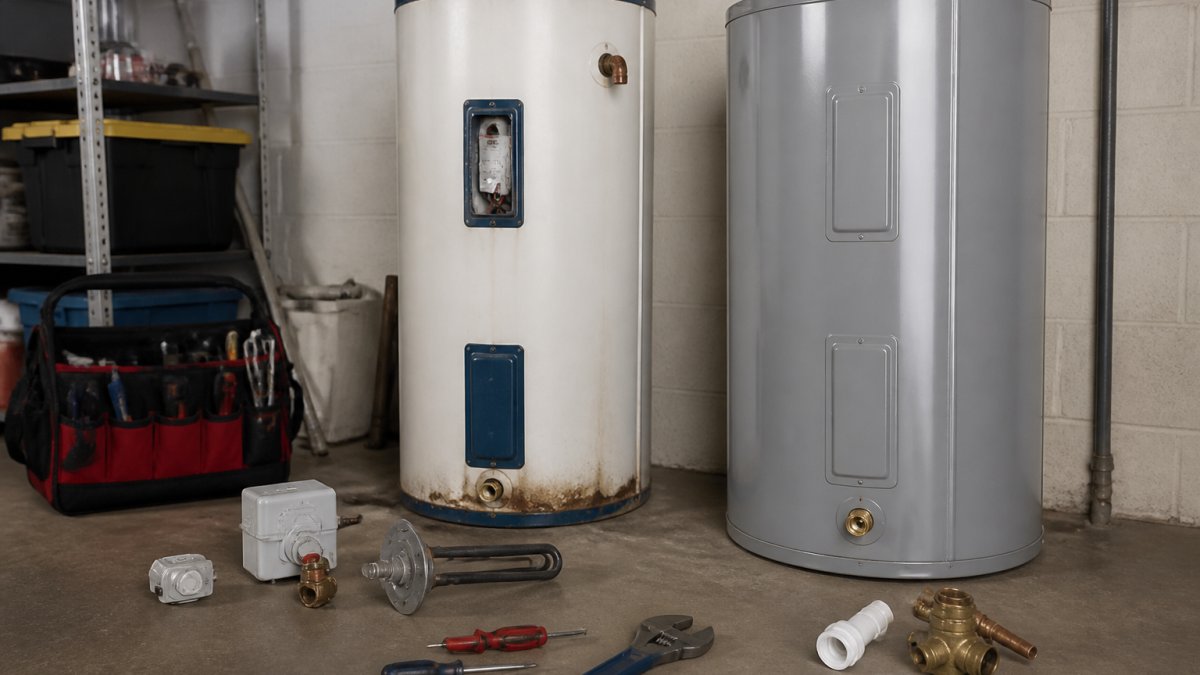
When a water heater fails, the decision between emergency water heater repair vs replacement comes down to three factors: the unit's age, the cost of the fix, and whether the tank itself is compromised. At Rich's Plumbing Heating & Air Conditioning, we've handled many emergency calls, and the pattern is consistent.
Here's what most guides get wrong: they treat this as a money question first. It's a safety question first. A leaking tank can rupture without warning, and that turns a repair bill into a flooded basement, ruined drywall, and a homeowner insurance claim.
Below, we'll walk through the safety steps to take in the first five minutes, the signs that point to replacement, and a decision tool you can run through in under two minutes.
Water Heater Leaking Emergency: Safety Steps Before Anyone Arrives
A water heater leaking emergency needs two things done immediately: shut off the water supply and cut the power. Every minute the tank keeps refilling, more water enters your home. These steps take about three minutes and prevent the worst damage.
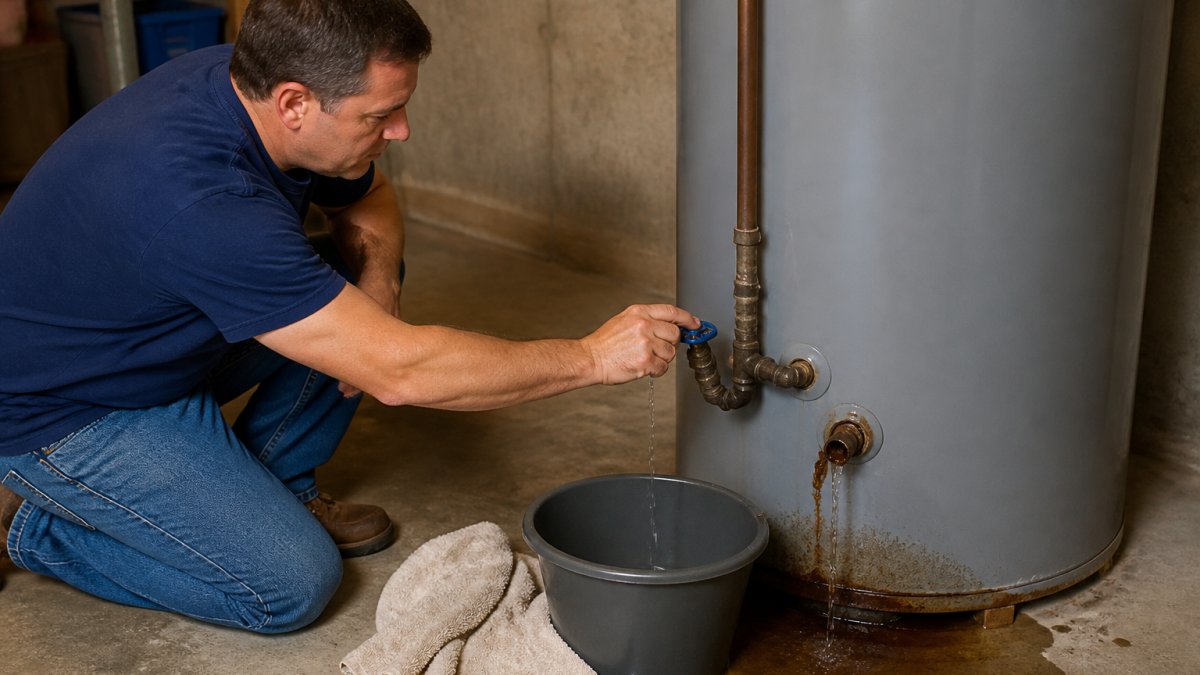
Shut Off the Water and Power
Close the cold-water inlet valve on top of the tank, usually a gate or ball valve on the pipe feeding the unit. Then kill the energy source. For a gas unit, turn the dial on the gas control valve to "off" and leave the pilot alone. For an electric unit, switch off the breaker at your panel.
Contain the Water and Document Damage
Spread towels and place buckets under the leak, then photograph everything: the tank, the puddle, damaged flooring, and any belongings affected. That photo record matters later if you file a water-damage claim. Move electronics, cardboard boxes, and anything stored on the floor away from the area.
Signs Your Water Heater Needs Replacement, Not Another Fix
Replacement is the right call when the tank itself is failing, not just a part inside it. Most component problems are repairable. Structural problems are not.
Watch for these signs that a water heater needs replacement:
- Rust-colored or metallic-tasting hot water
- Water pooling around the base or rust streaks on the tank body
- Rumbling or popping sounds from sediment buildup
A leaking tank is the clearest signal. Once the steel shell corrodes through, no patch holds. A common mistake is letting a handyman seal a weeping tank fitting. That buys weeks, not years, and the failure that follows is usually sudden.
Water Heater Lifespan: When Age Tips the Decision
Most tank water heaters last 8 to 12 years with regular maintenance; tankless units often run longer. Age alone doesn't force a replacement, but it changes the math.
Check the manufacturer's label on the tank for the build date. If your unit is within a year or two of its expected lifespan and needs a significant repair, replacement is usually the smarter spend.
Water Heater Repair Cost vs Replacement Cost: What to Expect
Water heater repair cost depends on the failed component, and replacement cost depends on tank size, fuel type, venting, and installation conditions. The numbers below are typical ranges for standard residential work, not quotes.
Typical repair scenarios break down like this:
| Problem | Repair Approach | Typical Repair Cost | Verdict |
|---|---|---|---|
| Failed heating element | Replace element | $150-$300 | Repair |
| Bad thermostat | Swap thermostat | $150-$300 | Repair |
| Pilot light or igniter fault | Clean or replace | $100-$250 | Repair |
| Pressure relief valve failure | Replace valve | $150-$250 | Repair |
| Sediment buildup | Flush the tank | $100-$250 | Repair if tank is sound |
| Leaking tank or corroded shell | Not repairable | Full unit replacement | Replace |
Replacement runs higher. A standard 40- to 50-gallon tank unit typically lands in the $1,200-$2,500 range installed, with gas units often at the upper end because of venting and code requirements.
Emergency and After-Hours Costs
This is where the repair-vs-replace math changes. Emergency calls carry a premium that standard pricing guides leave out:
- After-hours diagnostic fee: typically $75-$200, sometimes waived if you authorize the repair on the spot.
- Emergency labor rate: often 1.5x to 2x standard hourly rates on nights, weekends, and holidays.
- Parts availability: common parts (elements, thermostats, thermocouples) are usually stocked on service trucks. Less common parts, control boards, blower assemblies, specialty gas valves, may need to be ordered, which can add a day or more.
A practical rule: if the emergency diagnostic plus repair estimate approaches half the cost of a new installed unit, and the tank is past its midpoint lifespan, replacement is usually the better spend even at emergency rates.
When Repair Makes Financial Sense
Repair wins when the unit is under 10 years old, the tank is intact, and the problem is a single component. Heating elements, thermostats, pressure relief valves, and pilot assemblies are all serviceable parts. A flushed tank with a new anode rod can add years of service for a fraction of replacement cost.
When Replacement Is the Better Investment
Replacement wins when the tank leaks, corrosion is visible, or you're facing a second major repair on an aging unit. An older unit also costs more to run. Energy efficiency standards have tightened considerably over the past decade, so a new unit often trims your utility bills from the first month. The U.S. Department of Energy guidance on water heating is a useful reference for how efficiency ratings compare.
Tap to easily schedule service today! →
Warranties, Home Warranties, and Insurance
Coverage is where homeowners most often guess wrong:
- Manufacturer warranty: tank warranties commonly run 6 to 12 years and cover the tank itself, not labor. Component warranties are shorter, often 1 to 6 years. A failed tank inside warranty may get you a replacement unit, but you typically pay installation.
- Home warranty: if you carry one, it may cover repair or replacement of a failed water heater, but most plans exclude pre-existing conditions, code upgrades, and damage caused by lack of maintenance. Read the exclusions before you rely on it.
- Homeowners insurance: standard policies generally do not cover the water heater itself when it fails from age or wear. They may cover resulting water damage if the loss is from a sudden and accidental discharge, depending on your policy terms and deductible. Slow leaks and long-term seepage are commonly excluded.
Document everything, photos of the failed unit, the leak, and any damaged property, before cleanup. That record supports both warranty and insurance claims. Coverage always depends on your specific policy terms and the cause of the damage, so confirm with your insurer or warranty provider before assuming a claim will be paid.
Repair or Replace? A Decision Tool for Emergency Situations
Most guides give you a list of factors. In an emergency, you need a sequence. Run these steps in order, the first one that applies decides your next move.
Step 1: Is there an active safety hazard?
Before anything else, answer this. If yes, stop and act on safety, not on repair-vs-replace.
- Smell of gas, or a hissing sound near the unit: leave the building, do not flip switches or use a phone inside, and call your gas utility or 911 from outside.
- Standing water near an electric unit or the electrical panel: do not touch the panel or the unit. Leave the area and call a licensed plumber or electrician.
- Scalding water from the tap or the relief valve discharging continuously: shut off the water and power if you can reach them safely, then call for service.
If none of these apply, move to Step 2.
Step 2: Is the tank itself leaking or corroded?
Look at the tank body, not the fittings. Water weeping from the shell, rust streaks, or a puddle that returns after you dry it means the tank is compromised. Replace. Stop here, no patch holds a corroded shell, and a rupture can release the full tank contents into your home.
A small leak at a fitting, drain valve, or the T&P valve is different. Those are commonly repairable. Tightening or replacing a fitting is a service call, not a replacement.
Step 3: Is the unit past its expected lifespan?
Most tank units last 8 to 12 years; tankless units often run longer. Check the manufacturer's label for the build date. Past year 10, a major repair is money spent on borrowed time. Replace.
Step 4: Has it needed two or more repairs in two years?
A pattern of failures points to a unit at the end of its service life, even if the tank looks sound. Replace.
Step 5: Is it a single failed component on a sound, younger tank?
If you've reached this step, the answer is usually repair. Match the symptom to the likely cause:
| Symptom | Likely Cause | Commonly Repairable? |
|---|---|---|
| No hot water at all | Failed element, thermostat, or pilot/igniter | Yes |
| Not enough hot water | Sediment buildup, undersized unit, or failing lower element | Yes, unless undersized |
| Rumbling or popping | Sediment on the burner or element | Yes, flush the tank |
| Discolored or metallic-tasting water | Corroding anode rod or tank interior | Anode: yes. Tank: replace |
| Small leak at a fitting or valve | Loose connection or worn part | Yes |
| Water pooling under the tank | Cracked tank or failed pan | Replace |
| Pilot won't stay lit | Thermocouple, gas valve, or draft issue | Usually yes |
Step 6: Compare the numbers
If the repair estimate is more than half the cost of a new installed unit, and the tank is past its midpoint lifespan, replacement is usually the better spend. Use the cost ranges in the previous section to make that comparison concrete.
Why a Licensed Plumber Should Handle Your Emergency Repair
Gas connections, pressure relief valves, and electrical elements are not DIY territory. A licensed plumber carries the insurance, permits, and code knowledge to do the job safely, and many jurisdictions require a permit for water heater replacement.
Rich's Plumbing Heating & Air Conditioning is family owned and operated, licensed, bonded, and insured, with a 60-minute response time for urgent calls. If you need same-day service, the CDC's carbon monoxide safety guidance is worth reading while you wait, especially if you smell gas or suspect a venting problem.
Frequently Asked Questions
Should I repair or replace my water heater in an emergency?
The decision hinges on age, repair cost, and damage type. If your unit is under 8 years old and the fix is a single component like a heating element or thermostat, repair usually makes sense. If it is past 10 years, has a leaking tank, or the repair estimate approaches half the cost of a new unit, replacement is the better call. A licensed plumber can assess the situation on site and give you a clear recommendation before you commit.
Is a leaking water heater an emergency?
It depends on where the leak is coming from. A few drops from a loose fitting or the pressure relief valve can often wait for a scheduled visit. Water pooling around the base of the tank, rust-colored water, or a steady stream indicates a tank failure and should be treated as an emergency. Shut off the water supply and power, then call a professional right away to prevent water damage to floors and walls.
How much does emergency water heater repair cost?
Emergency water heater repair cost varies based on the failed component, unit type, and time of day. Common fixes like a heating element, thermostat, or pilot light assembly cost less than a gas control valve or blower motor. Emergency and after-hours calls typically carry a higher rate than standard service visits. Request a written estimate before work begins so there are no surprises.
How long does emergency water heater replacement take?
A standard tank water heater replacement usually takes 2 to 4 hours for a like-for-like swap. Tankless replacements or conversions from tank to tankless can take longer, sometimes a full day, because of venting, gas line, and electrical requirements. Your plumber should confirm the timeline upfront and let you know if any permits or inspections are needed before the job is complete.
A failed water heater never picks a convenient moment, and the wrong call can mean water damage, a safety hazard, or a second emergency next month. Rich's Plumbing Heating & Air Conditioning handles emergency water heater repair and replacement with licensed, insured technicians, free estimates for most services, and a 60-minute response time. Get started with Rich's Plumbing Heating & Air Conditioning and get your hot water back safely.