 blog
blog
Best HVAC Maintenance Tips for New Systems in 2026
Table of Contents
- Why a New HVAC System Still Needs a Maintenance Plan
- Your New HVAC System Maintenance Checklist for the First Year
- How Often to Change HVAC Air Filter in a New System
- HVAC Warranty Maintenance Requirements Most Homeowners Miss
- DIY HVAC Maintenance Tasks You Can Safely Handle
- Smart Thermostat Setup and System Commissioning Checks
- Airflow, Vents, and Ductwork: Installation Quality Checks
- When to Call a Professional for Your New System
- Frequently Asked Questions
Last Updated: October 6, 2026
Why a New HVAC System Still Needs a Maintenance Plan
A new HVAC system is not a set-and-forget purchase.
New equipment runs at peak efficiency only when airflow, refrigerant charge, and controls are set up right.
Most guides treat new and old systems the same. They are not.
Below, we break down a first-year schedule, filter rules, warranty traps, and the tasks you can safely handle yourself.
U.S. Department of Energy guidance on home heating and cooling
Your New HVAC System Maintenance Checklist for the First Year
A first-year new HVAC system maintenance checklist covers three things: filter checks, seasonal tune-ups, and performance tracking. Split the year into two phases: the first three months are break-in, the rest is seasonal care.
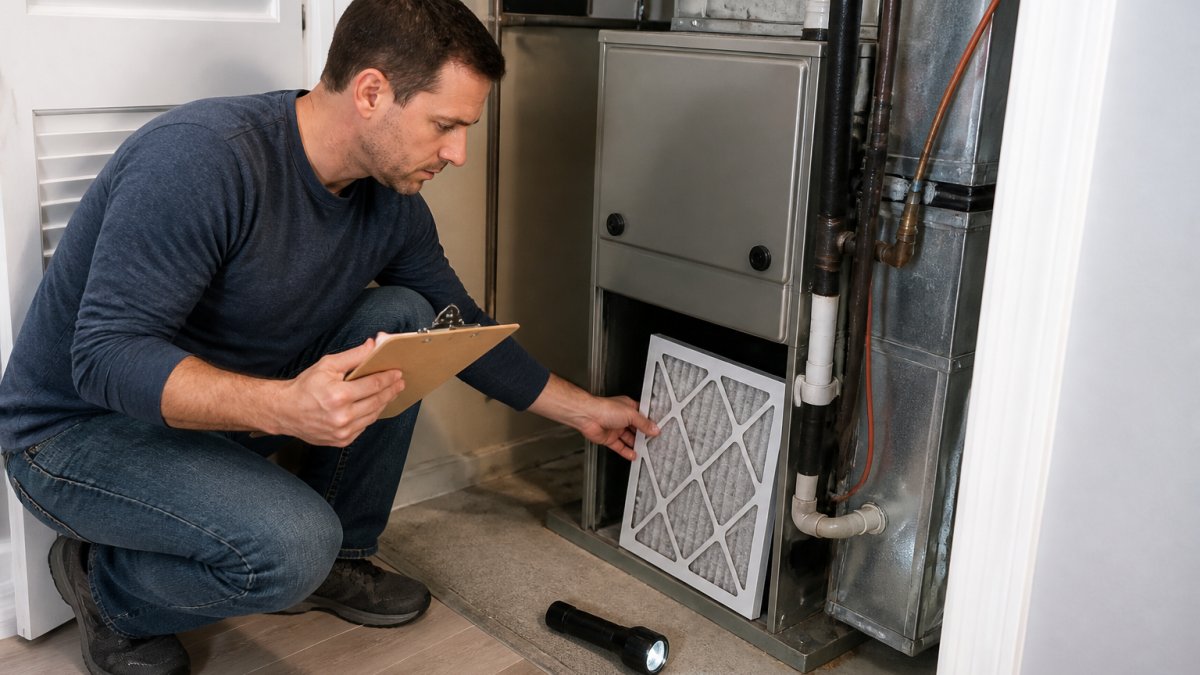
Months 1-3: Break-In Checks and Filter Monitoring
Check the air filter every 30 days during the first three months. New systems pull in dust from construction, drywall, and moving day, which clogs a filter fast.
- Note the starting filter condition on day one
- Check it again at day 30
- Look for uneven airflow from vents
Months 4-12: Seasonal Tune-Ups and Performance Tracking
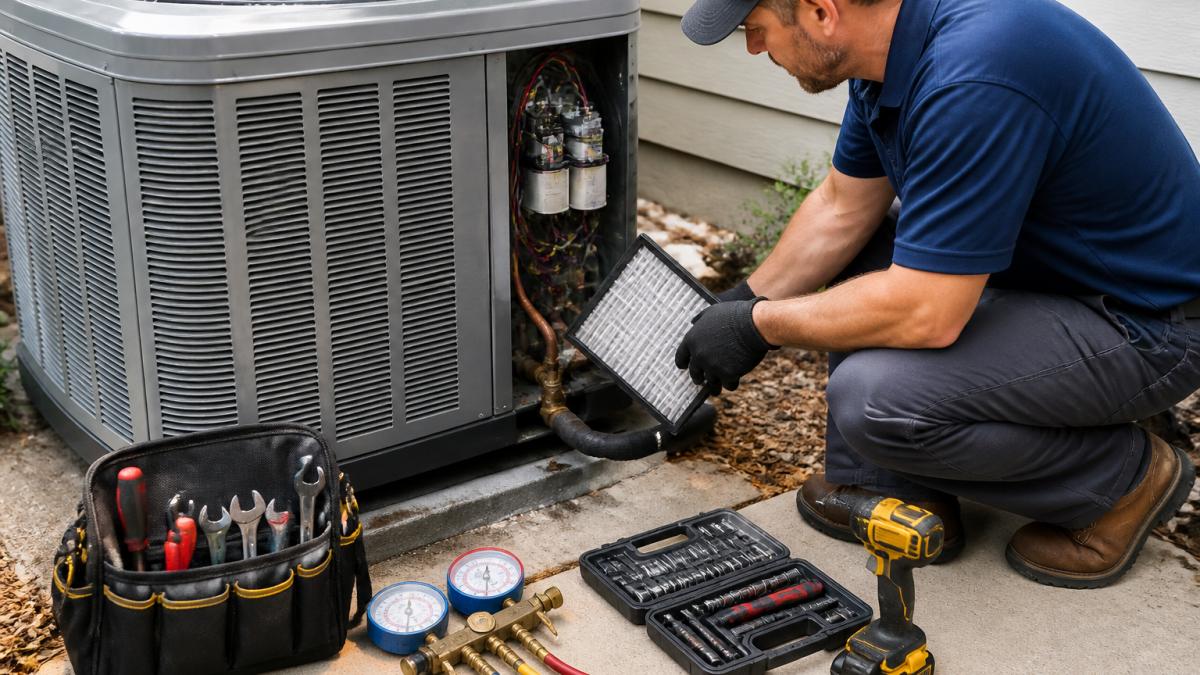
Schedule one professional tune-up before the heating season and one before the cooling season. A licensed technician checks refrigerant levels, electrical connections, and moving parts. Between visits, track performance.
- Log your thermostat settings each month
- Note any rooms that feel too warm or too cold
- Check for dust buildup around vents
How Often to Change HVAC Air Filter in a New System
Change the HVAC air filter in a new system every 30 to 90 days. The window depends on filter type, your home, and runtime. A basic fiberglass filter clogs faster than a pleated one, and a home with pets or heavy dust needs more frequent changes.
Most homeowners err one of two ways: they forget the filter entirely, or they buy the thickest, highest-rated filter they can find. Both hurt the system.
Filter Size, Fit, and MERV Ratings That Protect Airflow
Filter size and fit matter as much as the rating. A filter that does not seal lets unfiltered air slip past the edges, carrying dust into your blower and coils.
MERV ratings tell you how well a filter traps particles. Higher is not always better: a very high MERV filter can choke airflow in a system not built for it, forcing the blower to work harder and raising energy use.
| Filter Type | Typical Change Window | Best For | Airflow Impact |
|---|---|---|---|
| Fiberglass | 30 days | Basic dust capture | Low restriction |
| Pleated | 60-90 days | Most homes | Moderate restriction |
| High-MERV pleated | 90 days | Allergy-sensitive homes | Higher restriction |
HVAC Warranty Maintenance Requirements Most Homeowners Miss
Most HVAC warranties require proof of routine professional maintenance. Skip it, and the manufacturer can deny a claim on a failed part. This is the biggest trap for new system owners, and most guides stop short of explaining how to read the warranty, who registers the equipment, or what to do when paperwork goes missing.
Start the week the system is installed. Not the week something breaks.
Read the Warranty Before the Installer Leaves
Manufacturer warranties are not identical. Some require annual professional service or service at a specific interval, such as once every 12 months.
Ask the installer to point to the maintenance clause before they pack up. If they cannot find it, get the model and serial number and look up the warranty document on the manufacturer's website yourself.
Register the Equipment Yourself
A common pattern: the homeowner assumes the installer filed the registration. Sometimes they did; sometimes they did not, and the homeowner finds out years later when a claim is denied.
Do this within the first week:
- Get the model number, serial number, and installation date from the installer in writing
- Register the equipment on the manufacturer's website, even if the installer says they already did
- Save the registration confirmation email or PDF
If the installer insists they handled it, ask for the confirmation number. If they cannot produce one, register it yourself. Duplicate registration is not a problem. Missing registration is.
Keep a Paper Trail That Survives a Claim
When a part fails, the manufacturer will ask for proof the unit was maintained on schedule. A folder of receipts is not enough if the receipts do not show what was done.
Keep these records in one place:
- Dated service reports from each tune-up, with the technician's license number if available
- Filter change dates and receipts
- The original installation paperwork and permit, if one was pulled
A service report that says "checked system" is weaker than one listing refrigerant pressures, electrical readings, and filter condition. Ask the technician to write down what they measured, not just that they looked.
What Voids Coverage (and What Does Not)
Warranties generally do not cover damage from neglect, improper installation, or unlicensed work. They also may not cover damage from a filter that was never changed or a system that ran with a known refrigerant leak for months.
What usually does not void coverage on its own:
- Changing your own air filter
- Cleaning vents and registers
- Trimming plants away from the outdoor unit
What often does:
- Opening the sealed refrigerant system
- Adjusting gas components
- Skipping required professional service
Read the specific warranty document for your equipment. Do not rely on a neighbor's warranty or a forum post. Terms vary by brand, model line, and year.
Federal Trade Commission guidance on warranty rights
When a Claim Is Denied
If a claim is denied, ask for the denial in writing and the specific warranty language the manufacturer is relying on. Compare that to your service records. If they show the required maintenance was done, you have grounds to push back. The paper trail decides most of these disputes.
Tap to easily schedule service today! →
DIY HVAC Maintenance Tasks You Can Safely Handle
Homeowners can safely handle a short list of HVAC maintenance tasks. Everything else belongs to a licensed technician. Knowing the line keeps you safe and protects your warranty.
Safe tasks:
- Change or clean the air filter
- Clear dust and debris from vents and registers
- Keep the outdoor unit free of leaves and yard waste
What to Leave to a Licensed Technician
Leave refrigerant work, electrical checks, and gas line inspection to a pro. These tasks carry real risk and often void warranty coverage if done wrong.
- Refrigerant charging and leak repair
- Electrical connection and capacitor checks
- Gas furnace combustion testing
Smart Thermostat Setup and System Commissioning Checks
A smart thermostat only helps if it is set up right. Poor setup causes uneven temperatures and wasted energy. Commissioning confirms the thermostat and system work together as intended.
Start with these checks:
- Confirm the thermostat reads the room you actually use
- Set a schedule that matches your daily routine
- Avoid placing the thermostat near vents, sun, or drafts
If upstairs bedrooms run hot while downstairs stays cool, the thermostat may be reading the wrong spot, a setup issue, not always a system failure.
Airflow, Vents, and Ductwork: Installation Quality Checks
Airflow problems in a new system often trace back to installation, not the equipment. Duct leaks, crushed flex runs, undersized returns, and blocked vents all cut performance.
This is the section most guides skip: they tell you to clean your vents, but not how to tell whether the install itself is holding the system back.
Walk the House in the First Week
Do this before the installer's workmanship warranty window closes. Many installers offer a one-year labor warranty, and a problem found in month ten gives you less leverage than one found in week one.
Check these on a mild day when the system is running:
- Hold your hand at every supply register. Airflow should feel steady and similar from room to room. One weak register is a signal.
- Check every return grille. A return that is undersized or blocked starves the system and raises static pressure.
- Look at the duct connections at the air handler. Joints should be sealed with mastic or foil tape, not loose gray duct tape.
Write down what you find and photograph it. A photo of a crushed flex run beats a verbal complaint.
Signs the Install Itself Is the Problem
Some symptoms point to the equipment. Others point to the installation. These usually point to installation:
- One or two rooms never reach the set temperature while the rest of the house is fine
- The system runs long cycles but the house still feels humid
- Airflow at the registers is weak even with a clean filter
A common pattern: a system sized correctly but connected to ductwork never designed for it. The equipment is fine; the delivery is not.
Static Pressure and Why It Matters
A technician can measure static pressure at the air handler. High static pressure means the blower is fighting resistance from the filter, the ducts, or both.
You cannot measure this yourself without tools, but you can ask. At your first tune-up, have the technician record static pressure and compare it to the equipment's rated range.
What to Do When You Find a Problem
Call the installer first. Workmanship issues are usually their responsibility during the labor warranty period.
If the installer does not resolve it, ask for the static pressure reading and the Manual D duct design, if one was done.
If the issue persists, a third-party inspection can document the problem. Keep the report with your warranty records.
ENERGY STAR guidance on sealing ducts and improving airflow
When to Call a Professional for Your New System
Call a professional when you notice noises, temperature swings, or performance drops that do not go away.
Watch for these signs:
- Rattling, grinding, or banging at startup
- Rooms that never reach the set temperature
- A spike in energy use with no change in habits
Timely repairs on a new system protect both the warranty and the equipment. Small issues caught early stay small.
At Rich's Plumbing Heating & Air Conditioning, our licensed, bonded, and insured team has served homeowners for over 30 years.
Frequently Asked Questions
How often should a new HVAC system be serviced?
Schedule professional service twice a year: once in spring before the cooling season and once in fall before the heating season. Even a brand-new system benefits from this schedule because the first year catches installation issues, refrigerant charge problems, and airflow restrictions while they are still covered. Between visits, check your air filter monthly and change it when it looks dirty, which is the single biggest factor in keeping a new system running efficiently.
Can I do HVAC maintenance myself?
Yes, several DIY HVAC maintenance tasks are safe for homeowners. You can change the air filter, clean supply vents and return registers, clear debris from around the outdoor condenser unit, and keep the area within two feet of the unit free of leaves and dirt. What you should not do yourself is open refrigerant lines, test electrical components, or adjust the blower motor. Those require a licensed technician and, in most cases, are required for warranty coverage.
Does regular maintenance affect an HVAC system warranty?
It often does. Most manufacturers require documented annual professional maintenance to keep the parts warranty valid. If a compressor fails at year three and you cannot show service records, the manufacturer may deny the claim. Keep every invoice, note the date and technician name, and store the original installation paperwork. Registering your new system with the manufacturer within the required window also protects your coverage.
What should I check after a new HVAC system is installed?
Start with airflow: every room should reach a similar temperature within a reasonable time. Check that the thermostat is set up correctly and that the system cycles on and off without short-cycling. Look at the filter size printed on the unit and confirm the installer used the correct size. Listen for rattling or grinding at startup. If you notice inconsistent temperatures, unusual noises, or high energy bills in the first month, call the installer while the work is still under their labor warranty.
A new HVAC system rewards homeowners who stay on top of it. Filters, tune-ups, warranty records, and quick attention to odd noises all add up. When something needs a trained eye, Rich's Plumbing Heating & Air Conditioning is ready. Our licensed technicians handle maintenance, repairs, and emergency service with a 60-minute response time and a 100% satisfaction guarantee. Tap to easily schedule service today.