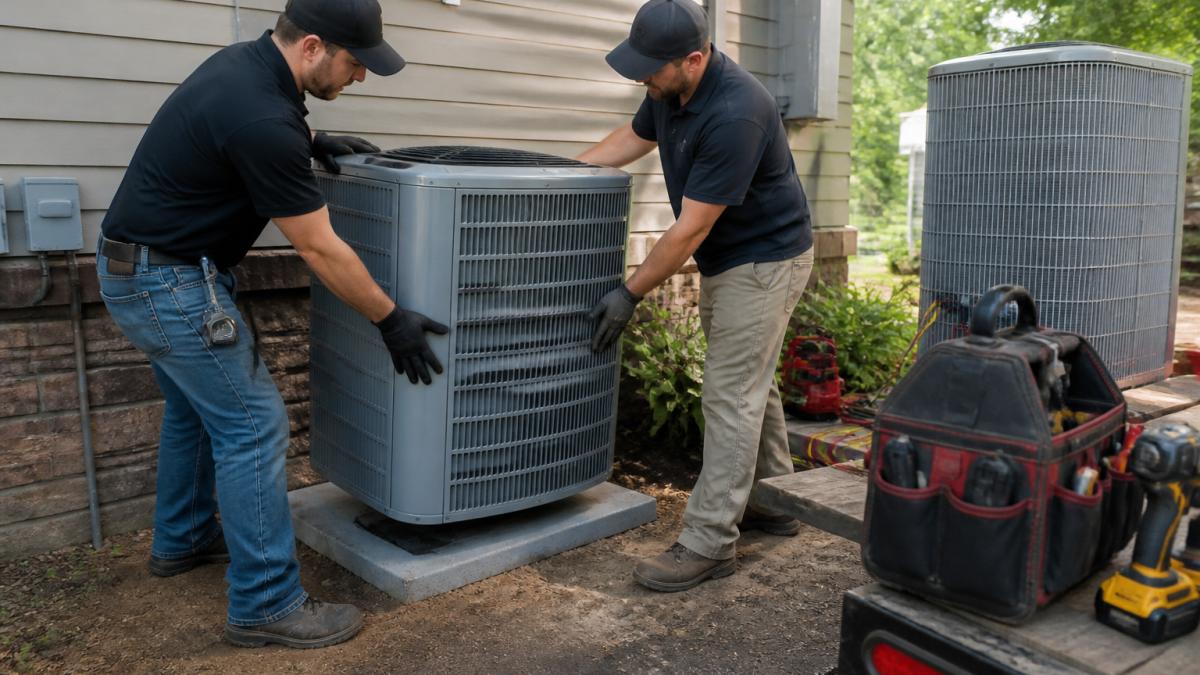
 how-to
How Long Does HVAC Installation Take? A 2026 Guide
Table of Contents
- How Long Does HVAC Installation Take? The Short Answer
- How Long Does It Take to Install an AC Unit?
- How Long Does HVAC Replacement Take?
- Factors Affecting HVAC Installation Time
- What to Expect During HVAC Installation: A Step-by-Step Timeline
- How to Prepare Your Home and Avoid Delays
- Frequently Asked Questions
Last Updated: October 6, 2026
How Long Does HVAC Installation Take? The Short Answer
A standard AC installation takes 4 to 8 hours. A full HVAC system replacement usually runs 1 to 3 days. That is the honest answer, and it is the one most homeowners are looking for when they ask how long does hvac installation take.
Here at Rich’s Plumbing Heating & Air Conditioning, we have handled heating and cooling installs across New Jersey. The truth is that the clock starts before the truck arrives and ends after the last test. Below, we break down real timelines by project type, plus the factors that push a job into a second day.
Typical Timelines at a Glance
| Project Type | Typical Duration | Crew Size |
|---|---|---|
| AC unit replacement | 4-8 hours | 2 technicians |
| Furnace replacement | 5-8 hours | 2 technicians |
| Full HVAC system replacement | 1-3 days | 2-4 technicians |
| New construction install | 3-5 days | 3-4 technicians |
| Ductwork modifications | Adds 1-2 days | Varies |
How Long Does It Take to Install an AC Unit?
Most AC installations finish in a single day, usually 4 to 8 hours from arrival to startup. A straight swap of an existing outdoor unit and matching indoor coil sits at the fast end. Add ductwork repairs or new electrical runs and you are looking at a second day.
The U.S. Department of Energy guide to home cooling notes that proper sizing and correct refrigerant charge matter as much as the equipment itself. That is why we never rush the final testing phase, even on a one-day job.
One-Day Installs vs. Multi-Day Projects
One-day jobs share a few traits:
- Existing ductwork is in good shape
- The new unit matches the old footprint
- Electrical service already meets code
- The outdoor pad and lineset are reusable
Multi-day projects usually involve one of these curveballs:
- Ductwork that needs sealing or rerouting
- A switch from window units to central air
- Panel upgrades for a larger system
- Tight attic or crawlspace access
How Long Does HVAC Replacement Take?
A full HVAC replacement takes 1 to 3 days for most homes. Day one covers removal and the indoor unit. Day two handles the outdoor condenser, lineset, and electrical. A third day appears when ductwork, permits, or inspections get involved.
Replacing Existing Equipment vs. New Construction
Replacing old equipment is faster because the infrastructure already exists. New construction is slower because everything gets built from scratch.
- Replacement: reuse existing ductwork, lineset, and pad where possible
- New construction: run new ductwork, cut new penetrations, pour a new pad
- System conversion: swap from baseboard or window units to central air
The EPA section on refrigerant handling requires certified technicians to recover refrigerant from old equipment before removal. That step adds time but is not optional.
Factors Affecting HVAC Installation Time
Several variables decide whether your job wraps by dinner or stretches into next week. The biggest ones are system size, ductwork condition, and how easily the crew can reach the equipment, but the factor homeowners most often underestimate is the difference between installation hours and total calendar time. A job can be six hours of labor and still take four days from signed estimate to running system.
Installation Hours vs. Calendar Time
Hands-on labor is only part of the clock. Here is what sits outside the workday:
- Permit application and review: most municipalities require a mechanical permit before work starts, and review windows vary widely by jurisdiction
- Inspection scheduling: the final inspection usually happens after startup, and the inspector's calendar, not the contractor's, sets that date
- Equipment availability: standard residential equipment is often in stock locally, but a specific tonnage, efficiency tier, or heat pump model may need to be ordered
- Contractor scheduling: peak season (first cold snap, first heat wave) can push install dates out by days or weeks
A common pattern is a two-day install that spans five to seven calendar days once permits, inspection, and delivery are counted. Ask your contractor for both numbers up front.
System Size, Type, and Ductwork Condition
A 2-ton system installs faster than a 5-ton system, and a heat pump adds a defrost cycle and reversing valve to commission. Ductwork in poor shape is the single most common reason a one-day job becomes two. Duct sealing, rerouting, or adding a return can add a full day on its own.
Accessibility, Electrical, and Permits
Access matters more than most homeowners expect. A condenser tucked behind a fence or an air handler in a tight attic slows every step.
- Accessibility: clear a path at least 3 feet wide to both units; tight attic or crawlspace access can add an hour or more to placement and connections
- Electrical: older panels may need an upgrade before the new system connects, and that work often requires its own permit and a separate trade
- Permits: most municipalities require a permit and a final inspection, and the inspection is a calendar event, not a labor hour
Permit turnaround varies by town, so we build that wait into the schedule. The DOE guidance on sizing and installation also recommends a load calculation before any replacement, which adds a short planning step up front.
Tap to easily schedule service today! →
Crew Size and Homeowner Access
Crew size changes the math more than most people realize. A two-technician crew is standard for an AC or furnace swap; a full system replacement or new construction often runs three to four. A larger crew can compress a two-day job into one long day, but only if the site allows it.
What homeowners can control:
- Parking and staging: leave room for the truck and a clear path for carrying equipment
- Pets: secure them before the crew arrives so doors can stay open
- Work area: move furniture, breakables, and anything blocking the attic hatch or closet
- Someone home: confirm an adult over 18 will be present for the walkthrough and any mid-job decisions
Unexpected Conditions and Contingency Planning
Estimates assume the hidden parts of the system are in usable shape. When they are not, the schedule moves. Common surprises include:
- Damaged or undersized ducts that need sealing, resizing, or replacement
- Outdated wiring that fails the electrical check and requires a panel or circuit upgrade
- Condensate drainage issues where the existing drain route cannot be reused
- Structural obstacles such as a rotted pad, blocked flue, or a lineset path that has to be re-routed
A pre-install inspection catches most of these before install day. When a surprise does surface mid-job, the right move is to pause and quote the fix rather than improvise.
What to Expect During HVAC Installation: A Step-by-Step Timeline
Here is how a typical install day runs, hour by hour. Times shift with project scope, but the order stays the same. The ranges below reflect hands-on labor for a standard AC or furnace replacement; permit review, inspection scheduling, and equipment delivery happen outside these hours and are covered in the factors section.
From Arrival to Commissioning
- Arrival and setup (30-45 minutes): crew lays drop cloths, stages tools, and confirms the load calculation and equipment match the plan
- Old equipment removal (1-2 hours): refrigerant recovery into a certified cylinder, disconnect, and haul-away
- New unit placement (1-2 hours): set the pad, position the condenser and air handler, and verify clearances for airflow and service access
- Connections (2-3 hours): lineset, electrical, condensate drain with proper slope and trap, thermostat wiring
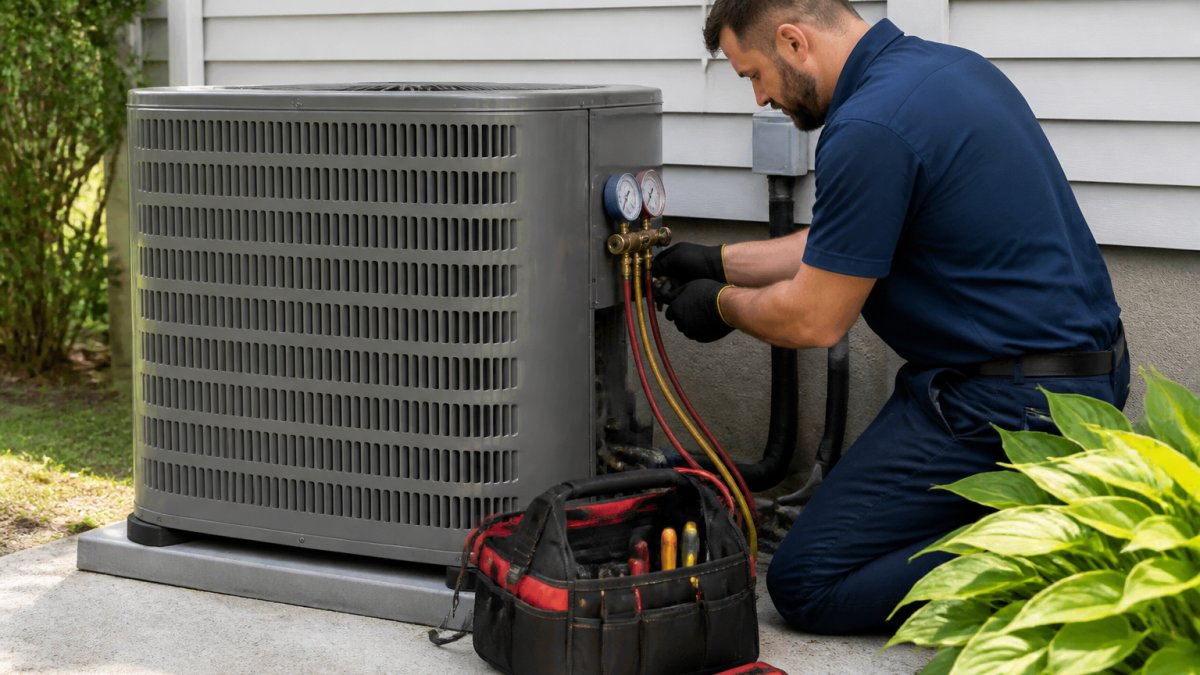
- Evacuation and charge (30-60 minutes): pull a deep vacuum on the lineset, then weigh in refrigerant to the manufacturer's spec rather than guessing by gauge
- Testing and startup (1 hour): airflow test, temperature split, static pressure check, and a full heating or cooling cycle
- Walkthrough (15-30 minutes): we show you the thermostat, filter access, and shutoff locations
Commissioning Is Not Optional
Commissioning is the step homeowners should watch for, and it is the one a rushed crew skips. A proper startup includes:
- Airflow verification: measuring static pressure and confirming the blower moves the cubic feet per minute the system was designed for
- Refrigerant check: confirming the charge by superheat or subcooling, not by feel
- Electrical check: amp draw on the compressor and blower compared to nameplate ratings
- Thermostat setup: configuring staging, fan settings, and any scheduling the homeowner wants
- Temperature split: a supply-to-return difference that falls in the manufacturer's expected range
If a crew leaves without measuring the temperature split or documenting the charge, the job is not finished, even if the air feels cold.
How the Day Can Slip
Even a well-run install can lose an hour or two. The most common in-day delays are a lineset that will not hold a vacuum, a condensate drain that needs a new route, a thermostat wire that has to be re-pulled, or a panel that fails the electrical check mid-job. None of these are unusual, and a good crew flags them early rather than at 5 p.m.
How to Prepare Your Home and Avoid Delays
Preparation on your end saves hours on install day. Clear the work area, secure pets, and plan to be home for the walkthrough.
Checklist before the crew arrives:
- Clear a 3-foot path to the indoor and outdoor units
- Move vehicles so the truck can reach the equipment
- Unlock gates and clear the outdoor pad area
- Note any uneven room temperatures to share with the tech
- Confirm someone over 18 will be home all day
Frequently Asked Questions
Can HVAC installation be completed in one day?
A straightforward AC unit replacement often finishes in one day, typically 4 to 8 hours. Full HVAC system replacements that involve both heating and cooling equipment, ductwork changes, or new electrical connections usually stretch into two or more days. Your contractor can confirm the expected timeline after assessing your home layout, existing equipment, and any additional work needed.
What factors can make HVAC installation take longer?
Several factors affecting HVAC installation time include the size and type of system, ductwork condition requiring repairs or modifications, accessibility of indoor and outdoor units, electrical upgrades, and permit or inspection scheduling. Unexpected conditions discovered during the job, such as hidden duct damage or insufficient refrigerant lines, can also extend the project. A thorough installation estimate should account for these variables upfront.
Will I need to leave home during HVAC installation?
For most residential installations, you can stay home. Technicians work around your household, though you may hear noise from drilling, equipment removal, and system startup. If your project involves extensive ductwork modifications or refrigerant handling in tight spaces, your contractor may ask you to clear certain areas for safety. Plan for pets and children to stay in a separate room during the noisiest phases.
How long before I can use my new HVAC system?
You can typically use your new system the same day installation finishes. After the installation crew completes electrical connections, refrigerant lines, and condensate drain work, they run testing and system startup. Once the system passes initial checks and the thermostat is configured, you can turn it on. If your project requires a municipal inspection, that usually happens after the system is running.
A smooth install comes down to planning, not luck. Rich’s Plumbing Heating & Air Conditioning brings over 30 years of family-owned experience to every job, with licensed, bonded, and insured technicians, free estimates for most services, and a 100% satisfaction guarantee. Our team handles heating, cooling, and plumbing under one roof, so one call covers the whole project. Tap to easily schedule service today and get a clear timeline before we start.