 how-to
When to Replace an Old Radiator: 7 Warning Signs
Table of Contents
- When to Replace an Old Radiator: A Practical Guide
- Signs a Radiator Needs Replacing
- How Long Do Home Radiators Last?
- Radiator Repair or Replacement: How to Decide
- Cost to Replace a Home Radiator and What Changes the Estimate
- Maintenance Steps That Extend Radiator Service Life
- What to Expect During a Radiator Replacement
- Frequently Asked Questions
Last Updated: October 14, 2026
When to Replace an Old Radiator: A Practical Guide
Most homeowners wait until a radiator fails completely before they think about how to replace radiator. That is a costly mistake.
At Rich's Plumbing Heating & Air Conditioning, we have handled heating repairs and installations across New Jersey for over 30 years.
The short answer: replace a radiator when it leaks from the body, corrodes through, or stops heating evenly after a proper flush.
Signs a Radiator Needs Replacing
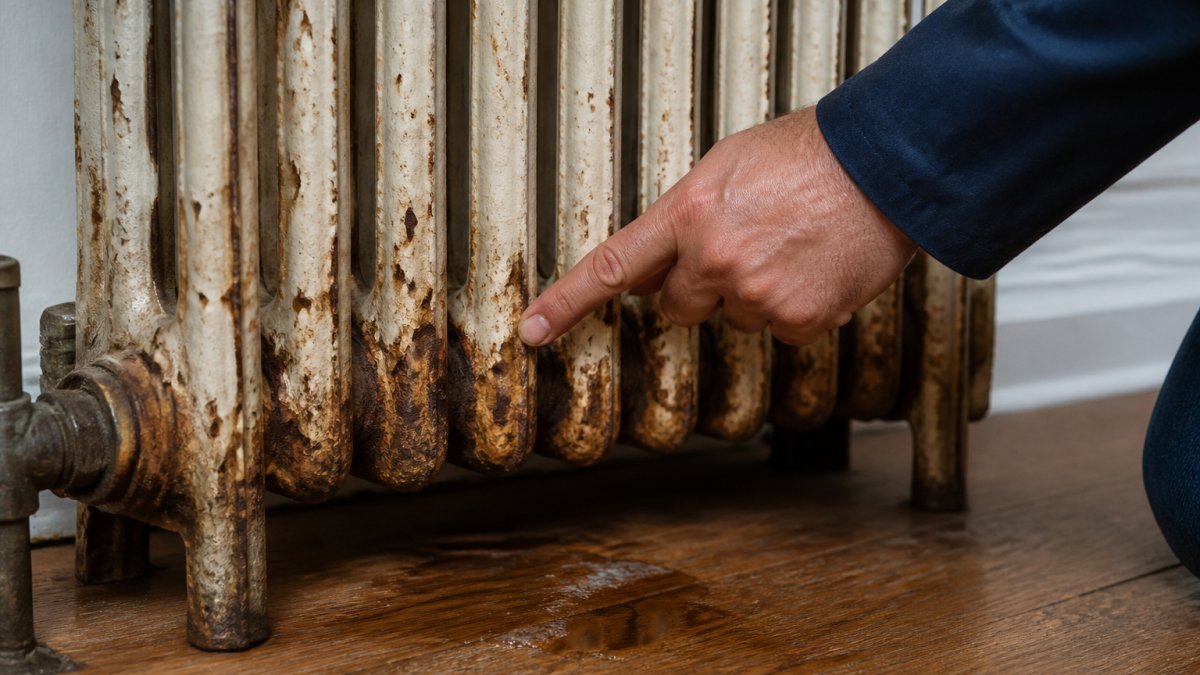
The clearest sign a radiator needs replacing is a leak that comes from the radiator body itself, not the valve or fittings. Rust streaks, puddles under the unit, and cold spots at the bottom all point to internal breakdown.
Watch for these red flags:
- Rust or brown stains on the radiator surface
- Water pooling under the unit after it cools
- Cold spots at the bottom while the top stays hot
- Uneven heating from room to room
A Diagnostic Checklist with Urgency Levels
Use this checklist to sort problems by how fast you need to act:
| Symptom | Urgency | Likely Cause | Action |
|---|---|---|---|
| Pinhole leak in the body | Emergency | Internal corrosion | Shut off and call a pro |
| Leak at valve or fitting | Soon | Worn seal or loose joint | Tighten or reseal |
| Cold spots at the bottom | Monitor | Sludge buildup | Schedule a flush |
| Rust streaks on the surface | Monitor | Surface corrosion | Inspect and clean |
| Banging or knocking | Soon | Trapped air or pressure | Bleed the system |
| Uneven heat across rooms | Monitor | Balancing or sludge | Full system check |
A common mistake is treating a body leak like a valve leak. Valve leaks are often fixable. A leak through the metal itself usually means the radiator is done.
How Long Do Home Radiators Last?
A well-maintained home radiator typically lasts 15 to 20 years, and some cast iron units last far longer. Lifespan depends on the material, the water quality in your system, and how often you flush it.
Here is the general range by type:
- Cast iron radiators: often 30 years or more with care
- Copper-brass radiators: around 15 to 20 years
- Aluminum radiators: typically 10 to 15 years
These are estimates, not guarantees. Many homeowners find that a radiator's real service life comes down to maintenance more than the calendar.
Factors That Shorten Radiator Service Life
Several things speed up wear and corrosion:
- Untreated water with high mineral content
- Skipping annual maintenance and flushing
- A failing water pump or air in the system
- High system pressure that stresses the metal
If your system runs on hard water or has never been flushed, expect the lower end of the range.
Radiator Repair or Replacement: How to Decide
Age alone is a poor trigger for replacement. A 25-year-old cast iron radiator that holds pressure and heats evenly is a better candidate for another decade of service than a 12-year-old aluminum unit with a weeping seam. The decision comes down to five variables, and you can work through them in order.
1. Where is the leak?
Location is the single strongest signal. Leaks at a valve, union, spud, or supply fitting sit outside the pressure boundary of the radiator body. Those are repairable because you are replacing a gasket, packing, or threaded joint, not the heat exchanger itself. Leaks that originate from the fins, columns, or a seam in the casting mean the metal has failed from the inside out.
2. How far has corrosion spread?
Surface rust is cosmetic. Pitting, flaking, and rust weeps that stain the floor are structural. A useful field test is to look at the bottom of the unit: corrosion concentrates where sludge and oxygen sit, so a radiator that is clean at the top and crusted at the base is closer to failure than one with even, light surface oxidation.
3. What does a pressure test show?
A pressure test is the closest thing to a definitive answer. The system is isolated, brought to its rated test pressure, and held. A radiator that cannot hold pressure with the valves closed has an internal breach that will keep leaking regardless of how many fittings you tighten. Ask for the test result in writing, the hold pressure and the duration, before you approve any repair on a unit over 15 years old.
4. Is the repair feasible and repeatable?
Some repairs are one-time fixes; others are the first of a series. A valve reseal on a sound radiator is a one-time fix. A pinhole patch on a corroded body is the first of many, because the same conditions that opened one hole are working on the rest of the metal. A practical rule: if the same radiator has needed two body repairs in three years, the third repair is money you will not get back.
5. Does the math favor replacement?
Compare the quoted repair against the installed cost of a comparable new unit. When a repair approaches half the cost of replacement on a radiator that is already past its expected service life, replacement usually wins on total cost of ownership. Factor in the labor you will pay twice if the repair fails mid-winter, plus the water damage risk from a body leak that lets go while you are asleep.
Tap to easily schedule service today! →
A decision framework you can apply in five minutes
- Repair if the leak is at a valve, fitting, union, or spud, and the body holds pressure.
- Repair if a power flush clears cold spots and restores even heat across the fins.
- Replace if the body leaks, weeps, or shows deep pitting or flaking.
- Replace if the unit fails a pressure test with the valves closed.
The real difference between a lasting fix and a patch job comes down to where the problem lives. If it is in the metal, patch jobs fail, and they tend to fail on the coldest night of the year, when every heating contractor in the area is already booked.
Cost to Replace a Home Radiator and What Changes the Estimate
The installed cost of a home radiator depends on the unit, the labor, and the condition of the system around it. Here is how the number is built.
The three cost buckets
Every radiator replacement quote is the sum of three parts:
- The radiator itself, the unit cost, which varies widely by material, size, and whether it is a stock size or a custom match for an older system.
- Labor, removal and disposal of the old unit, installation of the new one, connection to existing pipes, and system refill, bleed, and pressure test.
- Related work, anything the existing system needs to accept the new radiator safely, such as valve replacement, pipe repair, a system flush, or boiler or circulator pump service.
The third bucket is where estimates diverge most, and it is the one homeowners most often overlook.
What moves the number up or down
- Material and size. Cast iron is the heaviest and most expensive to buy and to move. Aluminum and copper-brass units cost less and install faster, but they may not match the heat output of the unit being removed.
- Number of units. Replacing one radiator is a single visit. Replacing several at once spreads the fixed costs, setup, draining, refilling, and testing, across more units, so the per-unit price usually drops.
- Accessibility. A radiator on an open wall with clear pipe runs is a straightforward job. A unit boxed into a finished basement, behind a cabinet, or under a window with limited clearance adds labor hours.
- Pipe and valve condition. Old steel pipe, seized valves, or fittings that crumble when touched turn a swap into a repipe. This is the most common reason a quote comes back higher than expected.
How to compare quotes fairly
Ask every contractor for the same four line items so you are comparing like with like:
- Radiator make, model, material, and heat output rating
- Labor for removal, disposal, installation, and testing
- Any related work, itemized separately
- Whether the quote includes a system flush, valve replacement, and a written pressure-test result
A quote that is silent on related work is not necessarily cheaper, it is just incomplete. The lowest number on paper often becomes the highest invoice once the technician opens the wall.
What to expect on the invoice
A single-unit replacement is typically a same-day job, and the invoice should reflect that: one unit, one labor charge, one disposal fee, and any itemized related work. If the quote includes a full system flush or boiler service, ask for those as separate line items so you can decide whether to bundle them now or schedule them later. Because these variables swing so widely from home to home, the most useful thing a contractor can give you is a written, itemized estimate before any work begins, and a clear statement of what is and is not included.
Maintenance Steps That Extend Radiator Service Life
Regular maintenance adds years to a radiator. A yearly check and a periodic flush prevent most of the problems that force replacement.
Do this each year:
- Bleed trapped air from each radiator
- Check valves and fittings for small leaks
- Look for rust or discoloration on the surface
- Test system pressure
- Schedule a professional flush every few years
Seasonal timing matters too. Spring and summer are the best windows for maintenance and flushing, before the heating season starts.
What to Expect During a Radiator Replacement
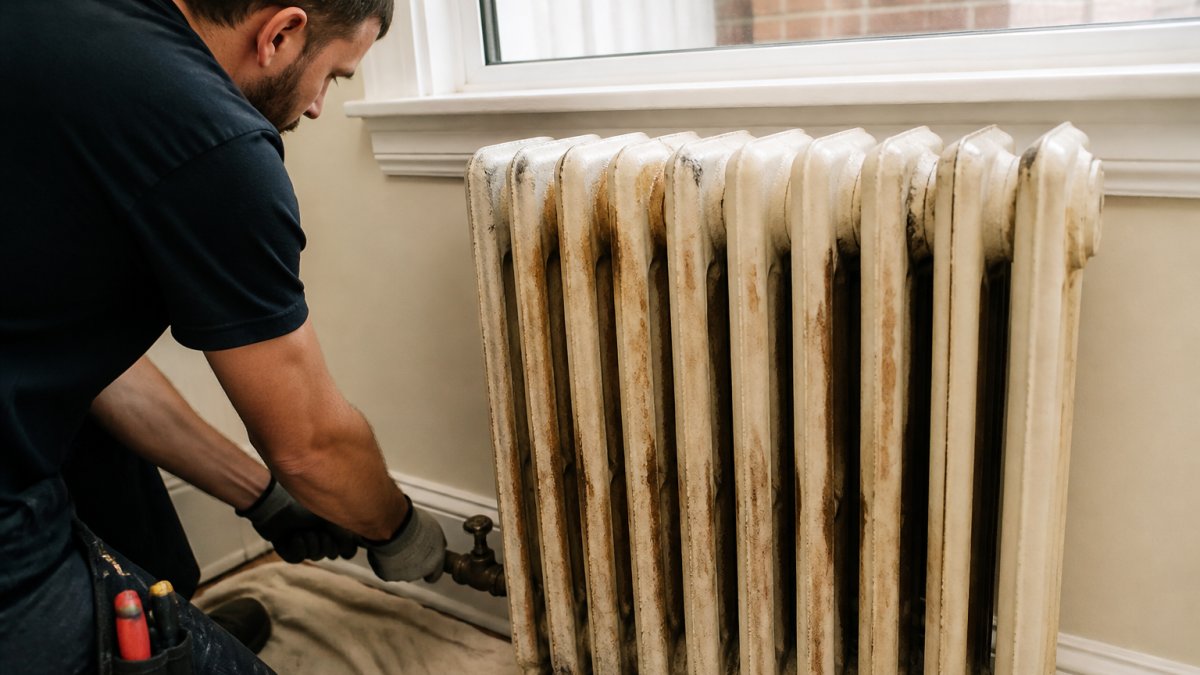
When you replace radiator units, it is usually a same-day job for a single unit. The process is straightforward and far less disruptive than most homeowners expect.
Here is the typical flow:
- Shut off and drain the system
- Disconnect the old radiator from its pipes
- Remove and dispose of the old unit
- Install the new radiator and connect fittings
- Refill, bleed, and pressure test the system
- Check heat output in every room
You should see even heat and stable pressure once the job is done. If you have a townhouse with shared walls, tell your technician up front so the work is planned around your layout.
Frequently Asked Questions
How do I know when an old radiator needs to be replaced?
Look for leaks, rust, cold spots, unusual noises, and a drop in heat output. If the radiator is over 15 years old and needs frequent repairs, replacement is often more cost-effective. A licensed technician can pressure-test the system to confirm whether the radiator itself is failing or if the issue is elsewhere.
How long do home radiators usually last?
Cast iron radiators can last 15 to 20 years or more, while steel and aluminum models often last 10 to 15 years. Lifespan depends on water quality, maintenance, and system pressure. Regular flushing and prompt repairs can extend service life, but units past 20 years are more prone to leaks and inefficiency.
Should I repair or replace a leaking radiator?
A single small leak in an otherwise sound radiator may be repairable, but multiple leaks, widespread corrosion, or a radiator over 15 years old usually justify replacement. Repair costs can add up, and a failing radiator can damage floors and walls. A professional inspection will confirm the best path.
How much does it cost to replace a home radiator?
The cost to replace a home radiator depends on the radiator type, size, system configuration, and labor. Pricing varies by region and project scope, so we recommend requesting a free estimate. Rich's Plumbing Heating & Air Conditioning provides transparent quotes before any work begins.
A failing radiator rarely fixes itself, and waiting usually turns a simple swap into an emergency. If your unit is leaking, corroded, or heating unevenly, our licensed and insured team can inspect it and give you a straight answer. Rich's Plumbing Heating & Air Conditioning offers a fast 60-minute response time, free estimates for most services, and a 100% satisfaction guarantee. Tap to easily schedule service today.