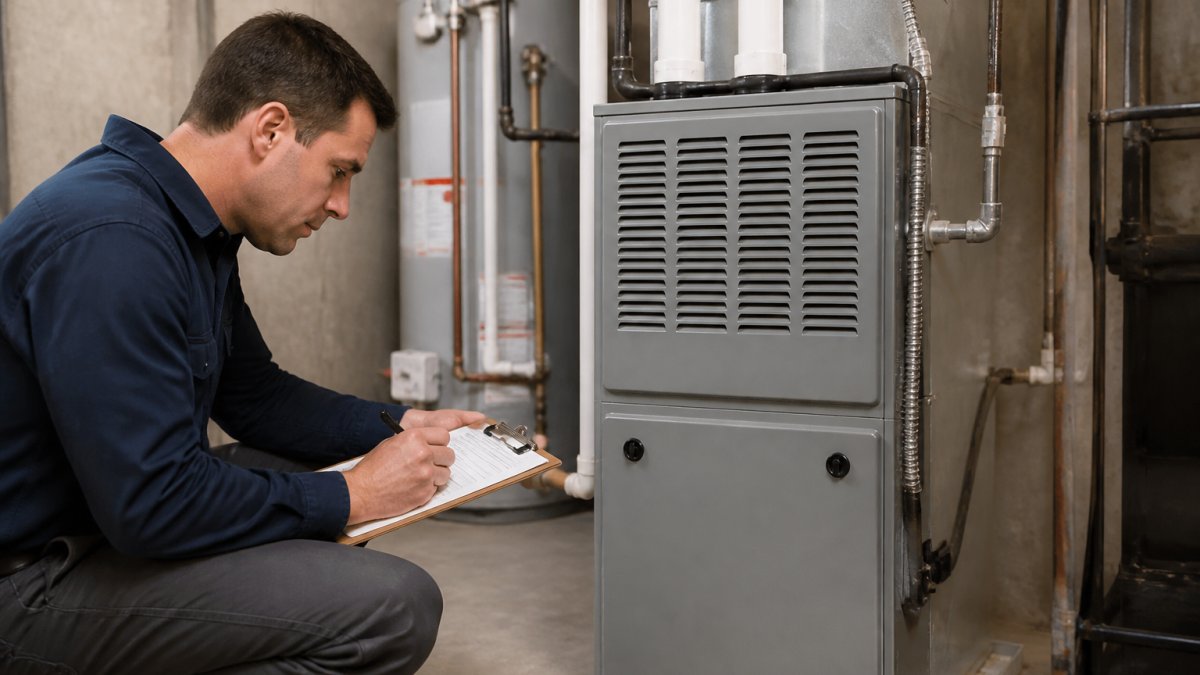
 how-to
How to Choose the Right HVAC Efficiency Rating
Table of Contents
- Start With Your Climate Zone and Utility Costs
- SEER2 vs SEER Ratings Explained
- AFUE Furnace Efficiency Ratings and Minimum Standards
- Calculating HVAC Energy Savings and ROI
- Installation Quality and Maintenance Affect Real HVAC Efficiency
- How to Compare HVAC Efficiency Ratings Before You Buy
- Frequently Asked Questions
Last Updated: October 3, 2026
Start With Your Climate Zone and Utility Costs
The right HVAC efficiency rating starts with where you live, not what's on sale. Climate zone and local utility rates decide which upgrades pay you back.
The U.S. Department of Energy splits the country into climate zones that shape how hard your system works each year. DOE climate zones guide Hotter summers push cooling costs up.
Utility rates finish the math. A system that runs more hours costs more to operate, no matter how efficient the label looks.
So before you shop, answer two questions:
- How many cooling and heating days does your area get?
- What do you pay per kilowatt-hour and per therm?
Homeowners who check these two numbers first make better picks.
SEER2 vs SEER Ratings Explained
SEER2 is the current federal efficiency standard for cooling, replacing the older SEER metric in 2023. Both measure the same thing, but SEER2 uses tougher testing conditions that reflect real homes.
That change matters because the numbers don't translate one-to-one. A system rated 15 SEER under the old test isn't the same as 15 SEER2.
What Changed With SEER2
The new test adds higher external static pressure, mimicking real ductwork resistance. Older ratings assumed cleaner, easier airflow than most homes have.
The practical result: SEER2 ratings run lower than old SEER numbers for similar equipment.
Higher SEER2 means lower energy consumption, but only if the system is sized and installed correctly. A great rating on a badly matched system wastes money.
EER, HSPF2, and BTU Sizing in the Same Decision
SEER2 isn't the whole picture. Three more numbers matter:
- EER measures cooling efficiency at a single peak condition, useful in hot climates
- HSPF2 rates heat pump heating efficiency across a season
- BTU describes system capacity, or how much heat it moves per hour
Sizing ties them together. An oversized system cools fast, then short-cycles, driving up bills and wearing out the compressor. An undersized one runs nonstop and never catches up.
A proper load calculation, not a rule of thumb, determines the right BTU capacity for your home.
AFUE Furnace Efficiency Ratings and Minimum Standards
AFUE measures how much fuel a furnace turns into heat versus how much escapes up the flue. An 80% AFUE furnace sends 20% of its fuel out the chimney. A 95% unit wastes far less.
Federal minimum efficiency standards set the floor for new equipment. DOE furnace efficiency standards These rules vary by region and fuel type, so check current requirements before you buy.
80% vs 95% AFUE: Which Furnace Fits Your Home
The choice comes down to climate and how long you plan to stay.
| Furnace Type | AFUE Range | Best For | Trade-off |
|---|---|---|---|
| Standard | 80% | Mild winters, tight budgets | Higher fuel use |
| Mid-efficiency | 90-92% | Moderate climates | Middle cost |
| High-efficiency | 95%+ | Cold winters, long-term homes | Higher upfront cost |
High-efficiency furnaces often need special venting, adding installation work. In a cold climate where the furnace runs for months, that cost usually pays back.
In a mild climate, an 80% unit can make more sense, since the savings gap is smaller.
Calculating HVAC Energy Savings and ROI
Most guides say high-efficiency equipment "saves money" and stop there. What you need is a break-even number: the year cumulative savings overtake the extra you paid upfront. Here is how to build one.
The Core Mechanism: Efficiency Is a Ratio, So Savings Are Not Linear
AFUE and SEER2 are ratios of output to input, so savings depend on the gap between two ratios, not the new rating alone.
The formula for a heating upgrade is:
Annual savings = Annual heating spend × (1 − Old AFUE ÷ New AFUE)
For a cooling upgrade, swap in SEER2:
Annual savings = Annual cooling spend × (1 − Old SEER2 ÷ New SEER2)
Two consequences fall out of that math:
Tap to easily schedule service today! →
- Diminishing returns. Going from 80% to 95% AFUE cuts fuel use by about 16%. Going from 95% to 98% cuts it by only about 3%. The second jump costs more and saves less.
- The baseline matters more than the target. Replacing a 10 SEER system with a 16 SEER2 unit produces a far bigger percentage cut than replacing a 14 SEER2 unit with the same 16 SEER2 unit, even though the new equipment is identical.
A Worked Example
Suppose your annual heating spend is $1,200 and you're choosing between an 80% AFUE and a 95% AFUE furnace.
- Savings fraction: 1 − (80 ÷ 95) = 1 − 0.842 = 0.158, or roughly 16%
- Annual savings: $1,200 × 0.158 ≈ $190 per year
Now apply the installed-cost difference. If the 95% unit costs $2,500 more installed (higher equipment price plus PVC venting and condensate handling), the simple payback is:
$2,500 ÷ $190 ≈ 13 years
That is longer than many homeowners expect. In a milder climate where the furnace runs fewer hours, say $600 annual heating spend, the same upgrade saves about $95 per year and payback stretches past 26 years.
Run the same math on cooling. A jump from 14 SEER2 to 18 SEER2 on a $700 annual cooling bill saves roughly $155 per year.
The Variables That Move the Break-Even Point
| Variable | Effect on Payback |
|---|---|
| Higher utility rates | Shortens payback |
| More annual run hours (extreme climate) | Shortens payback |
| Larger efficiency gap between old and new | Shortens payback |
| Higher installed premium (venting, electrical, ductwork) | Lengthens payback |
| Longer planned time in the home | Makes longer paybacks acceptable |
How to Use This Before You Sign
- Pull 12 months of utility bills and isolate the heating and cooling portions.
- Get the efficiency rating of your existing equipment off its data plate.
- Get installed quotes, not equipment prices, for two efficiency tiers.
- Run the formula above on each tier.
- Compare the payback period against how long you expect to own the home.
Where the Math Breaks Down
Simple payback ignores utility rate escalation, repair costs, and the fact that a higher-efficiency system may have more complex components. It also assumes the system actually performs at its rated efficiency, which brings us to the next section.
Installation Quality and Maintenance Affect Real HVAC Efficiency
A high efficiency rating is a laboratory number produced under controlled conditions. Your home is not a laboratory. The gap between rated and delivered efficiency is where most promised savings disappear, and it is almost entirely determined by installation and maintenance.
The Mechanisms That Erase Rated Efficiency
Duct leakage. In a typical home, a meaningful share of conditioned air escapes through leaks, disconnected joints, and poorly sealed plenums before reaching a room.
Incorrect refrigerant charge. Air conditioners and heat pumps are critically charged systems.
Improper airflow. Undersized returns, restrictive filters, or a mismatched blower setting raise static pressure, reducing airflow across the coil.
Oversizing. An oversized system reaches the setpoint quickly and shuts off before removing humidity, leaving a cold, clammy house.
Why High-Efficiency Equipment Is Less Forgiving
Here is the trade-off most guides omit: the more efficient the equipment, the more sensitive it is to installation and maintenance errors.
- Variable-speed and inverter-driven systems rely on complex control boards, electronic expansion valves, and communicating thermostats. A single miswire or a failed sensor can take the system down or force it into a reduced-capacity mode.
- High-AFUE furnaces use secondary heat exchangers and condensate management. Condensate traps that clog or freeze cause shutdowns, and the secondary exchanger is an added failure point that an 80% furnace does not have.
- Tighter tolerances mean small deviations in charge, airflow, or duct static pressure produce larger efficiency losses than they would on a basic single-stage unit.
The practical implication: the maintenance cost of ownership tends to rise with the efficiency tier. Budget for it when you run your payback math.
What Maintenance Actually Requires
| Task | Frequency | Why It Matters |
|---|---|---|
| Filter change | Every 1-3 months | Restricts airflow when loaded; the cheapest efficiency protection you have |
| Professional tune-up | Annually, before the season | Verifies charge, airflow, and electrical draw |
| Condensate trap and drain check | Annually | Prevents shutdowns and water damage on high-AFUE and heat pump systems |
| Duct inspection and sealing | Every few years | Recovers efficiency lost to leakage |
| Coil cleaning | As needed | Restores heat transfer capacity |
A maintenance agreement is not a sales gimmick on high-efficiency equipment, it is closer to a requirement for the system to deliver its rated performance over its service life.
How to Verify Installation Quality Before You Pay
Ask for these items in writing, and do not accept verbal assurances:
- A room-by-room load calculation (Manual J or equivalent), not a square-footage rule of thumb.
- Duct design and sizing (Manual D or equivalent) if ductwork is being modified.
- Startup readings: refrigerant charge verified by superheat or subcooling, static pressure, temperature split, and airflow (CFM).
A contractor who cannot or will not produce these is guessing. Guessing is how a premium system underperforms a mid-tier one.
How to Compare HVAC Efficiency Ratings Before You Buy
Compare ratings by matching them to your climate, your usage, and your budget, not by chasing the highest number. The best HVAC efficiency rating for your home is the one that pays back within your timeframe.
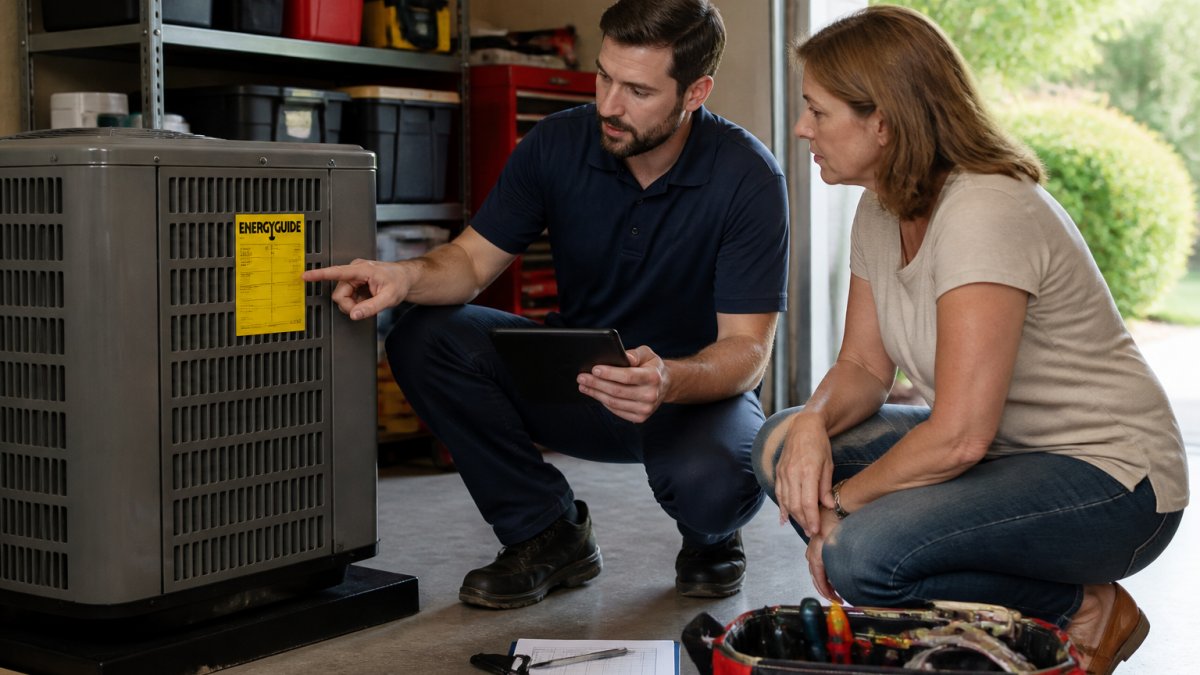
Use this checklist before you sign:
- Confirm your climate zone and seasonal usage
- Get a written load calculation, not a guess
- Compare SEER2, EER, and HSPF2 together
Ask for the load calculation in writing. A contractor who skips it is guessing, and guesses cost you comfort and money.
Rich's Plumbing Heating & Air Conditioning offers free estimates for most services and a 100% satisfaction guarantee.
Frequently Asked Questions
What is the $5000 rule for HVAC systems?
The $5,000 rule is a rough rule of thumb some contractors use: multiply the age of your system by the repair cost, and if the result exceeds $5,000, replacement may make more sense than repair. For example, a 12-year-old system needing a $500 repair gives $6,000, pointing toward replacement. It is not an official standard, so ask a licensed technician to weigh repair cost, refrigerant type, and how well the system still meets current efficiency ratings before deciding.
Is a 15.2 SEER2 rating better than a 16 SEER rating?
They are measured differently. SEER2 uses updated testing conditions that produce lower numbers than the older SEER scale, so a 15.2 SEER2 unit is generally comparable to a 16 SEER unit, not worse. When comparing systems, only compare SEER2 to SEER2. A higher SEER2 means lower energy consumption for the same cooling output, but the real savings depend on your climate zone, ductwork condition, and how the system is sized and installed.
Should I buy an 80% or 95% AFUE furnace?
It depends on your climate and how long you plan to stay. An 80% AFUE furnace sends about 20% of fuel energy out the flue, while a 95% AFUE condensing furnace loses only about 5%. In colder regions with long heating seasons, the higher rating usually pays back faster through lower utility bills. A 95% furnace also vents through PVC pipe, which can simplify installation in some homes. Ask for a load calculation and an operating cost comparison for your house before committing.
How do I calculate the return on investment for high-efficiency HVAC units?
Start with your current annual heating and cooling costs, then estimate the percentage reduction from the higher efficiency rating. Divide the price difference between the standard and high-efficiency unit by the annual savings to get a rough payback period in years. Include available federal tax credits and utility rebates, since these shorten payback. A 2026 installation of a qualifying high-efficiency system may be eligible for federal incentives, so confirm current program details before you buy.
Choosing the right HVAC efficiency rating takes more than reading a label. It takes your climate, your bills, and a correct load calculation working together. Rich's Plumbing Heating & Air Conditioning brings over 30 years of family-owned experience, a 60-minute response time, and licensed, insured technicians to every job. Get started with Rich's Plumbing Heating & Air Conditioning and get a system that actually delivers the savings its rating promises.