 how-to
How to Verify a Local Plumber License
Table of Contents
- Why Verifying a Plumber License Matters
- Step 1: Gather the Plumber's Information
- Step 2: Access Your State's License Lookup Tool
- Step 3: Search and Verify Active Status
- Red Flags of Unlicensed Plumbers
- Questions to Ask Before Hiring a Plumber
- Using the New Jersey Division of Consumer Affairs License Search
- What to Do If You Hired an Unlicensed Plumber
- Frequently Asked Questions
Last Updated: August 30, 2026
Why Verifying a Plumber License Matters
Hiring an unlicensed plumber might seem like a cost-saving shortcut, but it exposes you to serious risks that far outweigh any upfront savings. Licensed plumbers have completed required training, passed examinations, and carry insurance to cover damages or injuries on your property (ncsl.org). An unlicensed operator has none of these safeguards. If something goes wrong, a burst pipe causes water damage, faulty wiring creates an electrical hazard, or an injury occurs, you may be liable for all costs. Your homeowner's insurance likely won't cover damage caused by unlicensed work.
At Rich's Plumbing Heating & Air Conditioning, we understand that homeowners need confidence in the professionals they invite into their homes. This guide walks you through exactly how to verify plumber license status, what red flags to watch for, and what steps to take if you've already hired someone without proper credentials.
Step 1: Gather the Plumber's Information
Before you can verify plumber license details, you need the right information. A legitimate professional will provide this willingly.
Ask the plumber for:
- Full legal name (as it appears on their license)
- License number
- State where the license is issued
- Business name and address
- Any specialty certifications or additional licenses
Write these details down or photograph them. Don't accept vague answers like "I'm licensed in the area" or "My company handles all that." If a plumber hesitates to provide this information or becomes defensive, that's your first red flag. Licensed contractors understand that verification is standard practice.
Step 2: Access Your State's License Lookup Tool
Each state maintains its own licensing board and public database where you can search for active plumbers. Start by identifying which state issued the license, then navigate to your state's regulatory board website, typically called the "State Board of Examiners," "Division of Consumer Affairs," or similar.
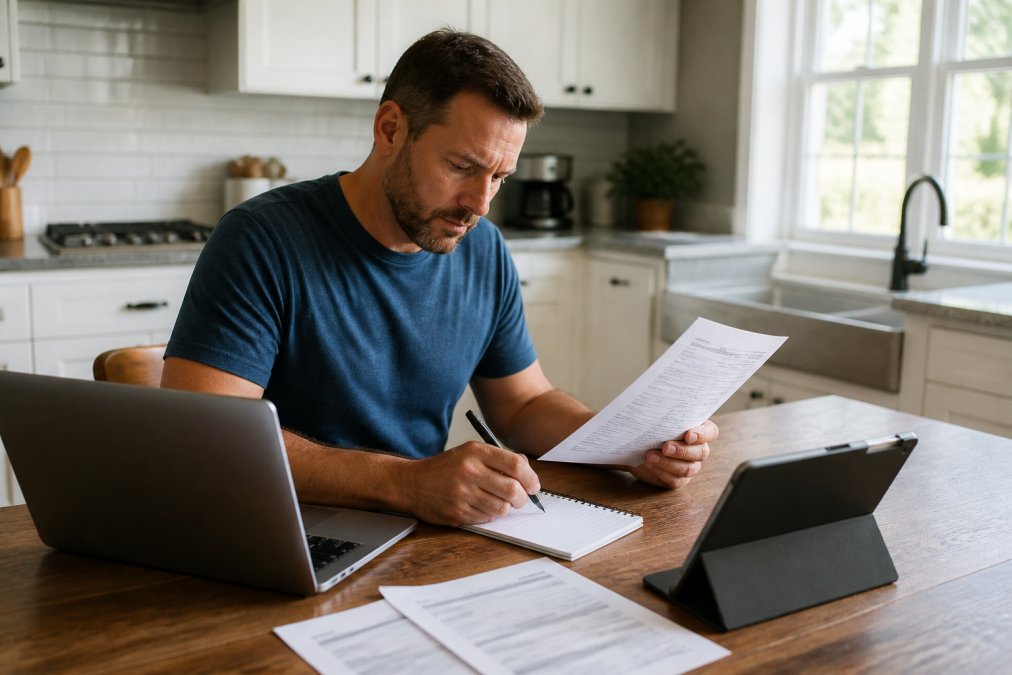
Most state licensing boards offer free online search portals accessible to anyone. The search portal usually appears prominently on the board's homepage, labeled "License Search," "Contractor Database," or "Verify a License." If you have trouble locating it, call the state board's consumer hotline. Having the plumber's license number makes the search faster, but you can often search by name and business address.
Step 3: Search and Verify Active Status
Once you've accessed the state's license lookup database, enter the plumber's name, license number, or business information into the search fields.
The database will return results showing:
- License number and type (journeyman plumber, master plumber, contractor license, etc.)
- Current status (active, inactive, expired, suspended, or revoked)
- Issue and expiration dates
- Any disciplinary actions or complaints on record
- Bonding and insurance information (in some states)
Active status is non-negotiable. If the license shows as expired, suspended, or revoked, do not hire that plumber. An expired license means the plumber hasn't renewed required training or passed current competency exams. A suspended or revoked license indicates serious violations, safety issues, consumer complaints, fraud, or failure to follow building codes.
Take a screenshot or print the results page as documentation. If the search returns no results, the plumber is unlicensed or the information provided was incorrect. If they cannot produce valid license information after a second request, walk away.
Red Flags of Unlicensed Plumbers
Unlicensed plumbers often use specific tactics to avoid detection. Recognizing these red flags helps you identify risky contractors before you sign a contract.
Vague or evasive licensing claims. An unlicensed plumber may claim they're "apprentices learning under a master plumber" without providing the master's name, license number, or apprenticeship program registration. Legitimate apprentices are registered with the state licensing board and cannot perform work independently or bill customers directly (dol.gov). If a plumber cannot name their supervising master or provide apprenticeship details, they're likely unlicensed.
Some operators claim to be "licensed in another state" without holding a license in your state. Plumbing licenses are state-specific and often not reciprocal. A plumber licensed in one state cannot legally perform plumbing work in another state unless they've obtained a license there.
Operating under a vague business structure. Watch for plumbers who advertise as "independent contractors," "handymen," or "jack-of-all-trades" when you need plumbing work. While handymen can handle minor repairs like fixing a leaky faucet, any work involving water supply lines, drainage systems, sewer connections, or code compliance requires a licensed plumber. If someone describes themselves as a handyman but is quoting you for water line replacement, ask directly whether they hold a plumbing license.
Cash-only arrangements and lack of documentation. Licensed professionals provide written estimates, invoices, and accept standard payment methods. Unlicensed plumbers often insist on cash-only payments with no written contract. This arrangement leaves no paper trail and prevents you from having documentation if something goes wrong. If a plumber refuses to provide a written estimate or insists on cash payment before work begins, do not proceed.
Significantly underpriced bids. Extremely low bids that undercut other estimates by 30% or more are a red flag. Licensed plumbers must account for licensing fees, liability insurance, bonding requirements, workers' compensation insurance, and continuing education costs. An unlicensed operator skips most of these costs, allowing substantially lower bids. However, this savings evaporates when the work fails or creates code violations.
Reluctance to provide proof of insurance and references. Ask any plumber for current proof of liability insurance and at least three recent customer references. A legitimate contractor will provide both without hesitation. If a plumber claims "references are confidential" or "I don't have insurance yet," that's a serious warning. Request to see the insurance certificate directly and call at least one reference.
Pressure to start work immediately or pay upfront deposits. While some legitimate contractors request a deposit for large jobs (typically 25-50%), unlicensed operators often pressure you to pay immediately or start the same day. Licensed plumbers can usually schedule work within a few days and are willing to wait while you verify credentials.
No written warranty or guarantee. Licensed plumbers typically guarantee their work for at least one year. Unlicensed operators often refuse to provide any written guarantee. Without a warranty, you have no recourse if the work fails shortly after completion.
Inability to explain building codes or permit requirements. Ask any plumber whether your job requires a building permit and inspection. Licensed plumbers know their state and local building codes. Unlicensed operators often claim "permits aren't necessary" or "we can do this without the city knowing," which is both illegal and dangerous.
Tap to easily schedule service today! →
Questions to Ask Before Hiring a Plumber
Beyond verifying plumber license credentials, asking the right questions reveals whether a contractor matches your needs and operates professionally.
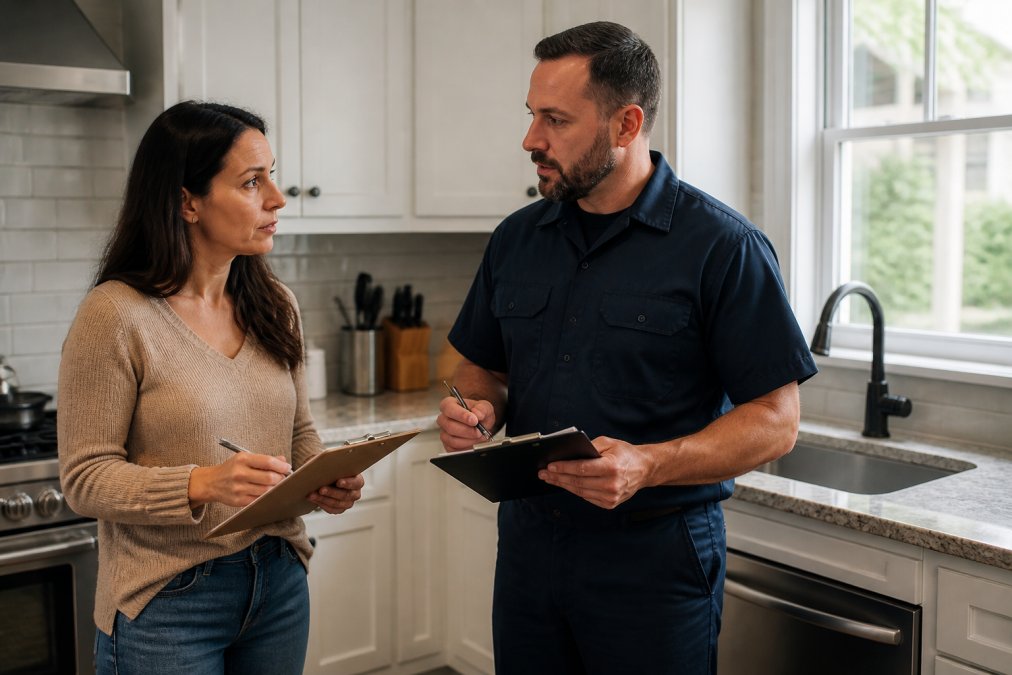
Ask about their experience with your specific issue and how long they've been licensed. Ask about their warranty on parts and labor, most reputable plumbers guarantee their work for at least one year. Inquire about their timeline, availability, and whether they offer 24/7 emergency service. Ask how they handle permits and inspections for major work.
Ask about their insurance coverage and request proof of current liability insurance and workers' compensation if they have employees. Request a detailed written estimate before work begins, not a verbal quote. The estimate should itemize labor, parts, and any additional charges.
Ask about payment terms: Do they require a deposit? How much? When is the balance due? What happens if the job costs more than the estimate? These questions help you assess whether the plumber is right for your job and reveal how professional and transparent they are.
Using the New Jersey Division of Consumer Affairs License Search
For residents in New Jersey, the Division of Consumer Affairs maintains the public licensing database for plumbers and other contractors.
Visit the New Jersey Division of Consumer Affairs website and locate the "License Search" portal. Enter the plumber's name, license number, or business address. The search returns current license status, disciplinary history, and complaint records.
New Jersey distinguishes between journeyman plumbers (who perform most standard plumbing work), master plumbers (who can run their own business and supervise apprentices), and plumbing contractors (who manage larger projects). Verify that the plumber holds the appropriate classification for the work you need.
The database also displays any active complaints or enforcement actions. Multiple complaints about the same issue, poor workmanship, failure to complete jobs, billing disputes, suggest a real problem worth noting.
You can also contact the Division directly at their consumer hotline to ask questions about a plumber's record or file a complaint if you've had a negative experience. Rich's Plumbing Heating & Air Conditioning operates under full licensing and regulatory compliance, so you can verify our credentials through this same process.
What to Do If You Hired an Unlicensed Plumber
If you've already hired an unlicensed plumber and discovered the problem after work began or was completed, take immediate action.
Stop work immediately if the job is still in progress. If work is already finished, document everything: take photos and videos of the completed work, keep all invoices and communications, and get a written description of what was done.
Contact your state's regulatory board to file a formal complaint. Provide the plumber's name, business information, details about the work performed, and any documentation you have. The board investigates complaints and can take enforcement action against unlicensed operators.
Check whether your homeowner's insurance will cover the work despite it being done by an unlicensed contractor. Call your insurance agent immediately to discuss the situation and understand your coverage.
Hire a licensed plumber to inspect the work and provide a written assessment of its quality and code compliance. If the unlicensed plumber's work violated building codes or created safety hazards, you may need repairs. The inspection report documents the problems and supports any legal claims or insurance disputes.
Consider consulting an attorney if the work caused significant damage or created safety issues. Report the unlicensed plumber to local law enforcement or your city's code enforcement office. Operating without a license is illegal, and reporting helps protect other homeowners.
Protecting your home starts with hiring the right professionals. When you verify plumber license credentials, you're ensuring that whoever handles your plumbing has the training, experience, and accountability to do the job correctly. A licensed, bonded, and insured plumber like Rich's Plumbing Heating & Air Conditioning provides the peace of mind that your home's essential systems are in capable hands. Contact us today to schedule your plumbing service with professionals you can trust.
Frequently Asked Questions
Why is it important to verify a plumber's license before hiring?
Verifying a plumber's license protects you from unlicensed contractors who may lack proper training, insurance, and accountability. Licensed plumbers have met professional registration requirements and are subject to regulatory board oversight and disciplinary action if they violate codes or harm consumers. A licensed contractor is bonded and insured, meaning you have recourse if something goes wrong. Hiring an unlicensed plumber exposes you to poor workmanship, liability issues, and no consumer protection.
How do I verify a plumbing contractor's license in New Jersey?
Use the New Jersey Division of Consumer Affairs license search portal to verify contractor status. You'll need the plumber's license number or business name. Search the public records database to confirm the license is active, check for any disciplinary actions, and verify the plumber's classification (apprentice, journeyman, or master plumber). The regulatory board maintains current licensee data and renewal status, so you can confirm the credential is valid before hiring.
What are red flags that a plumber might be unlicensed?
Unlicensed plumbers typically avoid providing a license number, claim they don't have one, or give a number that doesn't match state records. They may offer prices significantly lower than licensed competitors, refuse to provide proof of insurance or bonding, work only in cash, and lack a physical business address. They won't discuss permit requirements or regulatory compliance. Trust your instincts, legitimate professionals are transparent about their credentials and happy to provide verification.
What should I do if I hired an unlicensed plumber?
Contact your state's enforcement department or Division of Consumer Affairs to file a valid complaint about unlicensed activity. Document the work performed, any issues, and the contractor's information. If the work caused damage or cost you money, you may have grounds for a consumer protection claim. Going forward, always verify license status before hiring. If you need emergency repairs, choose a licensed, bonded, and insured professional to protect your home and wallet.