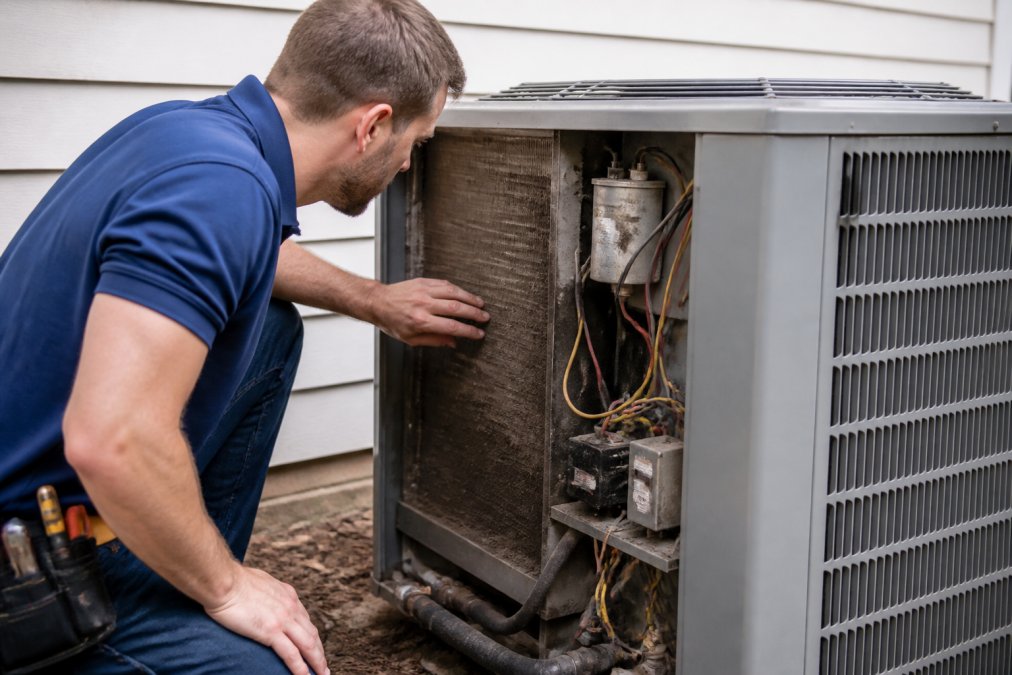
 how-to
Signs Your AC Needs Professional Maintenance
Table of Contents
- 9 Signs Your AC Needs Professional Maintenance
- 1. Weak or Warm Airflow
- 2. Unusual Noises: Rattling, Grinding, or Squealing
- 3. Rising Energy Bills Without Explanation
- 4. Short Cycling: Frequent On-and-Off Switching
- 5. Foul Odors or Burning Smells
- 6. High Indoor Humidity Levels
- 7. Water Leaks or Moisture Around the Unit
- 8. Thermostat Problems and Uneven Temperatures
- 9. Visible Ice on Evaporator Coils or Refrigerant Lines
- DIY Fix or Service Call? A Practical Decision Guide
- AC Maintenance Checklist for Homeowners
- How Often Should AC Be Serviced by a Professional?
- Average Cost of AC Maintenance and Repair vs. Replacement
- What to Expect During a Professional AC Maintenance Visit
- Frequently Asked Questions
Last Updated: August 10, 2026
9 Signs Your AC Needs Professional Maintenance
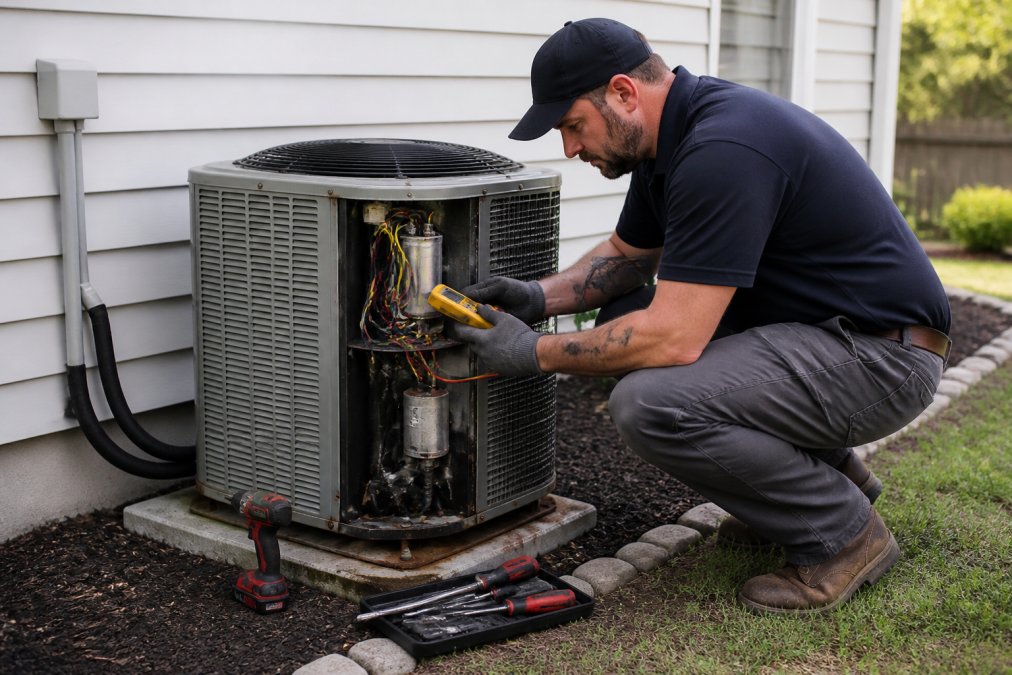
Recognizing warning signs early can mean the difference between a minor service call and a full system replacement. At Rich's Plumbing Heating & Air Conditioning, we've responded to thousands of HVAC calls across New Jersey, and most breakdowns were preventable. Below are nine reliable indicators that your air conditioning system needs professional attention, plus guidance on when to call for help.
1. Weak or Warm Airflow
Weak or warm airflow from your vents signals a problem. You should feel consistent, cool air from every vent. If airflow feels sluggish or room temperature, the cause could be a clogged air filter, failing blower motor, blocked ductwork, refrigerant leak, or dirty evaporator coil. Restricted airflow forces the system to work harder, accelerating wear and raising energy bills.
2. Unusual Noises: Rattling, Grinding, or Squealing
Your AC should run with a steady, low hum. Any deviation is a warning:
- Rattling points to loose components, debris in the condenser, or a failing motor mount
- Grinding signals worn bearings in the blower motor or compressor, which will seize if ignored
- Squealing usually means a belt or bearing issue
Grinding and squealing indicate mechanical wear that doesn't resolve on its own. Catching these early can save the compressor, the most expensive component.
3. Rising Energy Bills Without Explanation
A sudden spike in your utility bill without a change in usage habits signals system problems. An AC low on refrigerant, running with dirty coils, or struggling with airflow restriction must run longer cycles to reach the thermostat's target temperature, increasing electricity consumption.
According to the U.S. Department of Energy's energy efficiency guidance, a well-maintained AC system operates significantly more efficiently than a neglected one. Schedule a professional inspection before the problem compounds.
4. Short Cycling: Frequent On-and-Off Switching
Short cycling, when your AC turns on, runs for only a few minutes, shuts off, and restarts immediately, is not normal. This indicates an oversized system, low refrigerant levels, a malfunctioning thermostat, or a failing compressor. Each start-up cycle stresses the system, accelerates wear on electrical components and the compressor, shortens lifespan, and prevents full dehumidification cycles, leaving your home feeling clammy. An HVAC technician can diagnose the root cause quickly.
5. Foul Odors or Burning Smells
Odors from your vents require attention. A burning smell suggests an electrical problem, overheating wiring, failing capacitor, or burning motor. Turn the system off immediately and call for service, as this creates a fire hazard.
A musty or mildew smell points to mold or mildew growth in the evaporator coil housing or ductwork, affecting indoor air quality. This is common in humid New Jersey summers when drainage lines clog.
A rotten egg smell is rare but serious, potentially indicating a gas issue. Call immediately.
6. High Indoor Humidity Levels
An air conditioning system controls humidity, not just temperature. If your home feels sticky or muggy with the AC running, the system isn't doing its full job. Proper dehumidification happens as warm air passes over cold evaporator coils, causing moisture to condense and drain. If the system short cycles, has a refrigerant leak, or has a blocked drainage line, it won't run long enough or cold enough to pull adequate moisture from the air.
High indoor humidity promotes mold growth, makes allergens more active, and causes occupants to lower the thermostat further, increasing energy use.
7. Water Leaks or Moisture Around the Unit
Some condensation around your indoor air handler is normal. Puddles, dripping water, or moisture stains are not. The most common cause is a clogged condensate drainage line. When blocked by algae or debris, water backs up and overflows the drain pan, potentially damaging flooring, drywall, and the air handler.
Ice forming on refrigerant lines or evaporator coils and then melting is another source of unexpected water, signaling either a refrigerant leak or severely restricted airflow.
8. Thermostat Problems and Uneven Temperatures
If one room is comfortable while another feels hot, or if the thermostat display doesn't match what you feel, the problem might be the thermostat or something deeper. Thermostat calibration issues are common, particularly with older analog models. A thermostat that reads incorrectly causes the system to short cycle or run continuously.
Uneven temperatures across rooms often point to ductwork issues: leaks, blockages, or poor design. An HVAC technician can isolate whether the issue is the thermostat, ductwork, or unit itself.
9. Visible Ice on Evaporator Coils or Refrigerant Lines
Ice on your AC system is unmistakably wrong. The evaporator coils should be cold but never freeze solid. Ice formation typically results from restricted airflow over the coils (often from a clogged air filter) or a refrigerant leak causing coil temperatures to drop below freezing. When ice forms, it further blocks airflow, creating a worsening cycle that can damage the compressor.
If you see ice, turn the system off and let it thaw before calling for service. Running a frozen AC unit can burn out the compressor.
DIY Fix or Service Call? A Practical Decision Guide
Not every AC problem requires a service call. Knowing the difference saves money and prevents unnecessary delays.
Tap to easily schedule service today! →
| Problem | DIY Fix | Call a Pro |
|---|---|---|
| Weak airflow | Replace air filter | Blower motor issue, blocked ducts |
| System not cooling | Check thermostat settings | Refrigerant leak, compressor failure |
| Musty smell | Replace filter, check drain pan | Mold in coils or ductwork |
| Water near unit | Clear drain line with vinegar | Cracked drain pan, refrigerant ice |
| Short cycling | Check filter and vents | Electrical fault, refrigerant issue |
| Rattling noise | Check for loose panel screws | Internal mechanical wear |
| Ice on coils | Turn off, replace filter, let thaw | Refrigerant leak, restricted airflow |
| Burning smell | Turn off system immediately | Electrical fault, motor failure |
The rule is straightforward: if the fix involves refrigerant, electrical components, the compressor, or anything inside the air handler beyond the filter, call a professional. Refrigerant handling requires EPA Section 608 certification, and electrical work carries real safety risk.
AC Maintenance Checklist for Homeowners
Preventative maintenance is the most effective way to avoid emergency repairs. Many warning signs develop gradually, and a consistent routine catches them early.
Monthly tasks:
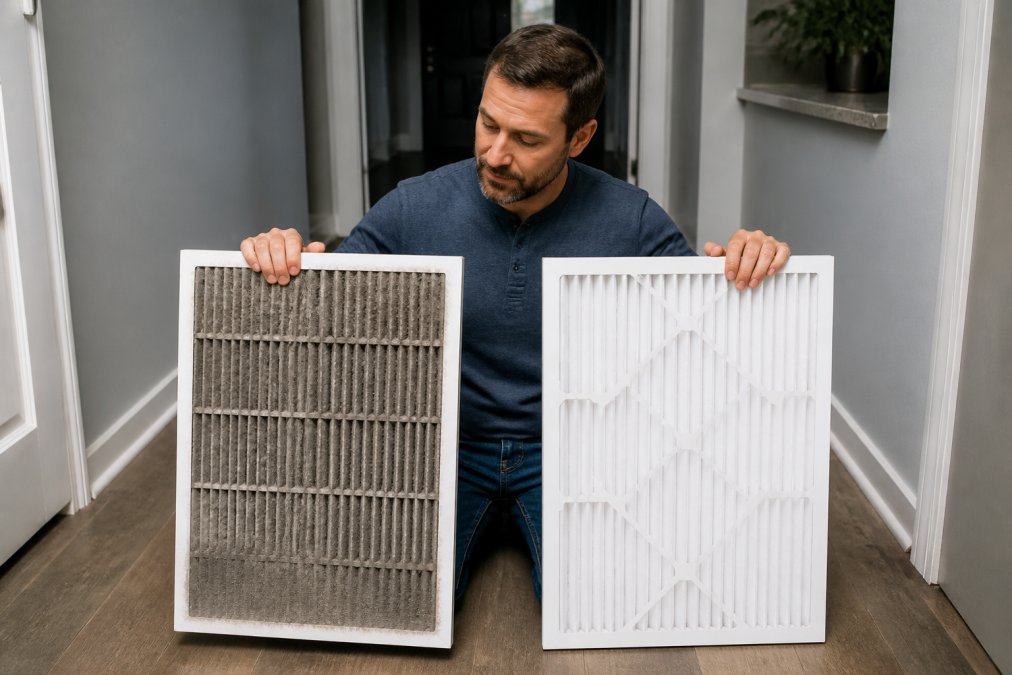
- Check and replace the air filter (every 1-3 months depending on filter type and household)
- Clear debris from around the outdoor condenser unit
- Check that all supply and return vents are open and unobstructed
Seasonal tasks (before cooling season starts):
- Test the thermostat for accurate temperature reading
- Check the condensate drain line for blockages
- Inspect refrigerant lines for visible ice or frost
- Listen for unusual noises during the first few cycles
- Verify that the outdoor condenser unit is level on its pad
- Clean the area around the indoor air handler
Annual professional service tasks (not DIY):
- Refrigerant level check and leak inspection
- Evaporator and condenser coil cleaning
- Blower motor inspection and lubrication
- Electrical component testing
- Ductwork inspection for leaks or damage
- System performance and efficiency testing
How Often Should AC Be Serviced by a Professional?
AC should be serviced by a professional at least once per year, ideally in the spring before the cooling season begins. This ensures the system is inspected, cleaned, and operating at full capacity before peak demand.
For most New Jersey homeowners, a single annual tune-up is sufficient. More frequent service is warranted for systems older than 10 years, homes with pets or high dust levels, systems running year-round, or any system that showed warning signs previously.
According to ENERGY STAR's guidance on HVAC maintenance, regular professional maintenance keeps systems running at rated efficiency and extends equipment lifespan. Skipping annual service accelerates the timeline to replacement.
Average Cost of AC Maintenance and Repair vs. Replacement
Specific pricing varies by system age, scope of work, and local conditions. Rich's Plumbing Heating & Air Conditioning offers free estimates so you know costs before committing.
The general cost hierarchy runs from least to most expensive:
- Routine annual maintenance tune-up
- Minor repairs (drain line clearing, filter housing repair, thermostat replacement)
- Moderate repairs (blower motor replacement, capacitor or contactor replacement, coil cleaning)
- Major repairs (compressor replacement, refrigerant leak repair and recharge, ductwork repair)
- Full system replacement
The repair vs. replacement decision hinges on system age and repair cost. A widely used industry guideline is the "5,000 rule": multiply the system's age by the estimated repair cost. If that number exceeds $5,000, replacement is generally the better investment. According to the Air Conditioning Contractors of America, systems older than 15 years with major component failures are often better candidates for replacement than repair.
What to Expect During a Professional AC Maintenance Visit
A professional AC maintenance visit is more thorough than most homeowners expect. A qualified HVAC technician will typically:
- Inspect and test the thermostat for accurate calibration
- Check refrigerant levels and inspect refrigerant lines for leaks
- Clean the evaporator and condenser coils to restore heat transfer efficiency
- Inspect the blower motor and fan blades for wear and proper operation
- Test electrical components including capacitors, contactors, and wiring connections
- Clear the condensate drainage line to prevent water backup
- Check airflow through ductwork and measure temperature differential
- Inspect the outdoor condenser unit for physical damage and proper clearance
- Run a full system performance test to verify cooling capacity and efficiency
The visit typically takes one to two hours. You should receive a written summary of findings, including any components showing early wear, so you can make informed decisions about repairs before they become emergencies.
Keeping an aging or stressed AC system running through a New Jersey summer without professional support is a gamble that rarely pays off. Rich's Plumbing Heating & Air Conditioning has served homeowners across New Jersey since 1989, with licensed, bonded, and insured technicians who can diagnose and resolve AC problems the same day. With a 60-minute response time for urgent calls and a 100% satisfaction guarantee, there's no reason to wait until a small warning sign becomes a full breakdown. Tap to easily schedule service today and get a free estimate before any work begins.
Frequently Asked Questions
How do I know if my AC needs to be serviced?
The clearest signs your AC needs professional maintenance include weak or warm airflow, strange noises like rattling or grinding, rising energy bills, short cycling, foul or burning smells, excess humidity indoors, and water pooling near the unit. If your system is doing any of these, schedule a service call before the problem worsens. An HVAC technician can diagnose issues with the compressor, blower motor, refrigerant level, or electrical components before they lead to a full breakdown.
How often should an AC unit be serviced by a professional?
Most HVAC professionals recommend scheduling professional AC maintenance once a year, ideally in spring before cooling season begins. Homes in New Jersey that run their systems heavily through humid summers may benefit from a second check in early fall. Annual service keeps the air conditioning system running efficiently, extends system lifespan, and helps catch refrigerant leaks, dirty evaporator coils, and mechanical wear before they turn into costly emergency repairs.
What is the $5,000 rule for AC repair vs. replacement?
The $5,000 rule is a simple guideline: multiply the age of your AC unit (in years) by the estimated repair cost. If the result exceeds $5,000, replacement is often the smarter investment. For example, a 10-year-old unit facing a $600 repair scores 6,000, suggesting replacement is worth considering. This rule helps homeowners weigh repair costs against the remaining useful life of the system. Contact a licensed HVAC technician for a professional assessment and free estimate before deciding.
Can I perform AC maintenance myself, or do I need a professional?
Homeowners can handle a few basic tasks: replacing air filters every 1-3 months, clearing debris from around the outdoor condenser unit, and checking that vents are open and unblocked. However, tasks like checking refrigerant levels, cleaning evaporator coils, inspecting electrical components, and testing thermostat calibration require a licensed HVAC technician. Attempting these without proper training risks damaging the system or voiding the manufacturer warranty. Annual professional inspection covers everything the DIY checklist cannot.