 ultimate-guide
Professional Drain Cleaning Cost in New Jersey: 2026 Guide
Table of Contents
- What Professional Drain Cleaning Cost in New Jersey Actually Covers
- Main Sewer Line Cleaning Cost vs. Sink and Floor Drain Service
- Plumbing Service Call Fees: What You Pay Before Any Work Starts
- Signs You Need Professional Drain Cleaning
- What Drives Drain Cleaning Prices: Clog Severity, Pipe Access, and Equipment
- Emergency Service, Seasonal Demand, and Insurance Coverage for Sewer Lines
- Frequently Asked Questions
Last Updated: September 13, 2026
What Professional Drain Cleaning Cost in New Jersey Actually Covers
Professional drain cleaning cost in New Jersey is not a single line item. It bundles a service call fee, diagnostic time, and the labor and equipment needed to clear the blockage. At Rich's Plumbing Heating & Air Conditioning, we've cleared drains across central New Jersey since 1989, and the biggest source of sticker shock is that homeowners expect one flat number.
The reality is a quote built from several parts. Consumer guidance on hiring a plumber from the New Jersey Division of Consumer Affairs recommends asking any contractor to itemize labor, parts, and fees before work begins. That itemization is exactly what separates a fair estimate from a padded one.
Flat-Rate Pricing vs. Hourly Rates
Most established plumbing companies now quote flat-rate pricing. You get one number before the technician starts, and it doesn't change if the job runs long. Hourly rates work the opposite way: you pay for time, so a stubborn clog costs more than an easy one.
Flat-rate pricing protects you from surprises and pushes the company to diagnose correctly, since a misdiagnosis eats their margin. The trade-off: flat-rate quotes bake in a cushion for harder jobs, so a simple sink clog may cost slightly more than strict hourly billing. For most homeowners, the predictability is worth it.
What a Standard Service Call Includes
A standard drain service call covers the trip, a visual inspection, and clearing one accessible blockage. It typically excludes video camera inspection, hydro-jetting, and pipe repairs, which are quoted separately.
- Travel and diagnostic time
- Clearing one drain or fixture
- Basic cleanup of the work area
- A recommendation for follow-up work, if needed
Main Sewer Line Cleaning Cost vs. Sink and Floor Drain Service
Main sewer line cleaning cost runs higher than a single-fixture job for one reason: scale. A main line carries everything from your home to the municipal sewer, and clearing it takes heavier equipment and more time.
A sink or floor drain sits at the end of a branch line, where a snake or small auger usually handles it. The main line often needs a larger auger, hydro-jetting equipment, or both, plus a cleanout access point.
| Job Type | Typical Equipment | Access Needed | Relative Cost |
|---|---|---|---|
| Sink or tub drain | Hand snake, small auger | Fixture drain | Lowest |
| Floor drain | Power auger | Floor cleanout | Moderate |
| Main sewer line | Large auger, hydro-jetter | Outdoor cleanout | Highest |
| Main line with root intrusion | Hydro-jetter plus cutter head | Cleanout plus camera | Highest, plus camera fee |
The equipment list is where the price gap lives. Hydro-jetting uses high-pressure water to scour the full pipe diameter, which clears grease buildup and root intrusion that a cable alone can't remove.
Plumbing Service Call Fees: What You Pay Before Any Work Starts
Plumbing service call fees are the fixed charge for getting a licensed plumber to your door, and they apply whether or not you approve the repair, the cost of a professional diagnosis.
Some companies waive the fee if you approve the work, others credit it toward the final bill, and a few charge it regardless, fair as long as they tell you upfront. The number varies by company, travel distance, and time of day.
Signs You Need Professional Drain Cleaning
Signs you need professional drain cleaning include slow drainage across multiple fixtures, gurgling sounds, recurring clogs, and sewage odors. When several drains slow at once, the problem is usually in the shared line, not the fixture.
Watch for these signals:
- Water backs up in one fixture when you use another
- Drains empty slowly even after a store-bought cleaner
- A persistent musty or sewage smell near floor drains
- Multiple clogs returning within weeks of each other
- Water pooling around a floor drain or basement cleanout
A single slow sink is often a local clog you can handle. Multiple slow fixtures point to a main line problem needing a licensed plumber and a camera inspection to confirm the blockage.
What Drives Drain Cleaning Prices: Clog Severity, Pipe Access, and Equipment
Clog severity, pipe access, and equipment choice drive most of the price variation. A soft grease clog near an accessible cleanout is a quick job; a root intrusion deep in a main line under a finished basement is not. Equipment is the single biggest swing factor, and most cost guides skip the mechanics behind it.
Why a Cable Snake and a Hydro-Jetter Land at Different Prices
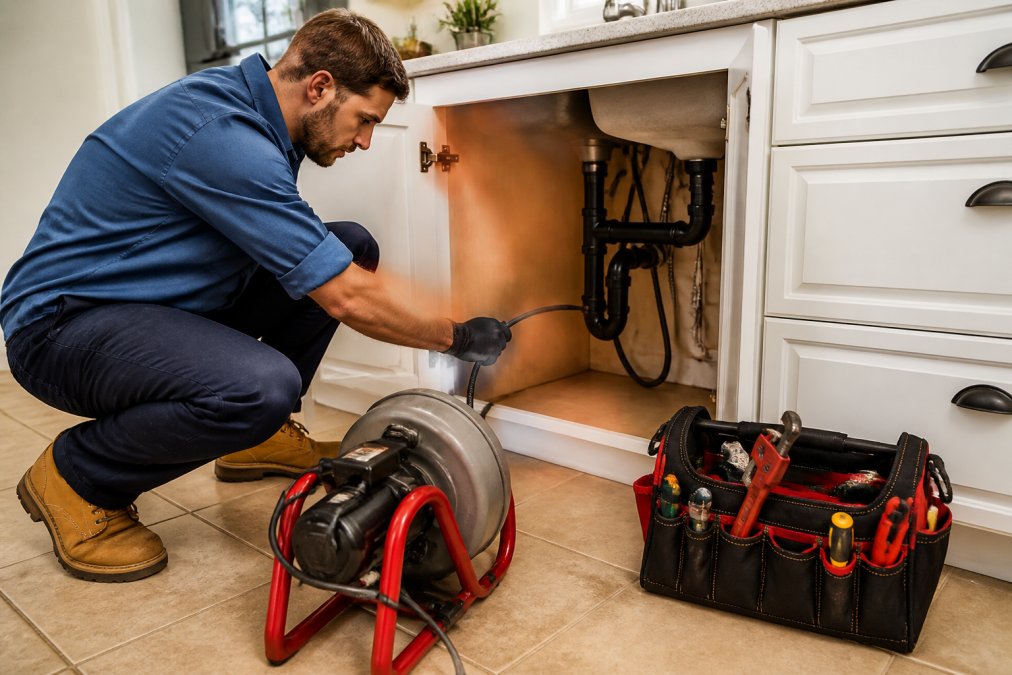
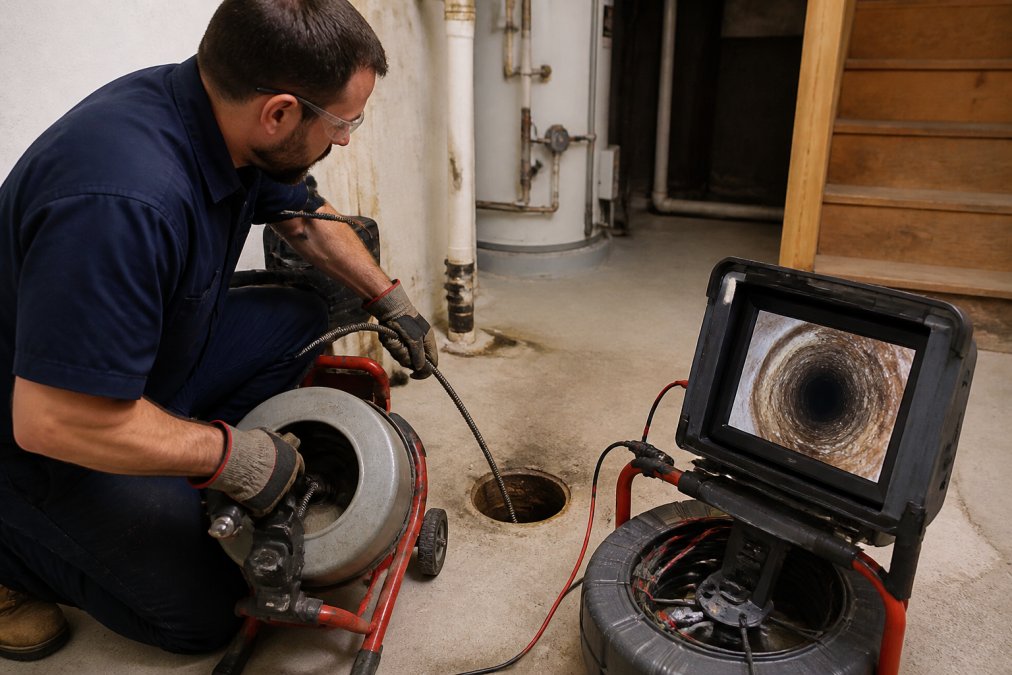
A drain snake, also called a cable machine or auger, spins a flexible steel cable through the pipe to break up or pull back a blockage. It handles localized clogs, hair, soap scum, paper, or a soft grease plug, through a fixture drain or cleanout. The machine is light, setup is fast, and a single-fixture job usually finishes in under an hour, which is why snake work sits at the low end of the price range.
Hydro-jetting pushes water at high pressure, commonly 3,000 to 4,000 PSI for residential main lines, through a hose fitted with forward and rearward nozzles (the EPA). The forward jet cuts into the blockage while the rear jets pull the hose and debris back toward the cleanout. Because the water scours the full interior diameter rather than punching a hole, it removes grease buildup, scale, and root mass that a cable can only pierce.
The price gap comes from four things:
- Equipment cost and wear. A hydro-jetter is a substantially more expensive machine than a cable auger, and the high-pressure hose and nozzles are consumables that wear out.
- Setup and water handling. The technician has to run a water supply, manage backflow, and often contain the debris that flushes out of the cleanout.
- Time on the line. A thorough hydro-jet pass takes longer than a snake pass because the goal is a clean pipe wall, not just an open channel.
- Skill and risk. High-pressure water in a fragile or already-cracked pipe can cause damage, so the operator has to read the line carefully. That is a higher-skill job.
A cutter head, a chain or blade attachment on a cable machine, sits between the two. It cuts roots rather than flushing them, and is often paired with a camera inspection to confirm the roots are gone and the pipe is intact.
When a Camera Inspection Gets Added to the Bill
A video camera inspection is usually a separate line item, and it turns a guess into a diagnosis. The technician feeds a camera on a push rod through the cleanout and watches the pipe interior on a monitor, revealing whether the blockage is grease, roots, a bellied section, a crack, or an offset joint.
A camera is worth the added cost when:
- The same line has clogged more than once in a short period.
- The home is older and the pipe material is uncertain, clay tile and cast iron behave very differently from PVC.
- A root intrusion is suspected and the technician needs to confirm the pipe is still structurally sound after cutting.
- A repair or replacement is being considered, because no reputable contractor should quote a major line repair without seeing the inside of the pipe first.
Skipping the camera on a repeat clog often means paying for the same clearing twice; paying once usually costs less than a second emergency call.
How Pipe Diameter and Cleanout Access Affect Labor
Pipe diameter and cleanout access change the labor required more than most homeowners expect. A wider pipe needs a larger, heavier machine, and a missing or buried cleanout forces the technician to find or create another access point.
Access is the hidden cost driver. An easily reached cleanout in an unfinished basement keeps the job simple; one buried under landscaping, or a home with no exterior cleanout, adds time and sometimes requires pulling a toilet to reach the line.
Pipe material matters too. Older clay tile and cast iron are more prone to root intrusion, scale, and joint failure than PVC, and a fragile pipe limits how aggressively a technician can run a cable or jetter, caution that translates into time and cost.
Before you book, locate your cleanout and clear anything blocking it. A technician who can walk straight to the access point finishes faster, and faster often means cheaper.
Emergency Service, Seasonal Demand, and Insurance Coverage for Sewer Lines
Emergency service, seasonal demand, and insurance coverage for sewer lines all shift what you pay. Emergency rates apply after hours, on weekends, and on holidays, because the company pays overtime to get someone to your door. The premium is real, but it is only one of three cost layers most homeowners never plan for.
When a Permit or Inspection Is Required
Routine drain cleaning, snaking or jetting an existing line to clear a blockage, generally does not require a permit. The work is maintenance on a pipe that already exists.
A permit typically becomes part of the conversation when the job crosses from cleaning into repair or replacement. Common triggers include:
- Replacing a section of main sewer line or a damaged lateral.
- Installing a new cleanout where none existed.
- Repairing or replacing a sewer line that connects to the municipal system.
- Any work that alters the path, material, or diameter of the line.
When a permit is required, a municipal plumbing inspection usually follows the work. That inspection is a separate cost and scheduling step that can add days to the project, but it is also the homeowner's protection: an inspected repair is documented, and documentation matters at resale.
Because requirements vary by municipality and scope of work, ask the contractor directly whether the job needs a permit and who pulls it. A contractor who hesitates is a warning sign; one who explains the inspection step before you sign is doing it right.
How Seasonal Demand Moves Pricing
Drain cleaning demand is not flat across the year, and pricing follows demand.
Cold snaps drive one cluster of calls. When temperatures drop, the risk of a frozen or blocked line rises, and empty homes or shallow buried lines are especially exposed. Those calls tend to be urgent, landing in the emergency tier.
Heavy spring rain drives a second cluster. Saturated ground and higher water tables push water into aging or cracked sewer lines, and a line that was marginal all winter suddenly backs up. Spring also resumes root growth, so root-related main line calls climb.
The practical takeaway: the shoulder seasons, late fall and mid-summer, when call volume is lower, are the cheapest and easiest windows to book preventative maintenance, avoiding both the emergency premium and peak-demand wait times.
What Homeowner Insurance Typically Does and Does Not Cover
The insurance question is the one most homeowners get wrong, and the distinction is narrow but important.
Many standard homeowner policies cover sudden and accidental water damage from a sewer backup, ruined flooring, drywall, or belongings inside the home (iii.org). What they typically do not cover is clearing the blockage itself, because routine maintenance and gradual clogging are treated as homeowner responsibilities rather than sudden events.
A few things worth checking in your own policy documents:
- Whether sewer backup coverage is included at all, or offered only as an endorsement you have to add.
- Whether the policy covers damage from a backup that originates off your property, such as a municipal main.
- Whether there is a separate limit for sewer backup that is lower than your general water damage limit.
- Whether the policy distinguishes between a sudden blockage and a slow, recurring one.
Coverage varies widely by policy and carrier, so the only reliable answer is in your own documents. If a main line blockage has already caused interior damage, document everything before cleanup and call your insurer before authorizing the repair.
Homeowners who want to avoid emergency pricing: schedule an annual drain maintenance visit in a shoulder season, when scheduling is easier and rates are steadier.
Frequently Asked Questions
How much does a professional drain cleaner cost?
The professional drain cleaning cost in New Jersey depends on several variables: the type of drain, clog severity, pipe access, and the equipment required. Simple sink clogs cost less than main sewer line blockages that need hydro-jetting or video camera inspection. Because every home is different, Rich's Plumbing Heating & Air Conditioning provides free estimates for most services so you know the price before work begins.
What factors influence the cost of drain cleaning in this region?
Key factors include clog severity, pipe diameter, cleanout access, and whether the blockage sits in a fixture drain or the main sewer line. Root intrusion and grease buildup often require hydro-jetting rather than a basic drain snake, which affects labor costs. Flat-rate pricing means the quote covers the full job, while hourly rates can climb if the clog is stubborn. Emergency service after hours also carries a higher rate.
Is professional drain cleaning worth the investment?
Yes, for recurring or deep blockages. Store-bought chemicals and drain snakes often clear only part of the clog, leaving grease and scale behind that causes another backup within months. A licensed plumber uses a video camera inspection to confirm the line is fully clear, which prevents repeat service calls. Preventative maintenance on a schedule costs less over time than repeated emergency visits.
What do plumbers charge per hour for drain services?
Hourly rates vary by market and job complexity, and many plumbing companies now use flat-rate pricing instead of hourly billing. Flat-rate pricing gives you a fixed quote before work starts, so the final bill does not change if the job takes longer than expected. Ask whether the service call fee is applied toward the repair. Rich's Plumbing Heating & Air Conditioning offers free estimates for most services so you can compare before committing.
A slow drain rarely fixes itself, and waiting usually turns a simple clearing job into an emergency. When you want a straight answer on what the work involves, Rich's Plumbing Heating & Air Conditioning provides free estimates on most services, a 100% satisfaction guarantee, and a family-owned team that has served New Jersey since 1989. Get started with Rich's Plumbing Heating & Air Conditioning and schedule a service call today.