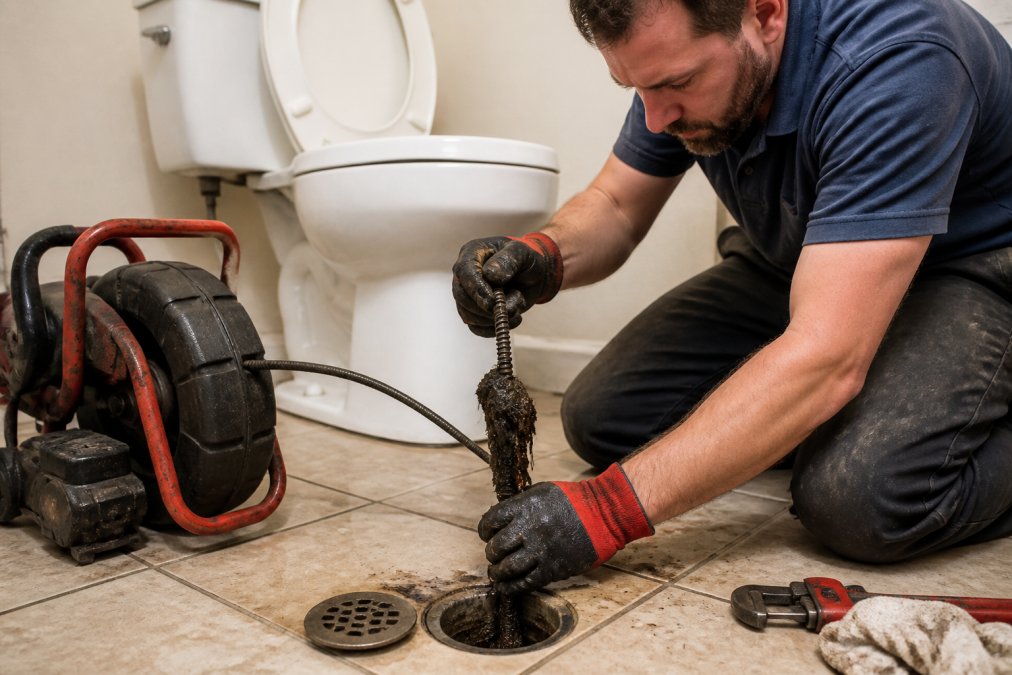
 how-to
Preventing Recurring Plumbing Clogs: A Homeowner's Guide
Table of Contents
- Why Your Drains Keep Clogging (It's Not Just Grease)
- How to Clear a Slow Drain Before It Becomes a Recurring Plumbing Clog
- Preventing Grease Buildup in Kitchen Pipes: Habits That Stick
- Signs of Main Sewer Line Blockage You Should Never Ignore
- Bacterial vs. Chemical Drain Cleaners: What's Safe for Your Pipes
- Water Hardness, Mineral Buildup, and Aging Pipes
- Eco-Friendly Maintenance Schedules and Preventative Habits
- When to Call a Professional for Recurring Plumbing Clogs
- Frequently Asked Questions
Last Updated: September 14, 2026
Why Your Drains Keep Clogging (It's Not Just Grease)
Preventing recurring plumbing clogs starts with understanding that a single fix rarely solves the problem. Most homeowners blame grease, but repeat blockages usually trace back to pipe age, water mineral content, drain line slope, and daily habits.
Treating each clog as isolated is a mistake. When the same sink backs up every few months, that pattern points to a structural or habitual cause a quick fix won't resolve.
The three most frequent drivers of repeat clogs are:
- Grease and fat accumulation that coats pipe walls and narrows the passage over time
- Mineral buildup from hard water, which creates rough surfaces where debris catches
- Pipe corrosion and aging, especially in older homes where cast iron or galvanized steel has roughened internally
Each requires a different response. Clearing a drain without addressing the cause is why so many homeowners call a plumber again within a year.
How to Clear a Slow Drain Before It Becomes a Recurring Plumbing Clog
Clear a slow drain by acting early, while the obstruction is still soft and localized.
Start with the gentlest method and escalate only if needed:
- Boil a pot of water and pour it slowly down the drain in two or three stages, giving each pour time to work
- Mix baking soda and vinegar (about half a cup each), pour it in, wait 15 minutes, then flush with hot water
- Remove and clean the pop-up stopper or drain cover, since hair and soap scum collect right at the opening
- Use a plunger with a good seal to create pressure and dislodge the blockage
- Run a drain snake if the first four steps don't restore full flow
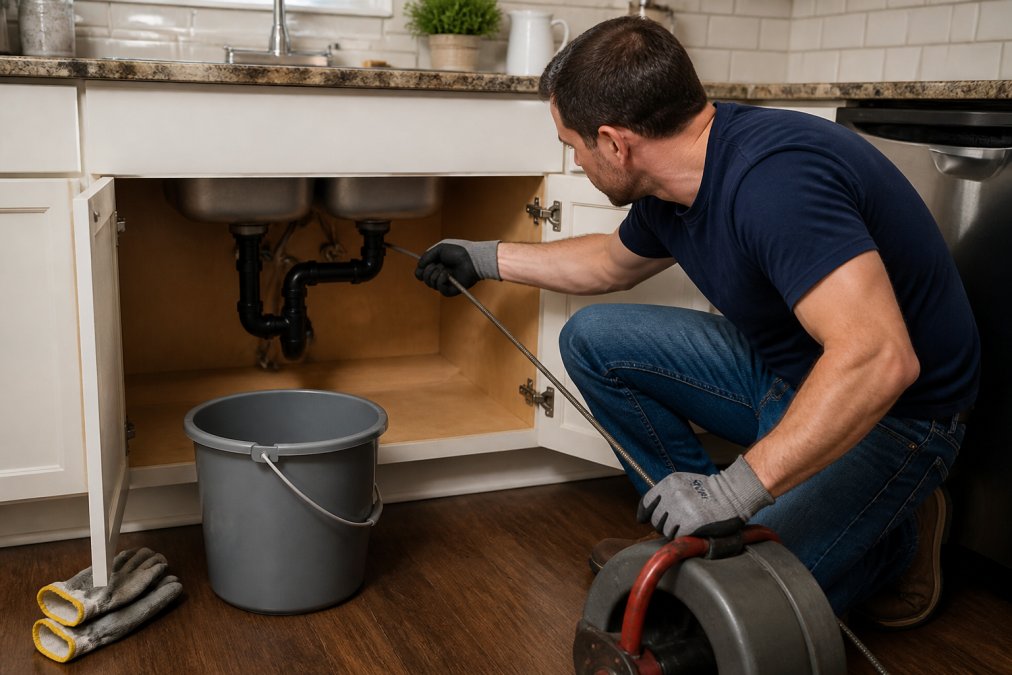
If water still pools after all five steps, the obstruction is likely past the trap in the branch line, a job for professional drain cleaning.
Tools That Actually Work: Drain Snake, Plunger, and Hot Water Flush
A drain snake is the most reliable DIY tool for a stubborn clog because it physically breaks up the obstruction. A plunger works on soft blockages near the trap, and a hot water flush is your best preventative tool but won't cut a solid grease plug, plunging a grease-clogged kitchen line often just compresses the blockage further down.
How to use each one:
- Plunger: Block the second drain opening in a double sink with a wet rag or a stopper so you're not pushing air out the other side. Use a flange (cup) plunger for sinks and a bell plunger for toilets. Give 15 to 20 firm strokes, then pull up sharply on the last one to break the seal and pull debris back.
- Hand auger (drum snake): Feed the cable into the drain until you feel resistance, then tighten the locking screw and crank clockwise. You're trying to hook or break up the clog, not drill through it. Feed more cable as the resistance gives. Most hand augers reach 15 to 25 feet, which covers the trap and the branch line for a single fixture.
- Hot water flush: Run water as hot as the fixture allows (not boiling on PVC, since sustained near-boiling water can soften some plastic joints) for 60 to 90 seconds after the drain is flowing. This melts the thin grease film before it hardens.
Safety note: never mix a chemical drain cleaner with a plunger or snake, plunging a caustic product sitting in the trap can splash it onto your skin or eyes (What’s in drain cleaner and what happens if you drink it?). Flush with water first, and wear gloves and eye protection.
DIY Diagnostic Tools to Find the Blockage
You can narrow down where a clog lives without opening a wall: one fixture backing up means a local clog, while multiple drains slowing at once means the main line.
The most useful DIY diagnostic is a drain camera (borescope), a flexible, LED-lit cable that connects to your phone. Consumer models run 16 to 33 feet, enough to inspect a trap, branch line, and the first stretch of a main line through a cleanout. The diagnostic logic:
- One fixture slow, others fine: the clog is in that fixture's trap or branch line. A hand auger usually clears it.
- Two or more fixtures on the same floor slow at once: the clog is in the shared branch or the stack. Snaking one sink won't touch it.
- Lowest fixtures in the home back up first (basement floor drain, laundry standpipe): the clog is in the main line or the sewer lateral.
- Gurgling from a fixture you aren't using: this points to a venting problem, not a clog. A blocked or improperly installed vent lets the drain pull air through the wrong fixture, and no amount of snaking fixes it.
To use a camera, find the cleanout, a capped Y-fitting, usually in the basement, crawlspace, or just outside the foundation. Remove the cap (have a bucket ready), feed the camera in, and watch for standing water, hair or grease masses, root tendrils, or a bellied (sagging) pipe section.
A camera won't clear anything, but knowing whether you have a 3-foot grease clog or a root mass 20 feet into the lateral tells you whether to grab a hand auger or call for hydro-jetting.
Preventing Grease Buildup in Kitchen Pipes: Habits That Stick
Preventing grease buildup in kitchen pipes comes down to what never enters the drain. Grease, oil, and fat are liquids when hot and solids when cool, so they coat pipe walls and harden as they travel.
The habits that actually work:
- Pour cooled grease into a can or jar, then throw it in the trash, never down the sink
- Wipe pans and plates with a paper towel before washing them
- Run cold water while you wash dishes, not hot, so any residual grease solidifies and moves through rather than coating the walls
- Flush the kitchen drain weekly with hot water to clear the thin film that builds up
Grease Disposal and Garbage Disposal Best Practices
A garbage disposal is not a trash can, and treating it like one is one of the fastest routes to a recurring plumbing clog. Disposals handle soft food scraps and small grease residue, nothing more.
Keep these out of the disposal entirely: coffee grounds, eggshells in bulk, fibrous vegetables like celery and corn husks, rice and pasta, and bones. Run cold water for 15 to 20 seconds before and after each use so particles clear the trap fully (FAQs: Garbage Disposal Support and Advice).
Signs of Main Sewer Line Blockage You Should Never Ignore
Signs of main sewer line blockage include multiple slow drains, sewage odors, gurgling toilets, and water backing up in unexpected places like a basement floor drain or shower, meaning the problem has moved past a single fixture.
The clearest indicator is simultaneity: when every drain slows at once, the obstruction sits in the main line, and sink-level snaking won't fix it. Other signs:
- Wastewater backing up into tubs or showers when you flush a toilet
- A persistent sewer smell in the basement or yard
- Soggy patches or unusually green grass over the sewer line
- Repeated clogs in the lowest drains of the home
These symptoms worsen quickly, and ignoring them can lead to sewage backup inside the house.
Root Intrusion and Sewer Line Health
Tree and shrub roots are one of the most overlooked causes of recurring plumbing clogs. Roots seek moisture, enter sewer lines through tiny cracks or loose joints, and grow into a mass that catches debris.
A root-invaded sewer line won't respond to chemical treatments or snaking for long, because the root regrows. A professional camera inspection can confirm root intrusion and show exactly where the line is compromised.
Bacterial vs. Chemical Drain Cleaners: What's Safe for Your Pipes
Bacterial drain cleaners are safer than chemical cleaners because they use enzymes and live cultures to digest organic matter without damaging pipes. Chemical cleaners rely on corrosive agents that generate heat and can eat through older pipe materials.
Here's how they compare:
| Cleaner Type | How It Works | Best For | Main Risk |
|---|---|---|---|
| Bacterial / bio-enzymatic | Digests organic buildup over time | Preventative maintenance | Slow-acting |
| Chemical caustic | Dissolves clogs with heat | One-time emergency clogs | Corrodes pipes, dangerous fumes |
| Chemical acidic | Eats through organic blockages | Rare, stubborn clogs | Damages fixtures, unsafe |
Bio-enzymatic cleaners are better for routine use because they work with your pipes instead of against them. Corrosive chemicals can weaken pipe walls over repeated use, especially in older plumbing.
Water Hardness, Mineral Buildup, and Aging Pipes
Hard water leaves mineral deposits that narrow pipe diameter and roughen interior surfaces where debris snags. Over years, this buildup acts like a permanent trap, catching hair, soap scum, and grease that would otherwise pass through.
Most homeowners never connect this to their clogs. If your home has hard water, you'll likely see white scale around faucets and showerheads, the same material coating the inside of your pipes.
How hardness is measured. Water hardness is reported in grains per gallon (gpg) or milligrams per liter (mg/L) of calcium carbonate. The U.S. Geological Survey classifies water as soft below about 1 gpg, moderately hard around 3.5 to 7 gpg, hard from 7 to 10.5 gpg, and very hard above 10.5 gpg (Hardness of Water). You can look up your local water supplier's annual consumer confidence report (often published online) or test a sample yourself with a strip or drop kit. If your number is in the hard-to-very-hard range, mineral scale is a real contributor to your recurring clogs.
What scale actually does. Calcium and magnesium precipitate out of hard water as it warms or sits, forming a crust inside pipes. That crust reduces the pipe's effective diameter and roughens the surface: a smooth pipe lets hair and grease slide through, while a scaled pipe gives them something to grab. Over a decade, scale alone can cut flow noticeably in a half-inch branch line, and once debris starts catching, the buildup accelerates.
Pipe material and age change the fix. The right response depends on what your pipes are made of:
- Galvanized steel (common pre-1960s): rusts from the inside, and the rust flakes combine with scale to form a rough, narrowing channel. These lines often need replacement rather than cleaning.
- Cast iron (common mid-century): develops internal tuberculation, knobby rust nodules, and rough patches that grab debris. Older cast iron also sags and cracks at joints, which is where roots get in.
- Copper: generally smooth and scale-resistant, but hard water still leaves deposits over time, and older copper can develop pinhole leaks.
- PEX and PVC/ABS (modern): smooth and largely unaffected by scale, so recurring clogs in these systems usually trace back to habits, slope, or the main line rather than the pipe itself.
What you can do about it. A whole-house water softener or scale-reducing conditioner removes or alters minerals before they reach your pipes. For existing scale, a plumber can sometimes descale mechanically or with a mild acid flush, but aggressive acid is hard on older metal. If your home has very hard water and original galvanized or cast iron, no maintenance schedule will fully stop the clogs; the pipe itself is the root cause, and a camera inspection plus a replacement estimate is the real fix.
Pipe corrosion compounds the problem: when mineral buildup meets internal rust or rough cast iron, even good habits can't keep drains clear indefinitely, a plumbing inspection can tell you whether the drainage system itself is the root cause.
Eco-Friendly Maintenance Schedules and Preventative Habits
An eco-friendly maintenance schedule prevents recurring plumbing clogs without harsh chemicals: consistent, low-impact habits on a regular timetable.
Follow this routine:
- Weekly: Flush kitchen and bathroom drains with hot water
- Monthly: Treat drains with a bio-enzymatic cleaner to break down organic film
- Seasonally: Clean drain strainers and pop-up stoppers, and check for slow drainage
- Annually: Schedule a professional plumbing inspection to check the main line and overall system integrity
Drain strainers and catchers do more for preventative maintenance than any single product. Combined with periodic flushing and monthly enzyme treatment, they keep pipes flowing without corrosive chemicals.
When to Call a Professional for Recurring Plumbing Clogs
Call a professional when the same drain clogs more than twice a year, when multiple fixtures back up at once, or when home remedies stop working. These patterns signal a problem in the main line, venting, or pipe structure itself.
A licensed plumber can run a camera inspection, confirm root intrusion or pipe corrosion, and use hydro-jetting to clear the line thoroughly rather than patch the symptom, addressing the cause instead of the latest clog.
At Rich's Plumbing Heating & Air Conditioning, our licensed and insured team has handled plumbing and drain issues for families across New Jersey for over 30 years. We offer free estimates for most services, emergency availability, and a 60-minute response time for urgent problems, all backed by a 100% satisfaction guarantee. If you've had a plumber patch the same clog before, we diagnose the underlying cause so you're not calling again in six months.
Frequently Asked Questions
Why does my plumbing keep getting clogged?
Recurring plumbing clogs usually come from three sources: grease and soap scum coating pipe walls in the kitchen, hair and biofilm in bathroom drains, or a structural issue like pipe corrosion, mineral buildup, or a main line blockage. If you're clearing the same drain every few months, the clog is likely deeper in the drainage system or your pipes have lost their smooth interior surface. A plumbing inspection can identify whether it's a habit problem or a pipe problem.
Are chemical drain cleaners safe for my pipes?
Chemical drain cleaners use corrosive agents that generate heat and can damage older pipes, pop-up drains, and garbage disposal components. They may clear the immediate clog but often leave behind a rough pipe surface that catches debris faster, which is why clogs return. Bacterial drain cleaners and bio-enzymatic cleaners are gentler alternatives that break down organic matter over time. For a recurring clog, mechanical methods like a drain snake or professional hydro-jetting are safer for your plumbing system integrity.
How do I keep my drain pipes from clogging?
Install drain strainers in every sink and shower to catch hair and food particles. Never pour grease, oil, or fat down the drain; wipe pans with a paper towel and dispose of it in the trash. Run hot water for 30 seconds after each use to flush soap scum and residue. Once a month, pour a kettle of boiling water followed by a bio-enzymatic cleaner down kitchen drains. Schedule a plumbing inspection every 18 to 24 months to catch pipe corrosion and mineral buildup early.
When should I call a professional for recurring clogs?
Call a licensed plumber when the same drain clogs more than twice in six months, when multiple fixtures back up at once, when you notice a sewer smell in the house, or when water drains slowly throughout the entire home. These point to a main line blockage, venting issues, or pipe corrosion that DIY tools cannot fix. A professional can perform a camera inspection and hydro-jetting to clear the line completely rather than patching the symptom.
Recurring clogs rarely have a single cause, and that's exactly why quick fixes keep failing. If your drains are backing up again, Rich's Plumbing Heating & Air Conditioning can run a proper inspection, clear the line with hydro-jetting, and identify whether aging pipes, root intrusion, or mineral buildup is driving the problem. Get started with Rich's Plumbing Heating & Air Conditioning and put an end to the cycle of repeat clogs.