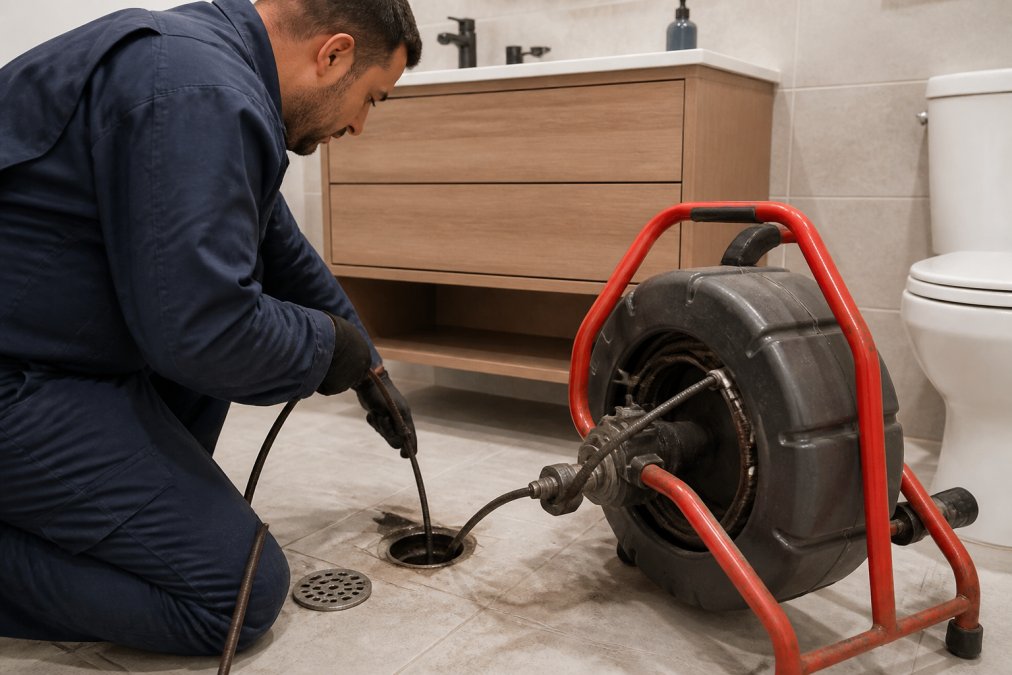
 comparison
Is Professional Drain Cleaning Worth It?
Table of Contents
- When Professional Drain Cleaning Becomes Necessary
- How to Clear a Slow Drain: DIY vs. Professional Approaches
- Hydro Jetting vs. Snaking: Which Method Solves Your Problem
- Cost of Professional Drain Cleaning and Long-Term Savings
- Risks of Chemical Drain Cleaners and Pipe Damage
- Preventative Maintenance vs. Emergency Service
- Frequently Asked Questions
Last Updated: August 27, 2026
When Professional Drain Cleaning Becomes Necessary
Slow drains and stubborn clogs are frustrating household problems, but knowing when to call a professional versus attempting DIY fixes can save you money and prevent costly pipe damage. Professional drain cleaning addresses issues that simple fixes can't solve and is often the only way to truly restore your plumbing system to full health.
At Rich's Plumbing Heating & Air Conditioning, we've handled thousands of drain emergencies. Homeowners often wait too long before calling for help, allowing minor clogs to become major problems. Clear signs you need professional intervention include water backing up into multiple fixtures, persistent foul odors from drains, or recurring clogs in the same location month after month.
Debris accumulates inside pipes over time, hair, soap scum, grease, mineral deposits, and tree roots all contribute to blockages that worsen without treatment. A slow drain today can become completely impassable within weeks. The cost-benefit calculation shifts dramatically depending on severity: a single clogged sink might warrant a DIY attempt, but a main sewer line blockage affecting your entire home's plumbing system is never worth amateur handling.
How to Clear a Slow Drain: DIY vs. Professional Approaches
You have three main options when facing a clogged drain: the plunger, chemical cleaners, or mechanical removal tools.
The plunger method works for minor blockages near the drain opening. It's free if you already own one and causes no pipe damage. The limitation is clear: plungers can't reach clogs deeper in the line. If nothing moves after two minutes of vigorous plunging, you've hit its limit.
Chemical drain cleaners like Green Gobbler Main Line Opener dissolve organic matter without physical effort and are inexpensive. However, caustic formulas can damage older pipes, harm septic systems, and create toxic fumes. Most importantly, they treat the symptom, not the cause, your drain might flow temporarily, but underlying debris accumulation continues.
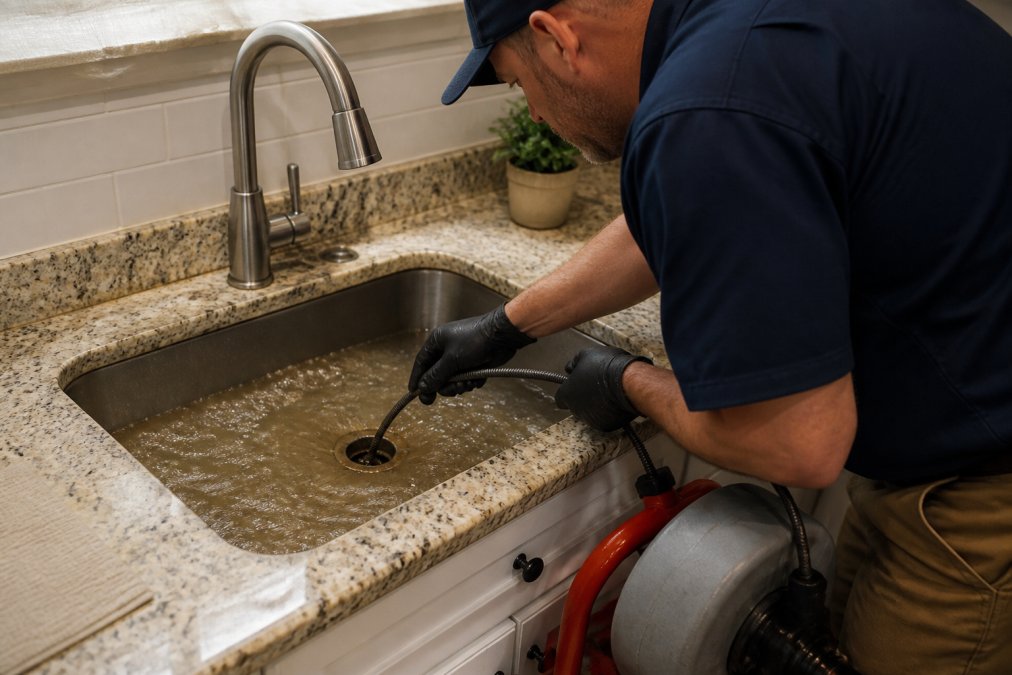
DIY drain snakes and augers (available for rent at roughly $300-400 per week) let you mechanically remove blockages yourself. This works for many clogs and avoids chemicals entirely. The catch: incorrect technique can damage your pipes, especially vulnerable PVC. You also need to know your pipe material and understand blockage depth.
Professional drain cleaning skips these compromises. Licensed plumbers have industrial-grade equipment, training in different pipe materials, and the ability to diagnose root causes. They assess whether your pipes are PVC, cast iron, galvanized steel, or clay, information that determines safe methods. For recurring clogs, main line issues, or failed DIY attempts, professional drain cleaning delivers value that DIY tools cannot match.
Hydro Jetting vs. Snaking: Which Method Solves Your Problem
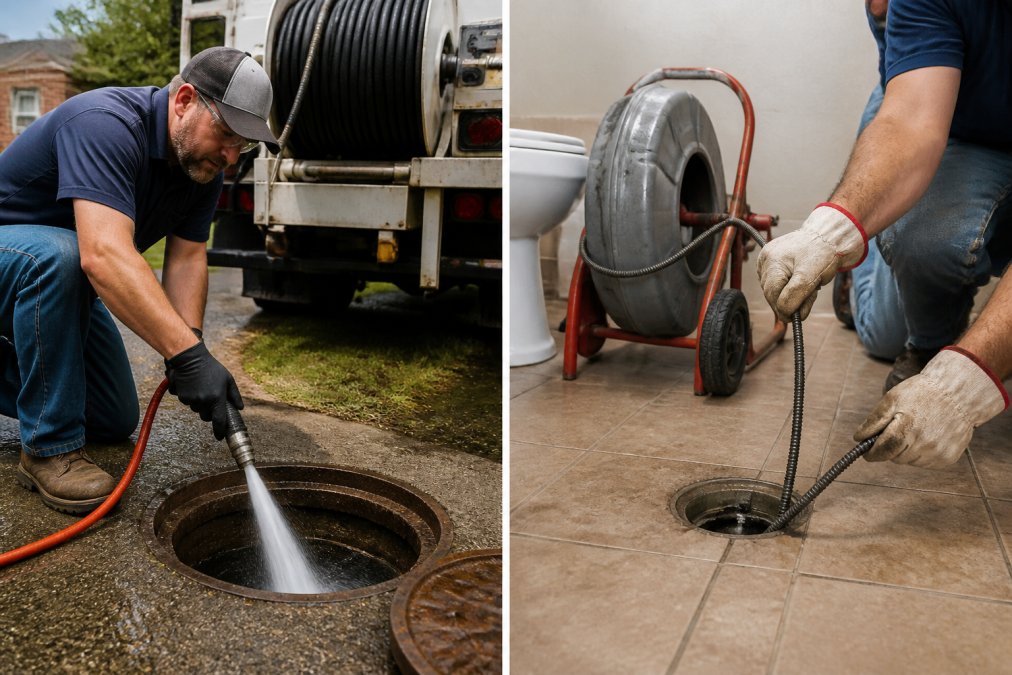
When professionals arrive to clear your drain, they typically choose between two proven techniques: drain snaking and hydro jetting.
Drain snaking uses a motorized cable with a rotating head that physically breaks apart blockages. This method works well for hair clogs, soap buildup, and partial blockages. It's faster than hydro jetting, usually takes 30 minutes to an hour, and costs less. Professional snaking is far more effective than DIY versions because plumbers use heavier equipment and have the skill to avoid pipe damage.
The limitation is that snaking doesn't clean pipe walls, the auger punches through the blockage but leaves residue clinging to the interior. For recurring clogs, the problem returns within months. Snaking also doesn't work well on severe blockages, tree root intrusions, or hardened grease buildup.
Hydro jetting uses pressurized water, typically between 4,000 and 35,000 PSI, to blast through blockages and scour the pipe interior. This method is far more thorough, removing not just the clog but the debris accumulation that caused it. Hydro jetting excels at handling grease buildup, mineral scale, tree root intrusions, and recurring blockages throughout your plumbing system. It's the standard for main sewer line cleaning because it provides the most comprehensive solution. The trade-off is cost and time.
The choice depends on your situation. For a single clogged bathroom sink caused by hair, snaking is efficient and cost-effective. For a main sewer line with tree root intrusion, recurring kitchen clogs from grease, or a complete plumbing system that hasn't been cleaned in years, hydro jetting delivers results snaking cannot achieve. Many professionals start with a camera inspection to assess severity before recommending one method.
Cost of Professional Drain Cleaning and Long-Term Savings
The financial case for professional drain cleaning becomes clearer when you calculate total cost of ownership over several years rather than just the upfront service fee.
Professional drain cleaning costs depend on blockage severity, whether it's a simple fixture drain or main sewer line, the method used (snaking versus hydro jetting), and whether a camera inspection is needed. Rich's Plumbing Heating & Air Conditioning provides free estimates so you understand exactly what you're paying for before work begins.
The real savings come from prevention. A homeowner who ignores slow drains eventually faces an emergency: complete main sewer line blockage, water backing up into the house, or pipe rupture requiring excavation and replacement. Main sewer line repairs easily exceed $5,000 and can reach $15,000 or more if excavation is required (the CDC). A preventative professional drain cleaning costs a fraction of that.
If you spend $200-400 on professional drain cleaning every 2-3 years, you're investing roughly $100-150 per year in preventative maintenance. Compare that to main line replacement costs, and the value becomes obvious. You're also avoiding sewage backup into your home, associated health hazards, and emergency service calls that always cost more than scheduled appointments.
The most cost-effective approach is preventative maintenance: professional drain cleaning every 2-3 years combined with good habits (avoiding pouring grease down drains, using drain screens, not flushing non-degradable items).
Risks of Chemical Drain Cleaners and Pipe Damage
Chemical drain cleaners pose real risks that many homeowners underestimate. While products like Green Gobbler market themselves as safer alternatives, all chemical solutions carry hazards worth understanding.
The pipe damage risk is substantial. Older plumbing systems with cast iron, galvanized steel, or clay pipes are vulnerable to chemical corrosion. Even "safe" formulas can eat through pipe walls over time. PVC pipes can soften and weaken when exposed to certain chemicals. Once pipe integrity is compromised, you face leaks, water damage, and expensive repairs.
Tap to easily schedule service today! →
Septic system damage is another serious concern. If your home uses a septic system, chemical drain cleaners can kill beneficial bacteria that break down waste in your tank, disrupting the entire system and requiring expensive tank pumping or replacement (the CDC).
Health and safety hazards shouldn't be ignored. Chemical fumes can cause respiratory irritation, eye damage, and chemical burns. If a chemical cleaner doesn't work and you call a plumber, you've created a dangerous situation with hazardous fumes and potential chemical reactions.
The effectiveness problem is often overlooked. Chemical cleaners work only on organic debris. They're useless against mineral scale, tree roots, or solid obstructions. If your clog isn't purely organic, the chemical simply sits unused.
Professional drain cleaning avoids all these risks. Mechanical methods, snaking and hydro jetting, remove blockages without introducing chemicals into your plumbing system, septic tank, or home environment. They work on any type of clog and actually solve the problem.
Preventative Maintenance vs. Emergency Service
The distinction between preventative maintenance and emergency service explains why some homeowners pay far more than others for drain care.
Preventative maintenance means scheduling professional drain cleaning on a regular schedule, typically every 2-3 years, before problems develop. During a preventative visit, a plumber can inspect your entire plumbing system, identify slow drains before they become clogs, remove debris accumulation, and catch early signs of pipe damage or tree root intrusion. A plumber can also advise on habits that damage plumbing and recommend drain screens, water softening, or landscaping changes if tree roots threaten your sewer line.
Emergency service is what you get when you ignore warning signs until your plumbing fails completely. Water backs up into your shower when you flush the toilet. Multiple fixtures stop draining. At this point, you need immediate professional intervention, and emergency calls always cost more than scheduled appointments. Many plumbers charge premium rates for after-hours service, weekend calls, or urgent situations requiring same-day response.
Rich's Plumbing Heating & Air Conditioning provides emergency drain service with a 60-minute response time because plumbing failures don't wait for business hours. But preventing the emergency is always preferable to managing the crisis.
The financial case is straightforward: preventative maintenance costs roughly $200-400 every few years. Emergency drain service for a main line blockage can cost $500-1,500 or more. If the emergency requires pipe repair or replacement, costs multiply dramatically. Preventative maintenance is the most cost-effective insurance policy a homeowner can purchase.
Professional drain cleaning is worth it when you factor in the long-term health of your plumbing system, prevention of costly emergencies, and peace of mind knowing your drains function properly. Rich's Plumbing Heating & Air Conditioning offers free estimates and a 100% satisfaction guarantee on all drain cleaning work. With our 60-minute response time and over 30 years of experience serving the region, we're ready to handle everything from slow drains to main sewer line emergencies. Tap to easily schedule service today and discover why professional drain cleaning delivers results that DIY methods simply cannot match.
=== FAQ ANSWERS (audit these too, same rules) ===
[1] Q: Why do plumbers advise against using chemical drain cleaners? A: Chemical drain cleaners contain corrosive substances that damage pipe walls over time, especially in older plumbing systems (the EPA). They can weaken PVC, galvanized steel, and cast iron pipes, leading to leaks and costly repairs. These cleaners also pose safety risks, fumes are harmful, and mixing products creates toxic reactions. Professional drain cleaning methods like snaking and hydro jetting remove blockages without harming your plumbing system's integrity.
[2] Q: How often should you have your home drains professionally cleaned? A: Most homeowners benefit from professional drain maintenance every 1-2 years as preventative care. Homes with older plumbing, multiple bathrooms, or recurring slow-draining sinks may need service annually. If you notice persistent slow drains, foul odors, or water backing up, schedule service immediately rather than waiting. Professional video pipe inspection can reveal your specific needs and help your plumber recommend the right service frequency.
[3] Q: Can professional drain cleaning prevent future plumbing emergencies? A: Yes. Regular professional drain cleaning removes debris accumulation, grease buildup, and mineral scale before they cause complete blockages. This preventative approach extends your pipe lifespan and reduces emergency calls. Professional equipment like hydro jets thoroughly clean pipe interiors, restoring water flow and reducing the risk of water damage, burst pipes, and main sewer line failures, all costly problems that preventative maintenance helps avoid.
[4] Q: What is the average cost of professional drain cleaning? A: Professional drain cleaning costs vary based on the severity of the clog, the drain location, and the method used. Basic snaking for a single drain typically costs less than hydro jetting or main sewer line work. However, pricing depends on your specific situation and local service rates. Contact a licensed professional for a free estimate before committing to service. Many companies offer coupons or discounts for first-time customers.
Frequently Asked Questions
Q: Why do plumbers advise against using chemical drain cleaners?
A: Chemical drain cleaners contain corrosive substances that damage pipe walls over time, especially in older plumbing systems. They can weaken PVC, galvanized steel, and cast iron pipes, leading to leaks and costly repairs. These cleaners also pose safety risks, fumes are harmful, and mixing products creates toxic reactions. Professional drain cleaning methods like snaking and hydro jetting remove blockages without harming your plumbing system's integrity.
Q: How often should you have your home drains professionally cleaned?
A: Most homeowners benefit from professional drain maintenance every 1-2 years as preventative care. Homes with older plumbing, multiple bathrooms, or recurring slow-draining sinks may need service annually. If you notice persistent slow drains, foul odors, or water backing up, schedule service immediately rather than waiting. Professional video pipe inspection can reveal your specific needs and help your plumber recommend the right service frequency.
Q: Can professional drain cleaning prevent future plumbing emergencies?
A: Yes. Regular professional drain cleaning removes debris accumulation, grease buildup, and mineral scale before they cause complete blockages. This preventative approach extends your pipe lifespan and reduces emergency calls. Professional equipment like hydro jets thoroughly clean pipe interiors, restoring water flow and reducing the risk of water damage, burst pipes, and main sewer line failures, all costly problems that preventative maintenance helps avoid.
Q: What is the average cost of professional drain cleaning?
A: Professional drain cleaning costs vary based on the severity of the clog, the drain location, and the method used. Basic snaking for a single drain typically costs less than hydro jetting or main sewer line work. However, pricing depends on your specific situation and local service rates. Contact a licensed professional for a free estimate before committing to service. Many companies offer coupons or discounts for first-time customers.