 ultimate-guide
HVAC Maintenance Checklist for Homeowners
Table of Contents
- Why HVAC Maintenance Matters for Your Home
- How Often to Change Your HVAC Filter
- Spring and Fall Seasonal Maintenance Tasks
- DIY HVAC Maintenance Tips You Can Do Yourself
- Signs Your HVAC Needs Professional Service
- Understanding the Cost of HVAC System Replacement
- Your Complete HVAC Maintenance Checklist
- Conclusion
- Frequently Asked Questions
Last Updated: August 29, 2026
Why HVAC Maintenance Matters for Your Home
Your HVAC system works year-round to keep your home comfortable, but most homeowners neglect it until something breaks. Regular maintenance prevents costly emergency repairs, extends your system's lifespan, and keeps energy bills under control. Think of it like servicing your car, skipping routine care leads to reduced efficiency, higher utility costs, and unexpected failures during peak seasons when you need the system most.
At Rich's Plumbing Heating & Air Conditioning, we've helped homeowners avoid these problems through preventative maintenance. A well-maintained HVAC system performs better, costs less to operate, and lasts significantly longer than one that's neglected.
How Often to Change Your HVAC Filter
The most critical task on any HVAC maintenance checklist is changing your air filter regularly. Your filter traps dust, pollen, and debris before they reach your system's moving parts. When clogged, your system works harder to pull air through, wasting energy and reducing comfort.
Most standard filters need replacement every 90 days, though this varies based on several factors. If you have pets, live in a dusty area, or have family members with allergies, change your filter every 30-60 days. Check your filter monthly by holding it up to light. If you can't see light through it clearly, it's time for a replacement.
Mark your calendar or set a phone reminder. This simple task takes five minutes and costs just a few dollars, making it the highest-return maintenance step you can take.
Spring and Fall Seasonal Maintenance Tasks
Seasonal transitions are the perfect time for deeper HVAC maintenance. Spring prepares your cooling system for summer demand, while fall gets your heating system ready for winter.
Spring Checklist
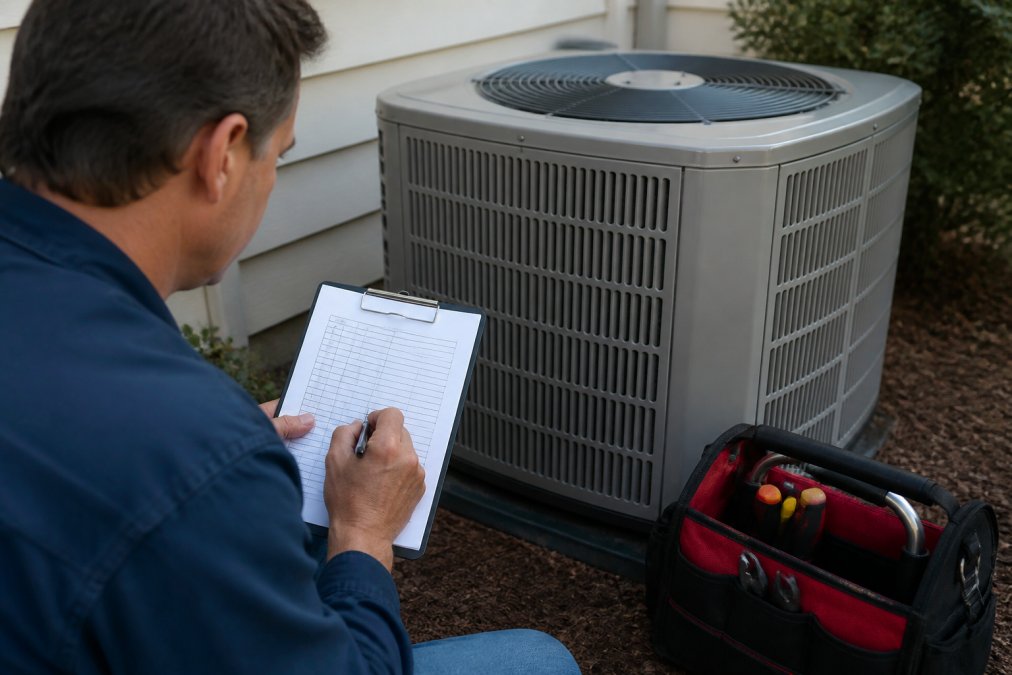
Spring maintenance focuses on preparing your air conditioning system for heavy use. Clean or replace your air filter, then inspect your outdoor condenser unit for debris. Clear away any vegetation within two feet of the outdoor unit and gently rinse the condenser fins with a garden hose on low pressure.
Check your thermostat settings and test both heating and cooling modes to ensure the system responds correctly. Inspect visible ductwork in your basement or attic for leaks or disconnected sections. Small leaks can be sealed with mastic sealant.
Fall Checklist
Fall preparation emphasizes heating system readiness. Replace your air filter and inspect the indoor furnace or heat pump unit for obvious issues. Test your thermostat in heating mode and listen for unusual sounds like rattling, grinding, or squealing, which indicate bearing wear or loose components.
Check your condensate drain line by pouring a cup of water into the drain pan and confirming it flows out the drain line. Inspect your outdoor unit for debris and clear away leaves and branches.
DIY HVAC Maintenance Tips You Can Do Yourself
Not all HVAC maintenance requires a professional. Several tasks fall well within the capability of a motivated homeowner.
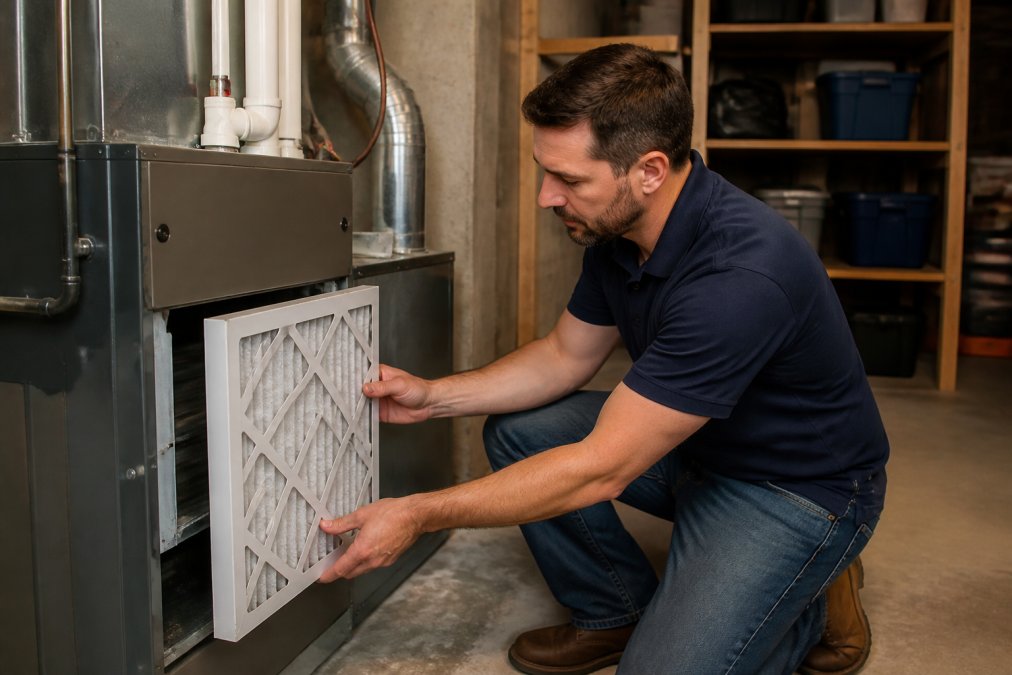
Changing your air filter is the most obvious DIY task. Turn off your system, locate the filter, slide out the old filter, and insert the new one with the airflow arrow pointing in the correct direction. Cleaning your air vents and registers improves airflow throughout your home. Remove register covers and vacuum out accumulated dust, then wipe them down with a damp cloth.
Inspect your outdoor condenser unit and remove visible debris. A garden hose on low pressure can rinse away accumulated dust, but never use a pressure washer. Check your thermostat batteries annually and replace them if needed. Inspect visible ductwork for obvious damage, disconnections, or gaps where conditioned air escapes.
Listen to your system during operation and note any unusual sounds. Documenting when these sounds occur helps your technician identify the issue quickly.
Signs Your HVAC Needs Professional Service
Some problems require professional expertise. Uneven heating or cooling across your home suggests airflow problems, ductwork issues, or thermostat problems. Unusual noises like grinding, squealing, rattling, or banging indicate mechanical problems that often precede complete system failure.
Weak airflow from your vents means your system isn't delivering conditioned air effectively. Start by checking and replacing your air filter, then inspect visible ductwork for blockages. If airflow remains weak, professional service is needed.
Higher than normal utility bills despite consistent usage patterns suggest declining system efficiency. A sudden spike indicates a specific problem like refrigerant leaks or failing compressors. Refrigerant leaks require professional service, as refrigerant handling is restricted by law.
Strange smells, burning, musty, or chemical odors, warrant professional investigation. Burning smells might indicate electrical issues or motor problems. Musty odors suggest mold growth in your ductwork or air handler. System failures to start or respond to thermostat changes need professional diagnosis.
Understanding the Cost of HVAC System Replacement
Most HVAC systems last 15-20 years with proper maintenance. Once your system exceeds 15 years, replacement becomes increasingly likely within the next few years.
The cost of HVAC system replacement depends on several factors: your home's size, system type, efficiency rating, regional labor costs, and whether ductwork modifications are needed. Get a professional assessment rather than guessing. Rich's Plumbing Heating & Air Conditioning offers free estimates for most services, allowing you to make informed decisions without surprise costs.
Tap to easily schedule service today! →
Consider replacement before your system fails completely. An aging system that's becoming unreliable creates stress and uncertainty. Replacing it on your schedule, during mild weather, costs far less than emergency replacement during peak season.
Higher-efficiency systems cost more upfront but deliver lower operating costs over their lifetime. Calculate the payback period by dividing the efficiency upgrade cost by your estimated annual energy savings. Financing options are often available for system replacement.
Your Complete HVAC Maintenance Checklist
Use this comprehensive checklist to track your HVAC maintenance throughout the year.
| Task | Frequency | Season | DIY or Professional |
|---|---|---|---|
| Change air filter | Every 30-90 days | Year-round | DIY |
| Clean air vents and registers | Quarterly | Year-round | DIY |
| Inspect outdoor unit for debris | Monthly | Year-round | DIY |
| Test thermostat operation | Quarterly | Year-round | DIY |
| Clean condenser fins | Spring and fall | Seasonal | DIY |
| Inspect ductwork for leaks | Spring and fall | Seasonal | DIY |
| Professional system inspection | Annually | Spring or fall | Professional |
| Check refrigerant levels | Annually | Spring | Professional |
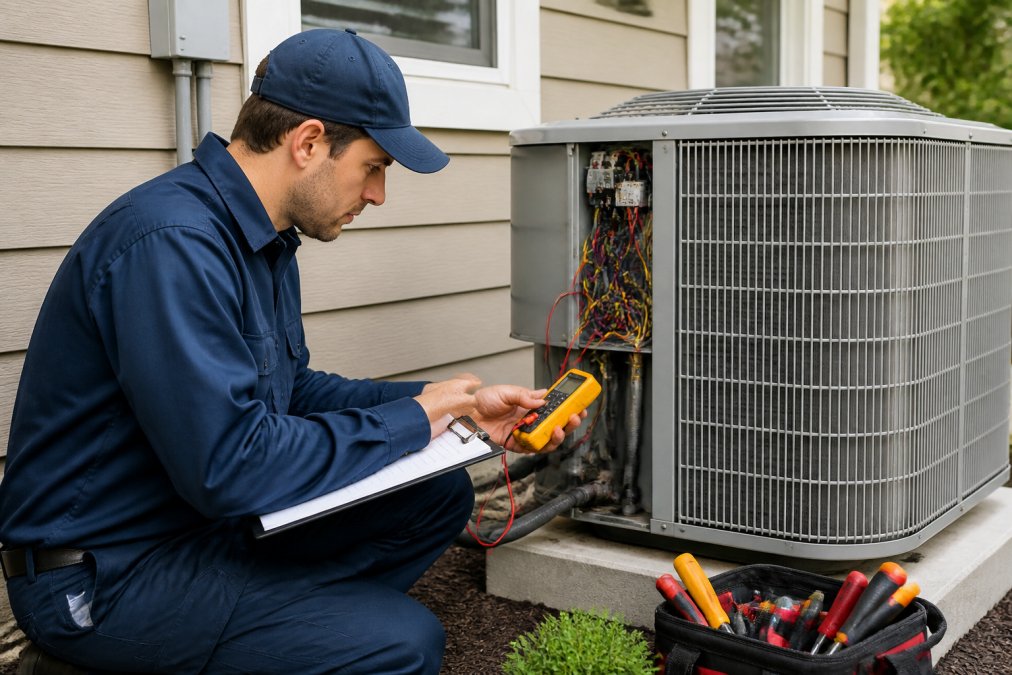
| Inspect electrical connections | Annually | Spring | Professional |
| Test heating operation | Fall | Fall | DIY/Professional |
| Test cooling operation | Spring | Spring | DIY/Professional |
| Clear condensate drain | Fall | Fall | DIY |
| Lubricate moving parts | Annually | Spring | Professional |
| Inspect indoor air handler | Annually | Spring | Professional |
Monthly Tasks: Check air filter for visible dirt, inspect outdoor condenser for debris, and listen for unusual system noises.
Quarterly Tasks: Replace air filter if needed, clean air vents and registers, and test thermostat in both heating and cooling modes.
Spring Tasks: Replace air filter, clean outdoor condenser unit thoroughly, trim vegetation around outdoor unit, schedule professional inspection, test air conditioning operation, and inspect visible ductwork.
Fall Tasks: Replace air filter, inspect furnace or heat pump for corrosion, clean condensate drain line, clear debris from outdoor unit, test heating operation, and schedule professional inspection.
Annual Professional Service: Schedule at least one professional inspection annually, ideally before your peak season. A professional inspection includes checking refrigerant levels, inspecting electrical connections, lubricating moving parts, testing system safety controls, and identifying potential problems before they cause failures.
Conclusion
A systematic HVAC maintenance checklist keeps your system running efficiently, extends its lifespan, and prevents costly emergency repairs. Start with simple tasks like changing filters, cleaning vents, and clearing debris, then schedule professional inspections before each peak season.
Your home's comfort depends on a healthy HVAC system. Regular preventative maintenance is far less expensive than emergency repairs or premature system replacement. When you're ready to schedule professional service, reach out to Rich's Plumbing Heating & Air Conditioning. With over 30 years of experience serving homeowners across New Jersey, our licensed and insured team delivers fast, reliable HVAC maintenance backed by a 100% satisfaction guarantee. Tap to easily schedule service today!
According to the U.S. Department of Energy, regular HVAC maintenance can improve system efficiency by up to 15%, helping homeowners reduce energy consumption and lower utility bills. U.S. Department of Energy HVAC Maintenance Guide provides detailed guidance on maintaining heating and cooling systems for optimal performance.
The Environmental Protection Agency emphasizes the importance of maintaining proper refrigerant levels and electrical connections to ensure safe, efficient operation. EPA Guidelines on HVAC System Maintenance outlines safety requirements for homeowners and professionals.
For additional information on indoor air quality and how HVAC maintenance affects the air you breathe, American Society of Heating, Refrigerating and Air-Conditioning Engineers (ASHRAE) Standards provides technical standards for residential HVAC systems.
Frequently Asked Questions
Q: What should I include on my residential HVAC maintenance checklist?
A: Your HVAC maintenance checklist should include monthly air filter inspections, seasonal tune-ups before heating and cooling seasons, outdoor unit debris clearance, thermostat testing, air vent and register cleaning, condensate drain inspection, electrical connection checks, and lubrication of moving parts. Professional inspections should cover refrigerant levels, blower motor performance, and ductwork evaluation. The specific tasks depend on whether you're performing basic DIY maintenance or scheduling professional service.
Q: How often should a homeowner perform HVAC maintenance?
A: Check your air filter monthly and replace it every 1-3 months depending on usage and filter type. Schedule professional HVAC system tune-ups twice yearly: once before heating season (fall) and once before cooling season (spring). Between professional visits, perform basic DIY tasks like cleaning air vents, clearing outdoor condenser debris, and monitoring thermostat settings. Regular preventative maintenance extends system longevity and maintains energy efficiency.
Q: What are signs your HVAC needs professional service?
A: Watch for unusual noises from your HVAC system, reduced airflow from vents, uneven temperatures throughout your home, higher than normal energy bills, visible refrigerant leaks, thermostat malfunctions, or a system that won't turn on. If your air filter is clogged despite frequent changes, your blower motor runs constantly, or you notice carbon monoxide detector alerts, call a professional immediately. These signs indicate issues beyond basic DIY maintenance that require expert diagnosis and repair.
Q: What DIY HVAC maintenance can homeowners safely do?
A: Safe DIY tasks include replacing air filters, cleaning air vents and registers, removing debris from outdoor condenser units, checking thermostat batteries, inspecting visible electrical connections for corrosion, and cleaning around ductwork. Avoid attempting refrigerant work, electrical repairs beyond basic checks, or internal component lubrication unless you have specific training. Always turn off your HVAC system before performing any maintenance, and consult your system manual for manufacturer-specific guidance.
Q: What is the $5,000 rule for HVAC systems?
A: The $5,000 rule suggests that if your HVAC system repair costs exceed half the price of a new system, replacement may be more cost-effective than repair. This helps homeowners decide between investing in fixes for aging equipment versus upgrading to a new, efficient system. Factors affecting this decision include your system's age, warranty status, energy efficiency improvements available, and how long you plan to stay in your home. Consult a licensed professional to evaluate whether repair or replacement makes financial sense for your specific situation.
Q: How can I improve my HVAC system's energy efficiency?
A: Clean or replace air filters regularly to reduce airflow restriction and improve system performance. Set your thermostat to match your schedule and avoid extreme temperature swings. Seal air leaks around windows and doors to reduce strain on your system. Keep outdoor condenser units clear of debris and vegetation. Ensure ductwork is properly sealed and insulated. Schedule professional maintenance to keep your system running at peak efficiency. These steps reduce energy consumption and lower heating and cooling costs while extending your system's lifespan.
Q: When should I schedule professional HVAC maintenance?
A: Schedule professional HVAC maintenance in spring before cooling season begins and in fall before heating season starts. This timing ensures your system is inspected, cleaned, and tuned before peak usage. If you notice signs of problems like unusual noises, reduced airflow, or performance issues, call immediately rather than waiting for scheduled maintenance. Many homeowners benefit from an annual professional inspection even if their system seems to be working fine, as preventative checks catch small issues before they become expensive repairs.