 how-to
How to Clear a Slow Drain: Step-by-Step Guide
Table of Contents
- Diagnosing Your Slow Drain Before You Start
- Tools Needed to Clear a Slow Drain
- Natural Solutions: Baking Soda, Vinegar, and Hot Water
- How to Use a Drain Snake to Remove Stubborn Clogs
- How to Clean a P-Trap for Deep Blockages
- Best Drain Cleaner for Slow Drains: What to Know Before You Buy
- Preventing Hair Clogs in Your Shower Drain
- When to Call a Professional Plumber
- Frequently Asked Questions
Last Updated: August 12, 2026
Diagnosing Your Slow Drain Before You Start
A slow drain starts as a minor annoyance and becomes a plumbing emergency if ignored. At Rich's Plumbing Heating & Air Conditioning, we've seen homeowners wait weeks on sluggish drains, only to face standing water backing up into the tub. Most slow drain issues are fixable without professional help if you correctly identify the source first.
A slow drain is a drainage system problem where water exits a plumbing fixture more slowly than normal, typically caused by a partial clog obstruction from hair, soap scum, grease, or mineral buildup inside the pipe.
Visual Signs That Tell You Where the Clog Is
The location and behavior of your slow drainage reveals what you're dealing with:
- Single fixture drains slowly: The clog is local, almost certainly in the drain stopper, P-trap, or the first few feet of pipe below the fixture.
- Multiple fixtures drain slowly at the same time: You're likely looking at a shared drain line blockage or a vent stack issue. DIY methods stop being reliable here.
- Water backs up into a nearby fixture: Running the dishwasher causes the kitchen sink to gurgle. This points to a shared drain line or sewer line problem.
- Gurgling sounds without visible standing water: Often a vent stack issue, which controls air pressure in your drainage system.
- Foul odors with slow drainage: Decomposing organic matter trapped in the P-trap or pipe walls, common in kitchen drains.
If only one sink or shower is slow, you're in DIY territory. If multiple fixtures are affected, skip to the "When to Call a Professional Plumber" section.
What Different Pipe Materials Mean for Your Approach
PVC pipes (white or gray plastic, most homes built after the 1980s) tolerate most DIY methods well, including drain snakes and enzyme cleaners. Avoid near-boiling water, which can soften joints.
Copper pipes handle heat well but are vulnerable to corrosion from harsh chemical drain cleaners. Limit chemical cleaner use to once or twice yearly.
Cast iron pipes (common in homes built before 1970) are durable but accumulate debris faster on rough interior walls. Drain snakes work well; aggressive chemical cleaners accelerate corrosion.
Galvanized steel pipes are most problematic. Older galvanized pipes corrode from the inside, causing slow drainage. Chemical cleaners make this worse. Manual extraction and a plumber's assessment are your best options.
Tools Needed to Clear a Slow Drain
Having the right tools before you start makes the difference between a 20-minute fix and a frustrating afternoon.
| Tool | Best For | Difficulty Level |
|---|---|---|
| Cup plunger | Sink and tub clogs | Beginner |
| Drain snake (hand auger) | Hair clogs 2-4 ft deep | Beginner-intermediate |
| Needle-nose pliers | Removing debris from stopper | Beginner |
| Bucket and towels | P-trap removal | Beginner |
| Pipe wrench | Stubborn P-trap fittings | Intermediate |
| Rubber gloves | All methods | All levels |
A basic hand auger handles the vast majority of residential clogs. Motorized versions are overkill for most bathroom drains. A standard cup plunger works for sinks and tubs; the flange plunger is for toilets.
Natural Solutions: Baking Soda, Vinegar, and Hot Water
The baking soda and vinegar method works well for mild slow drains caused by soap scum and light organic buildup. It won't solve serious hair clogs or grease blockages, but as a first step and regular maintenance, it's effective and safe for all pipes.
Method:
- Pour one cup of baking soda directly into the drain opening.
- Follow immediately with one cup of white vinegar.
- The fizzing reaction breaks up soft organic deposits on pipe walls.
- Cover the drain with a cloth or stopper to direct the reaction downward.
- Wait 15-20 minutes.
- Flush with the hottest tap water for 2-3 minutes.
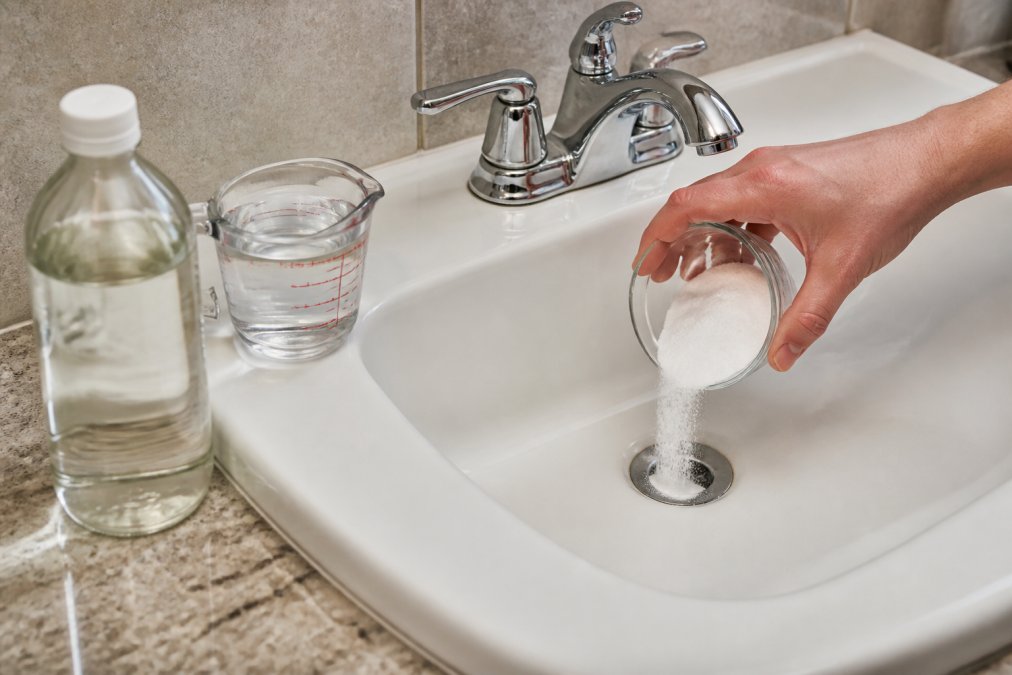
Use the hottest water from your tap rather than boiling water. Boiling water works on metal pipes but can warp PVC pipe joints and soften adhesive fittings. For kitchen drains, a hot water flush after every few uses prevents grease from solidifying on pipe walls.
According to the Environmental Protection Agency's WaterSense program, simple drain maintenance habits help conserve water by keeping your drainage system running efficiently.
How to Use a Drain Snake to Remove Stubborn Clogs
Manual extraction with a drain snake is the most reliable DIY method for stubborn hair clogs beyond the P-trap. Proper technique makes the difference between pulling the clog out and pushing it deeper.
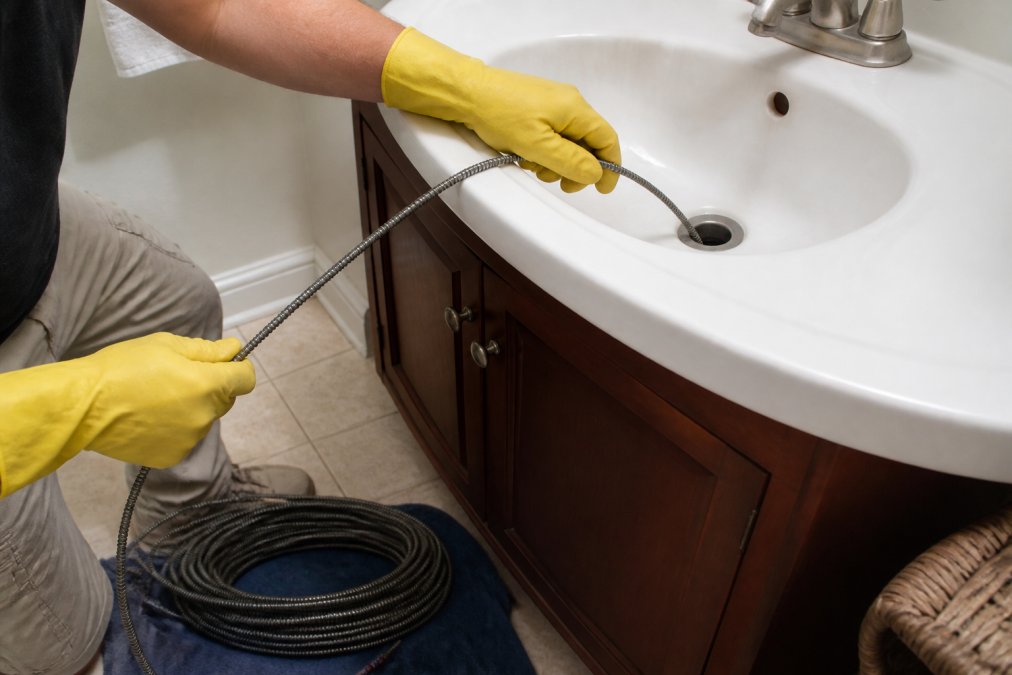
Steps:
- Remove the drain stopper and set it aside.
- Feed the end of the snake into the drain opening.
- Turn the handle clockwise as you push the snake forward to navigate pipe bends.
- When you feel resistance, you've reached the clog. Work the snake back and forth with gentle pressure.
- Rotate the handle and slowly retract the snake to hook and pull out the clog.
- Remove debris from the snake tip with gloved hands and dispose of it.
- Run hot water for 2-3 minutes to confirm drainage is clear.
For bathroom drains, most hair clogs sit 18-36 inches into the pipe. A basic 25-foot hand auger is sufficient. If you feed the full length without finding a clog, the blockage is likely deeper in the shared drain line.
As the Plumbing-Heating-Cooling Contractors Association's homeowner resources note, proper manual extraction technique prevents pipe damage and is safer than chemical drain cleaners for repeated use.
How to Clean a P-Trap for Deep Blockages
The P-trap is the curved pipe section directly below your sink. Its shape holds water that blocks sewer gases, but that same curve catches debris, creating a common blockage location.
Cleaning a P-trap requires only a bucket and an adjustable wrench.
Steps:
- Place a bucket directly under the curved pipe section.
- Unscrew the slip nuts on both ends of the P-trap by hand (or with a pipe wrench if tight). Turn counterclockwise.
- Pull the P-trap free and let trapped water drain into the bucket.
- Inspect the interior for debris. Hair, soap scum, and grease are common culprits.
- Clean the P-trap with an old toothbrush and warm soapy water.
- Check the pipe sections on either side for visible buildup.
- Reattach the P-trap and hand-tighten the slip nuts. Snug is enough; overtightening cracks plastic fittings.
- Run water and check for leaks at both connections.
Best Drain Cleaner for Slow Drains: What to Know Before You Buy
Chemical drain cleaners work in specific situations but carry real risks when used incorrectly.
Types of chemical drain cleaners:
- Caustic cleaners (lye or potassium hydroxide): Generate heat to dissolve grease and organic matter. Effective on kitchen drain grease clogs but harsh on older pipes with repeated use.
- Oxidizing cleaners (bleach, peroxides, or nitrates): Break down organic material through oxidation. Work well on hair and soap scum with less pipe damage than caustic formulas.
- Enzyme-based cleaners: Use biological agents to digest organic matter. Slow-acting but safe for all pipe materials and septic systems. Best for preventative maintenance.
The best drain cleaner depends on your pipe material and clog type. For PVC pipes with hair clogs, use an oxidizing or enzyme cleaner. For cast iron or copper pipes with grease buildup, a caustic cleaner used sparingly is effective.
Never use chemical drain cleaners if you have a complete blockage with standing water. The cleaner sits on top without reaching the clog, leaving you with a sink full of caustic liquid. Use a plunger or drain snake first to create drainage.
According to the American Chemical Society's guidance on household chemical safety, drain cleaning chemicals require ventilation and protective eyewear, and should never be mixed with other household cleaners.
Preventing Hair Clogs in Your Shower Drain
Preventing hair clogs is far easier than clearing them. The shower drain is the most common location for recurring clogs.
Install a drain hair catcher. A mesh or silicone drain cover sits over the drain opening and catches hair before it enters the pipe. Empty it after every shower. This single habit eliminates the majority of shower drain clogs.
Additional preventative steps:
- Run hot water for 30-60 seconds after every shower to flush loose soap scum.
- Use a drain stopper with a built-in filter if your shower has a removable overflow plate assembly.
- Avoid bar soap if you have hard water; it reacts with minerals to form soap scum that coats pipe walls.
Post-Clog Maintenance Schedule to Keep Drains Clear
A simple schedule prevents recurring clogs.
| Frequency | Task |
|---|---|
| Weekly | Empty drain hair catcher; hot water flush for 60 seconds |
| Monthly | Baking soda and vinegar treatment; clean drain stopper |
| Every 3 months | Inspect and clean P-trap; check for slow drainage in all fixtures |
| Annually | Enzyme cleaner treatment for all drains; professional inspection if any fixture runs slow |
The monthly baking soda and vinegar treatment is most impactful. It prevents organic buildup from accumulating on pipe walls and costs almost nothing.
When to Call a Professional Plumber
Some slow drain situations require professional help. Knowing when to stop is as important as knowing how to start.
Call a licensed plumber when:
- Multiple fixtures drain slowly or back up simultaneously. This indicates a shared drain line or sewer line blockage requiring professional equipment like hydro-jetting or motorized augers.
- You've tried manual extraction and chemical cleaners without improvement. Persistent clogs past the P-trap often require camera inspection.
- You notice pipe corrosion, visible damage, or foul odors from multiple drains. These signal systemic drainage issues, not single clogs.
- Your home has galvanized steel pipes and recurring slow drains. Pipe integrity may be compromised; professional assessment determines if repiping is needed.
- Standing water doesn't clear within 24 hours of treatment. You risk water damage and mold growth.
The Rich's Plumbing Heating & Air Conditioning team handles these situations with a 60-minute response time for urgent drain issues and over 30 years of experience diagnosing complex drainage problems. As a licensed, bonded, and insured family-owned operation, we provide free estimates so you know what you're dealing with before any work begins.
Hydro-jetting is the professional solution for severe blockages and grease buildup in kitchen lines. It uses high-pressure water to clear the full pipe diameter, restoring flow without chemicals. It's also most effective for clearing buildup in older cast iron pipes where a drain snake alone can't reach the pipe walls.
For more on when professional intervention is warranted, the International Association of Plumbing and Mechanical Officials' homeowner guidance provides clear criteria for distinguishing DIY-appropriate repairs from those requiring licensed professionals.
Eco-friendly disposal of clog debris: Wrap hair and debris from a drain snake or P-trap cleaning in newspaper or a paper bag before disposing in the trash. Don't rinse it back down the drain. For enzyme-based cleaners, check local municipal guidelines; most are safe for septic systems, but wastewater guidelines vary.
Frequently Asked Questions
Will baking soda and vinegar actually clear a slow drain?
Baking soda and vinegar work well on minor slow drains caused by soap scum and light debris. The fizzing reaction helps loosen buildup inside the pipe. Pour half a cup of baking soda followed by half a cup of white vinegar, let it sit for 15 to 30 minutes, then flush with hot water. For a serious hair clog or a blockage deep in the drainage system, you'll likely need a drain snake or professional help to fully clear the obstruction.
What is the best way to clear a slow drain in a bathroom sink?
Start by removing and cleaning the drain stopper, since hair and soap scum collect there first. If that doesn't restore normal flow, try the baking soda and vinegar method followed by a hot water flush. For deeper clogs, use a drain snake or plunger to dislodge the obstruction manually. If standing water persists or the slow drainage affects multiple fixtures, clean the P-trap under the sink or call a licensed plumber to inspect the sewer line.
When should I call a professional plumber for a slow drain?
Call a plumber when slow drainage affects more than one fixture at the same time, when you notice gurgling sounds from the vent stack, or when DIY methods haven't worked after two or three attempts. Recurring clogs in the same drain, foul odors, or standing water that won't move at all can signal a deeper sewer line issue or pipe corrosion that requires professional equipment like hydro-jetting or a plumbing snake with a camera attachment.
How do I prevent hair clogs from forming in my shower drain?
Install a mesh drain cover or hair catcher over the shower drain opening. These catch hair before it enters the plumbing fixture and can be cleared out after every shower in seconds. Pair this with a monthly baking soda and hot water flush to dissolve soap scum before it builds up. Avoid washing heavy amounts of hair product or conditioner directly down the drain, as these substances combine with hair to form dense clog obstructions over time.
Persistent slow drains are a sign your drainage system needs attention, and waiting rarely makes them easier to fix. Rich's Plumbing Heating & Air Conditioning offers fast, reliable drain service backed by a 100% satisfaction guarantee and emergency availability for situations that can't wait. Tap to easily schedule service today.