 ultimate-guide
Emergency Plumber Call-Out Costs: What to Expect
Table of Contents
- What Is an Emergency Plumbing Service Fee?
- Understanding After-Hours Plumbing Rates
- Factors That Influence Emergency Plumber Costs
- Plumbing Emergency Checklist: What Qualifies as Urgent
- How to Minimize Emergency Plumbing Costs
- When to Call an Emergency Plumber vs. Waiting
- Frequently Asked Questions
Last Updated: September 20, 2026
What Is an Emergency Plumbing Service Fee?
An emergency plumbing service fee is the charge a licensed plumber adds to your bill when you request urgent repairs outside standard business hours. This separate fee reflects the plumber's premium availability and responsiveness. Emergency calls in the middle of the night, on weekends, or holidays trigger additional charges on top of labor and materials costs. The emergency call-out fee typically covers dispatch costs, premium availability, and the plumber's sacrifice of personal time. Understanding this structure helps you avoid sticker shock when the bill arrives.
Understanding After-Hours Plumbing Rates
After-hours rates climb the further you get from standard business hours. Weekend service typically adds 25-50% to standard labor rates; holiday rates can double or triple them. Some plumbers charge a flat after-hours fee, others apply a multiplier, and some use tiered pricing (evening, late-night, weekend/holiday). The key detail: after-hours rates apply even if the repair takes 30 minutes. You're paying for availability and responsiveness, not just labor time.
Red Flags in After-Hours Quotes
Emergency situations create pressure to accept the first quote without scrutiny. Predatory plumbers exploit this. Before you authorize work, compare the quote against these benchmarks.
Service call fee alone exceeds $100-150. A legitimate emergency service call fee ranges from $75 to $150. If a plumber quotes $200+ just to show up, that's inflated. Ask if the fee is waived or credited toward the final bill if you hire them.
Hourly labor rate jumps more than 100% above daytime rates. Legitimate emergency premiums range from 25% to 100% above standard rates. Anything beyond that suggests exploitation, not genuine after-hours staffing costs.
Flat-rate quote comes with no itemization. A reputable plumber will break down the estimate (service call, parts, labor). If they quote a lump sum with no explanation, you cannot verify fairness.
Plumber refuses to provide a written estimate. Any plumber who insists on starting work before giving you a price in writing is a major red flag. Legitimate emergency plumbers understand that homeowners need cost certainty, especially at night. They'll provide a quote verbally and follow up with written documentation before the work begins.
Quote includes "diagnostic fee" that doesn't credit toward repair. Some plumbers charge a separate diagnostic fee ($50-100) to assess the problem. This is sometimes legitimate, but ethical plumbers credit this fee toward the final bill if you hire them for the repair. If the plumber quotes a diagnostic fee that's non-refundable and non-creditable, that's a sign they're layering charges.
Estimated labor time seems inflated for the job. A simple burst pipe repair typically takes 1-2 hours; a main line clog, 2-3 hours. If a plumber estimates 4-5 hours for a straightforward repair, ask why. Vague time estimates are a tactic to inflate the bill.
Parts markup exceeds 50%. Plumbers typically mark up parts 20-50% above cost. This covers their overhead for stocking inventory and managing supplier relationships. If a plumber quotes a part that costs $100 wholesale for $300 retail, that's a 200% markup, predatory. You can sometimes ask the plumber to source the part yourself and charge only labor, though this varies by business model.
How to Verify a Fair Quote
Before authorizing emergency work, validate the quote:
Ask the plumber to itemize the estimate. Request service call fee, labor rate, and parts cost separately.
Compare with daytime rates. Ask what the repair would cost during business hours. If the emergency price is 3-4 times higher, that's excessive.
Check licensing and insurance. Verify the plumber's license with your state's licensing board and confirm liability insurance and bonding.
Search for pricing complaints online. Look up the plumber's business name on Google, the Better Business Bureau, and Yelp. A pattern of complaints about surprise charges is a warning.
Ask about payment structure. Can you pay after the work is complete? Legitimate plumbers typically accept payment after the job is done.
Factors That Influence Emergency Plumber Costs
Several variables determine your final bill when you call for emergency plumbing service. None of these factors work in isolation, they compound.
Hourly Labor Rates vs. Flat-Rate Pricing
Licensed plumbers use hourly labor rates or flat-rate pricing. Hourly rates charge per minute on-site; you don't know the final cost until work is done. Flat-rate pricing quotes a set price for the specific repair, giving you certainty upfront and incentivizing efficiency. Most emergency plumbers use flat rates for common emergencies (burst pipes, main line clogs, water heater failures), protecting both parties.
Parts and Materials
The emergency plumber cost includes labor and materials. A simple fix might require a $15 coupling; a burst pipe might need $200-400 in materials. Parts markup varies (cost-plus or included in flat rate), but the emergency nature doesn't typically increase parts prices, labor and service call fees spike. Reputable plumbers disclose upfront if special parts or multiple trips are needed.
Response Time and Service Call Fee
Response time directly affects the emergency plumber cost. A 60-minute response time is standard; faster response times command premium fees. The service call fee ranges based on the plumber's business model and time of day. Rich's Plumbing Heating & Air Conditioning prioritizes a 60-minute response time for emergency calls.
Plumbing Emergency Checklist: What Qualifies as Urgent
Not every plumbing problem is an emergency. Knowing the difference saves you money and prevents unnecessary late-night calls.
True emergencies require immediate attention: water gushing from pipes, sewage backing up, complete loss of water pressure, gas smell near water heater, water heater flooding the basement, or toilet overflowing with raw sewage. Waiting until morning will cost more in damage repair than the emergency call-out fee.
Tap to easily schedule service today! →
Non-emergencies can wait: slow drains, dripping faucets, weak pressure in one fixture, or visible corrosion with no active leak. Calling for a non-emergency at 11 PM means paying premium rates for a problem that costs half as much during the day. When in doubt, call the plumber's emergency line to confirm urgency.
How to Minimize Emergency Plumbing Costs
You can't always prevent emergencies, but you can reduce what they cost you. Several strategies work.
DIY Temporary Mitigation Steps
Take immediate action to limit damage:
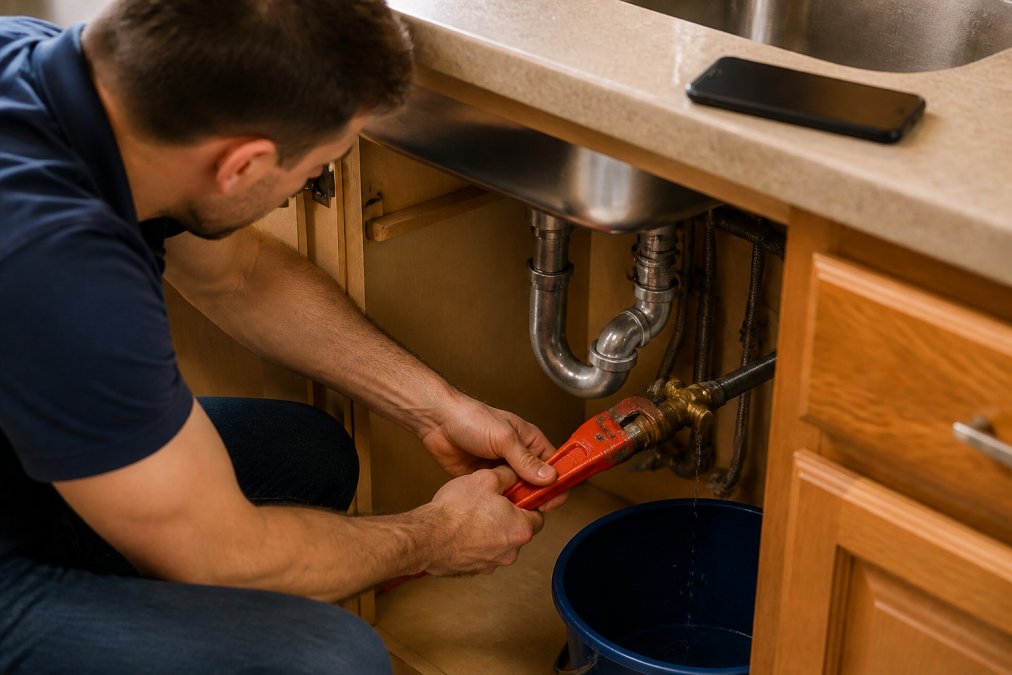
For a burst pipe or major leak: Shut off the main water supply (typically in the basement or near the water meter). Turn it clockwise until it stops. Open the lowest faucet to release pressure.
For a toilet overflow: Lift the float ball or shut off the water supply valve behind the toilet. Use a plunger if the blockage is visible. Don't use chemical drain cleaners.
For a drain backup: Stop using that fixture. Don't run the dishwasher or washing machine if the main line is backing up. Avoid all water use for sewer backups. These steps prevent damage from worsening.
Vetting for Predatory Pricing
Protect yourself by asking questions before work begins:
Request a written estimate. A reputable emergency plumber will quote before starting. If they refuse, that's a red flag. Ask for the breakdown: service call fee, labor rate, parts cost.
Ask about the emergency plumber cost structure. Is the service call fee waived if you proceed? What's the hourly or flat rate? Are parts marked up, and by how much?
Compare with daytime rates. A legitimate emergency surcharge is 25-100% more. If the plumber quotes 300% more, that's predatory.
Verify licensing and insurance. Ask to see credentials. Uninsured plumbers who cause additional damage leave you liable.
Check online reviews. Search for complaints about surprise charges or bait-and-switch pricing. A pattern of pricing complaints is a warning.
Insurance Coverage and Payment Plans
Your homeowner's insurance may cover emergency plumbing repairs, depending on the cause and your policy. Water damage from a burst pipe: Sudden, accidental pipe failure is typically covered. However, water damage from neglect, deferred maintenance, or gradual leaks is usually excluded. Call your insurance agent immediately after discovering a burst pipe and before the plumber starts work.
Plumber payment plans: Many companies offer in-house plans or partner with Affirm or CareCredit (0% interest for 3-12 months if you qualify). Some offer discounts for payment in full within 30 days.
When to Call an Emergency Plumber vs. Waiting
The decision comes down to risk. How much damage will occur if you wait? How certain are you about what's wrong?
Call immediately for:
- Active water leaks flooding your home
- Sewage backups or raw sewage in fixtures
- Complete loss of water to the entire house
- Water heater actively leaking and filling the basement
- Burst pipes with water gushing out
Wait until morning for:
- Slow or partially clogged drains
- Single dripping faucets
- Low water pressure in one fixture
- Visible corrosion with no active leak
Frequently Asked Questions
What is typically included in an emergency plumber call-out fee?
An emergency plumber call-out fee usually covers the technician's visit, initial diagnosis, and emergency dispatch. This fee is separate from labor costs and parts. Most licensed plumbers charge a service call fee to arrive at your home and assess the problem. The fee may be waived if you proceed with repairs, depending on the contractor's policy. Always ask what the service call fee includes before scheduling.
How much more do after-hours plumbing rates cost compared to standard hours?
After-hours plumbing rates typically range from 1.5 to 3 times the standard hourly rate, depending on the time of day and day of the week. Evening calls (after 5 PM) usually cost more than morning calls. Weekend service and holiday rates are often the highest. Contact a licensed plumber directly for their specific after-hours surcharge structure, as pricing varies by contractor and location.
What qualifies as a plumbing emergency that needs immediate service?
A plumbing emergency includes pipe bursts, sewer line backups, gas leaks near plumbing, major water leaks causing damage, complete loss of water supply, and water heater failures. Overflowing toilets, burst pipes under the house, and backed-up drains affecting multiple fixtures also qualify. Non-emergencies include slow drains, minor leaks, and routine maintenance. Use a plumbing emergency checklist to determine urgency before calling for emergency service.
How can I reduce the cost of an emergency plumbing visit?
Shut off the main water supply immediately to prevent additional water damage and reduce the scope of repairs needed. Document the problem with photos for your insurance claim. Get a contractor estimate and compare quotes from licensed, insured professionals before committing. Ask about payment plan options if the repair is expensive. Schedule preventive maintenance during standard business hours to catch issues early and avoid future emergency calls.