 how-to
Emergency Heating Repair: What to Do When Heat Fails
Table of Contents
- What Qualifies as a Heating Emergency
- Signs You Need Emergency Heating Repair
- Heating System Troubleshooting Guide
- Emergency Furnace Repair Cost: What to Expect
- How to Schedule Emergency Service
- New Jersey Home Energy Assistance Programs
- Staying Safe During a Heating Emergency
- Frequently Asked Questions
Last Updated: August 20, 2026
What Qualifies as a Heating Emergency
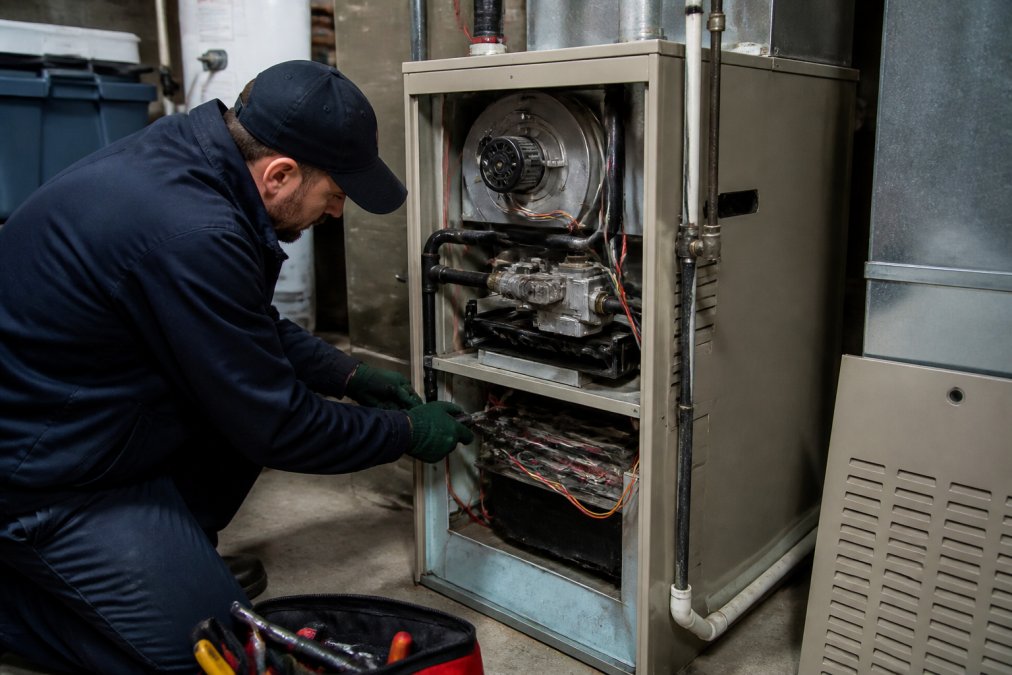
A heating emergency occurs when your home's temperature drops to dangerous levels, threatening property damage, frozen pipes, and serious health risks. Your furnace stops producing heat entirely, your boiler shuts down unexpectedly, or your heat pump fails during freezing temperatures, these situations require professional attention within hours, not days.
At Rich's Plumbing Heating & Air Conditioning, we understand that a broken heating system in winter is a crisis threatening your home's structural integrity and your family's safety. That's why our team maintains a 60-minute response time for emergency calls. The distinction between a maintenance issue and an emergency comes down to safety and livability: if your system isn't heating at all and temperatures are dropping, that's an emergency requiring immediate professional response.
Signs You Need Emergency Heating Repair
No heat coming from your vents despite the thermostat being set to heat mode is the most obvious sign. You should feel warm air flowing when the system runs; if nothing comes out or the air is cold, your furnace or boiler has stopped working and demands immediate attention.
Strange noises from your furnace, loud banging, grinding, or squealing, indicate mechanical problems that could lead to complete failure. A burning smell coming from your heating vents signals electrical problems, dust buildup, or damaged components that require professional inspection immediately.
If your pilot light won't stay lit, your heating system can't function. A pilot light that won't hold a flame usually means a thermocouple problem or gas supply issue. Uneven heating throughout your home, where some rooms stay warm while others remain cold, may indicate your furnace is failing or struggling to distribute heat properly.
Carbon monoxide detectors going off demand immediate action. This is a safety emergency: if your detector alarms, leave your home immediately and call emergency services, then contact a licensed HVAC technician.
Heating System Troubleshooting Guide
Before calling for emergency heating repair, perform basic checks to understand what's happening with your system.
Check Your Thermostat and Power
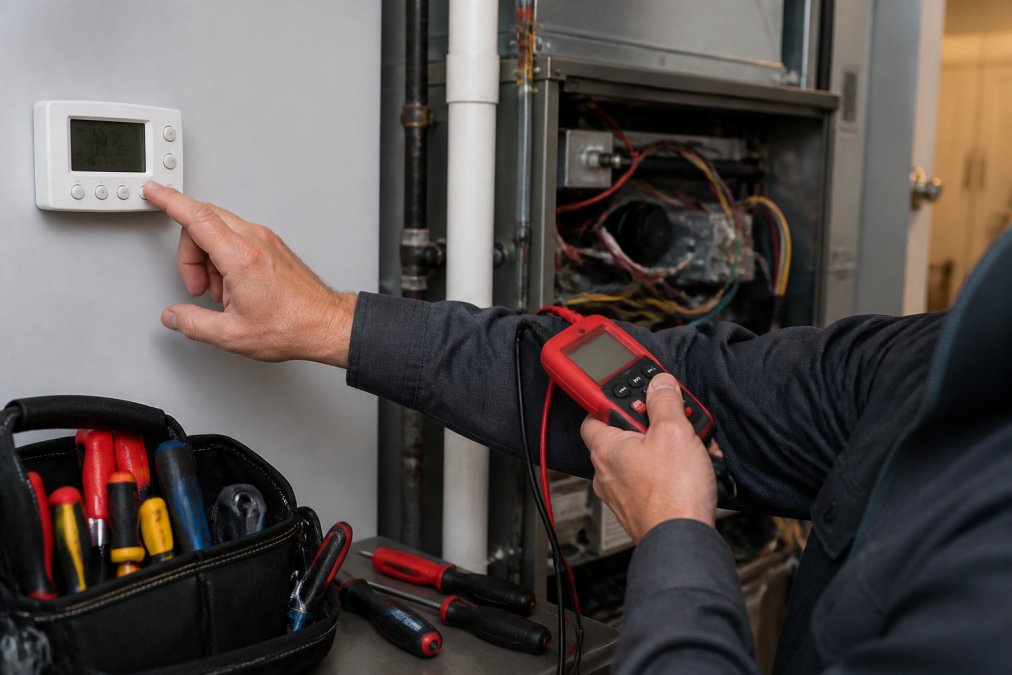
Verify that your thermostat is set to "heat" mode and the temperature setting is higher than the current room temperature. If your thermostat is battery-powered, replace the batteries, weak batteries prevent communication with your furnace. Check your furnace's power switch and ensure it's in the "on" position. Check your home's electrical panel for a tripped circuit breaker labeled for your furnace or HVAC system; if it's tripped, flip it back on.
Inspect Your Furnace Pilot Light
For gas furnaces, locate the pilot light, a small blue flame that should be burning continuously. If it's out, check for visible obstructions around the pilot assembly. If the area is clear, you can attempt to relight the pilot following your furnace's instructions, usually found on a label near the pilot assembly.
If the pilot light won't stay lit after relighting or goes out again within minutes, this indicates a thermocouple problem or gas supply issue requiring professional repair. Don't attempt repeated relighting; call for emergency heating repair instead.
Replace Your Air Filter
A clogged air filter reduces airflow and can cause your furnace to overheat and shut down as a safety measure. Locate your furnace's air filter and note the size printed on the frame. If the filter looks dark or clogged with dust, replace it with a new filter of the same size. A clean air filter improves heating efficiency and prevents some common furnace shutdowns.
Emergency Furnace Repair Cost: What to Expect
Service call fees are your first cost. Most HVAC companies charge a diagnostic fee to identify the problem, which typically applies toward your repair cost if you proceed with service. For emergency calls outside normal business hours, expect a higher service fee than daytime calls.
The actual repair cost depends on what's broken. A simple fix like relighting a pilot light or replacing a thermocouple costs significantly less than replacing a failed blower motor or repairing a cracked heat exchanger. Rich's Plumbing Heating & Air Conditioning offers free estimates for most services, allowing you to understand costs before committing to work.
For emergency calls, expect to pay a premium over standard daytime service rates, reflecting the cost of maintaining 24/7 availability. If your furnace is old and repairs keep happening, consider replacement as a long-term solution, as frequent repairs on aging systems often cost more over time than investing in a new, efficient unit.
How to Schedule Emergency Service
Call your HVAC provider's emergency line immediately with your address, phone number, and a brief description of the problem. Explain that you have no heat, which prioritizes your call appropriately. Mention if you have children, elderly family members, or anyone with health conditions that make cold exposure dangerous.
Tap to easily schedule service today! →
Provide accurate information about your heating system if you know it, whether you have a furnace or boiler, gas or electric, and any strange noises or smells. Ask for an estimated arrival time. Reliable companies like Rich's Plumbing Heating & Air Conditioning commit to specific response windows.
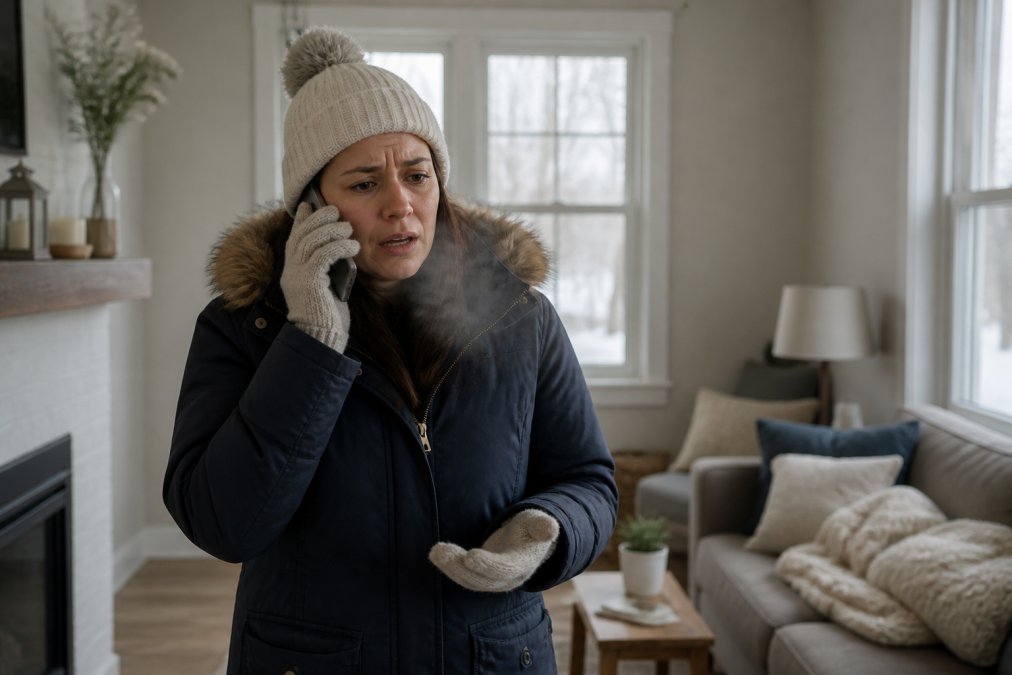
While waiting for the technician, take safety precautions. Close off unused rooms to concentrate heat in occupied spaces. Use space heaters only in well-ventilated areas, never in bedrooms while sleeping. Keep car exhaust away from your home. Never use your oven or stove to heat your house, as this creates carbon monoxide and fire risks.
New Jersey Home Energy Assistance Programs
If cost is preventing you from getting emergency heating repair, New Jersey offers assistance programs to help homeowners afford heating system repairs and fuel costs.
The Low Income Home Energy Assistance Program (LIHEAP) provides federal funding to help eligible households pay heating bills and make necessary repairs to heating systems. To apply, contact your local community action agency or the New Jersey Department of Human Services. You'll need to provide proof of income, residency, and heating costs.
Other utility assistance programs operate through local community organizations and non-profits, often providing emergency grants specifically for heating system repairs. Contact your utility company directly; many offer assistance programs or can refer you to local resources. Weatherization assistance programs help improve your home's energy efficiency, reducing heating costs long-term through air sealing, insulation improvements, and heating system optimization.
Staying Safe During a Heating Emergency
Never use your oven or stove as a heating source, this creates carbon monoxide, a deadly gas that accumulates in enclosed spaces. Space heaters require careful use: choose models with automatic shutoff if they tip over, keep them at least three feet away from flammable materials, and never leave them running unattended, especially at night.
Ensure your carbon monoxide detectors are working and test them monthly. If your detector alarms, leave your home immediately and call emergency services. Keep your home's exterior vents clear of snow and ice, which can block furnace exhaust vents and cause carbon monoxide to back up into your home.
Maintain adequate ventilation even while staying warm. If you have frozen pipes, don't use open flame to thaw them; instead, use heat tape, hot water, or call a professional plumber. Stay hydrated and eat regularly, as cold stress affects your body's ability to function. Elderly family members and young children are most vulnerable to cold exposure; monitor them closely.
Document your situation by taking photos of your thermostat reading and any visible damage to your heating system. Keep records of when your heat failed and when you called for service, as this documentation helps with insurance claims or assistance program applications.
When your heating system fails during winter, the stakes are high. Your home's structural integrity, your family's health, and your safety all depend on getting professional help quickly. Rich's Plumbing Heating & Air Conditioning understands the urgency of a failed heating system. Our family-owned team has served the community for over 30 years with a commitment to fast response and reliable repairs. With our 60-minute response time, licensed technicians, and 100% satisfaction guarantee, we're equipped to handle your heating emergency with the expertise and speed your situation demands. When heat fails, call immediately, professional emergency service protects your home and your family's safety.
Frequently Asked Questions
What should I do if my heat stops working in the middle of the night?
First, check your thermostat settings and ensure it's set to heat mode with a temperature above the current room temperature. Verify the furnace has power by checking the circuit breaker. If you smell gas or see a carbon monoxide alarm alert, evacuate immediately and call 911. For other issues, contact an emergency HVAC service. Many providers, including those serving your area, offer 24/7 emergency dispatch and can arrive within 60 minutes.
How much does emergency furnace repair cost?
Emergency furnace repair pricing depends on the specific problem, the time of day, and your location. Service calls may include a diagnostic fee, labor costs, and parts. Emergency after-hours service typically includes a surcharge. Contact your local HVAC provider for a free estimate before work begins. Many companies offer transparent pricing and will explain costs upfront so you know what to expect.
Are there financial assistance programs to help pay for heating repairs in New Jersey?
Yes. The Low Income Home Energy Assistance Program (LIHEAP) helps eligible households pay heating bills and emergency repairs. The application period typically runs from November through March. You can also explore utility company assistance programs and local weatherization programs. Contact your county's social services office or visit the New Jersey Department of Human Services website to check eligibility and apply during the application period.
How can I troubleshoot my furnace before calling for emergency repair?
Start by checking your thermostat is set correctly and has fresh batteries. Look at your furnace's pilot light, if it's out, try relighting it following your unit's instructions. Check that the circuit breaker for the furnace is on. Replace the air filter if it's clogged, as this can restrict airflow and trigger shutdowns. If the furnace won't start or you smell gas, stop troubleshooting and call emergency services immediately.