 ultimate-guide
Cost of HVAC System Replacement: 2026 Pricing Guide
Table of Contents
- What Drives the Cost of HVAC System Replacement
- Factors Affecting HVAC Replacement Price
- HVAC Repair vs Replacement Cost: Which Makes Sense?
- HVAC Energy Efficiency Ratings SEER2 and HSPF2 Explained
- Hidden Costs of Electrification and Post-Installation Verification
- Regional Cost Variance and Inflation-Adjusted ROI
- Energy Tax Credits and Rebate Programs
- Frequently Asked Questions
Last Updated: September 10, 2026
What Drives the Cost of HVAC System Replacement
The cost of HVAC system replacement is shaped by two forces: equipment and materials, and the labor required to install them. Understanding both helps you predict your final bill before a technician ever arrives.
Equipment accounts for the larger share of most quotes. A condenser unit, air handler, evaporator coil, and refrigerant lines are priced by capacity and efficiency tier. Higher SEER2 ratings and variable-speed compressors raise equipment cost but lower monthly bills.
Labor is the variable that surprises homeowners. Installation complexity, ductwork modification, and electrical work can swing a project's total by thousands. A straight swap in an accessible attic takes far less time than a retrofit in a finished basement with tight clearances.
At Rich’s Plumbing Heating & Air Conditioning, we've quoted enough replacements to know that the equipment sticker price is rarely the real story. The building around the system decides the labor line.
Equipment and Materials
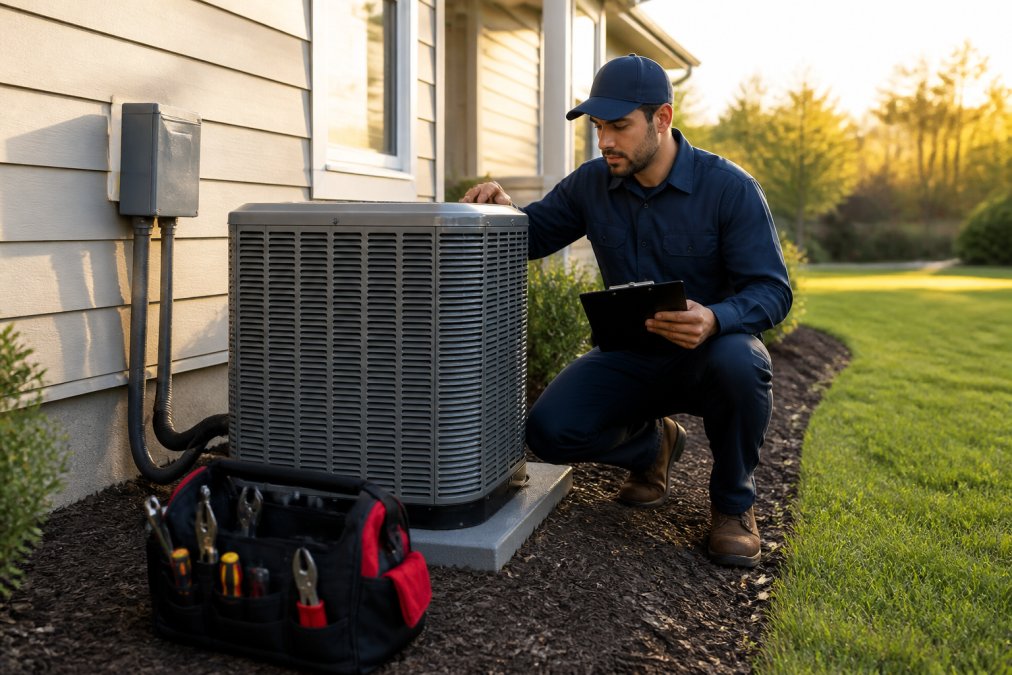
Equipment cost depends on type, size, and efficiency. A furnace, an air conditioner, and a heat pump each carry different price structures because they contain different components.
Materials beyond the main unit add up: line sets, drain pans, thermostats, mounting pads, and refrigerant. A load calculation determines the tonnage and BTU capacity you actually need, which directly sets the equipment tier.
Labor and Installation Complexity
Installation complexity is the biggest swing factor in any quote. A like-for-like replacement in an open, accessible location is straightforward. Anything else adds hours.
Watch for these cost drivers:
- Ductwork modification for a differently sized unit
- Electrical panel upgrades to support new equipment
- Refrigerant line replacement when the old lines are incompatible
- Condensate drainage rework
- Zoning system additions
Each one adds labor, materials, and often a permit.
Factors Affecting HVAC Replacement Price
Several variables push a replacement quote up or down. The two that matter most are system size and efficiency tier, but home layout, existing infrastructure, and local labor rates all play a role.
System Size and Capacity (Tonnage)
Tonnage and BTU capacity must match your home's actual heating and cooling load. An oversized unit short-cycles and wears out faster; an undersized one runs constantly and never keeps up.
A proper Manual J calculation determines the right size based on square footage, insulation, window area, and climate. Skipping this step is one of the most common mistakes we see. A technician who sizes by rule of thumb will get it wrong often enough to matter.
Efficiency Ratings and Equipment Type
Efficiency ratings determine both upfront price and long-term operating cost. Higher-efficiency equipment costs more to buy and less to run. The break-even point depends on your climate, usage, and how long you plan to stay in the home.
HVAC Repair vs Replacement Cost: Which Makes Sense?
Repair is usually the right call for a young system with an isolated failure. Replacement makes more sense when repairs become frequent, the unit is near the end of its service life, or the repair bill approaches the price of new equipment. The decision is a financial one, so run it like one.
The framework comes down to four inputs: the age of the unit, the quoted repair cost, the replacement quote, and how long you plan to stay in the home. Get all four on paper before you decide.
The 50% Rule and Age of System
The 50% rule is a common guideline: if a repair costs more than half the price of a new system, replacement is usually the better financial choice. Age matters too. Most systems have a service life of roughly 15 to 20 years with proper preventative maintenance, and the repair frequency curve steepens sharply after year 12 (energy.gov).
| Situation | Recommended Action | Why |
|---|---|---|
| Under 10 years, single repair | Repair | System has remaining life |
| 10-15 years, repair over 50% of replacement | Replace | Poor return on repair spend |
| 15+ years, frequent breakdowns | Replace | Reliability and efficiency both decline |
| Any age, refrigerant leak in older unit | Evaluate replacement | Older refrigerants are costly to service |
Running the Actual Numbers
The 50% rule is a starting filter, not a verdict. A more useful test is total cost of ownership over your remaining ownership window.
Work through it like this:
- Get a written repair quote. Ask what the repair covers and what it does not, a compressor swap and a capacitor replacement are not comparable line items.
- Get a replacement quote for a like-for-like system. Same tonnage, comparable efficiency tier. Do not compare a repair against a premium upgrade.
- Estimate remaining life. A 16-year-old system with a 15-to-20-year service life has roughly 2 to 4 years left on average. A 6-year-old system has a decade or more.
- Multiply annual repair spend by remaining years. If you have averaged two service calls a year at a few hundred dollars each, that recurring cost belongs in the comparison.
- Add the efficiency delta. A new system at a higher SEER2 rating cuts monthly cooling cost. Over a 10-year horizon in a hot climate, that gap can be meaningful; in a mild climate, it is smaller.
A common pattern: a repair that costs 30% of replacement on a 14-year-old unit looks reasonable in isolation, but once you add two more likely repairs and the efficiency gap, the replacement wins on a 5-year view.
When Repair Still Wins
Repair is the right answer more often than replacement-focused content admits. If the system is under 10 years old, the failure is isolated (a blower motor, a capacitor, a thermostat), and the rest of the system tests within spec, repair is the lower-cost path and preserves remaining equipment life.
A second repair on the same component within 12 months is the signal to stop. That pattern usually means the underlying failure is systemic, not isolated.
The Resale Angle
A replacement does not typically return its full cost at resale, but a documented new system with a transferable manufacturer warranty is a selling point that removes a buyer objection. A 15-year-old system with a recent repair history is a negotiating liability. If you plan to sell within 2 to 3 years, factor that into the decision rather than treating the replacement as a pure efficiency play.
HVAC Energy Efficiency Ratings SEER2 and HSPF2 Explained
SEER2 is the Seasonal Energy Efficiency Ratio 2, a measure of cooling efficiency. HSPF2 is the Heating Seasonal Performance Factor 2, a measure of heating efficiency for heat pumps. Both ratings replaced the older SEER and HSPF standards, and both use updated testing procedures that produce lower, and more realistic, numbers than the legacy ratings.
Higher numbers mean greater efficiency. The U.S. Department of Energy sets the minimum efficiency standards that new equipment must meet, and those minimums have risen in recent years, so older units often fall well below today's baseline (energy.gov). That gap is where the upgrade math lives.
How SEER2 and HSPF2 Affect Your Energy Bills
A higher SEER2 rating means the system uses less electricity to deliver the same cooling. The savings compound over a system's lifecycle, but the payoff period depends on your usage and local utility rates.
For homeowners comparing quotes, the practical question is simple: does the monthly savings justify the higher equipment price? In a hot climate with heavy summer use, it often does. In a mild climate, the math is tighter.
Calculating Your Break-Even Point
This is the calculation most cost guides skip. You can run it yourself with four numbers: your current system's efficiency rating, the quoted system's rating, your annual cooling spend, and the price difference between the two quotes.
Step 1, Estimate annual cooling cost. Pull your summer electric bills and isolate the cooling portion. If you cannot separate it, a reasonable estimate is the difference between your highest summer month and your lowest spring or fall month, multiplied across the cooling season.
Step 2, Estimate the savings percentage. Efficiency savings scale roughly with the ratio of the ratings. Moving from an older 10 SEER unit to a 16 SEER2 system is a large jump; moving from 14 SEER2 to 16 SEER2 is a smaller one. The percentage improvement is the difference divided by the new rating.
Step 3, Apply it to your annual cooling cost. If you spend a certain amount per year on cooling and the new system is meaningfully more efficient, the annual savings is that percentage of your current spend.
Step 4, Divide the price premium by the annual savings. The result is your break-even in years. If the premium is a few hundred dollars and the annual savings is a few hundred dollars, the payback is short. If the premium is several thousand dollars and the savings is small, the payback may exceed how long you plan to stay.
Inflation-Adjusted ROI
A break-even calculated today is not the break-even you will experience. Energy prices tend to rise over time, which shortens the payback on high-efficiency equipment. A system that breaks even in 8 years at today's rates may break even in 6 or 7 if rates climb steadily.
The reverse is also true: if you finance the upgrade, add the interest cost to the premium before dividing. A low-interest promotional financing offer changes the math in favor of the higher tier; a high-rate loan can erase the savings entirely.
A cheaper system with a low SEER2 rating can cost more over 15 years than a higher-rated unit. Run the numbers over the full lifecycle before deciding on efficiency tier, and rerun them whenever you get a new quote, because equipment prices and utility rates both move.
Hidden Costs of Electrification and Post-Installation Verification
Two costs catch homeowners off guard: the infrastructure work that electrification can require, and the verification step that confirms the job was done right.
Electrification means moving heating off gas and onto a heat pump. That shift can demand electrical capacity your home does not currently have, which means a panel upgrade before the HVAC work even starts.
Electrical Panel Upgrades and Permitting Fees
A heat pump or high-efficiency system may draw more power than an older electrical panel can safely supply. When that happens, a panel upgrade becomes a prerequisite, not an optional add-on.
Permitting fees vary by jurisdiction and are set by your local building department. Check with your municipality for current fee schedules, and confirm whether the contractor or the homeowner is responsible for pulling the permit.
Why You Need a Post-Installation Check
Post-installation verification confirms the system was charged, configured, and balanced correctly. A technician should check refrigerant charge, airflow, static pressure, and thermostat compatibility before calling the job complete (the EPA).
Skipping this step is why some new systems underperform from day one. A unit that is overcharged, undercharged, or set to the wrong airflow will never deliver its rated efficiency.
Regional Cost Variance and Inflation-Adjusted ROI
The same system costs different amounts in different parts of the country. Labor rates, permit costs, climate demands, and local code requirements all vary, and those differences show up in your quote.
Inflation adds another layer. A quote you received two years ago is not a reliable benchmark for today's pricing. When comparing bids, compare them against current quotes, not memory.
How Location Impacts Your Total
Regional cost variance comes down to three things: local labor rates, local permitting and inspection requirements, and the efficiency tier your climate demands. A cold-climate home needs a heat pump rated for low temperatures, which costs more than a mild-climate unit.
Calculating Long-Term Savings
Inflation-adjusted ROI compares the total cost of ownership over the system's lifecycle, not just the purchase price. Factor in energy savings, maintenance, repairs, and the rising cost of electricity or gas over time.
A cheaper system with a low SEER2 rating can cost more over 15 years than a higher-rated unit. Run the numbers over the full lifecycle before deciding on efficiency tier.
Energy Tax Credits and Rebate Programs
Federal tax credits and utility rebate programs can offset a meaningful share of replacement cost. The exact amounts and eligibility rules change, so verify current figures with the official sources before you count on them.
The IRS publishes current information on residential energy credits, and the U.S. Department of Energy maintains guidance on efficiency standards and available incentives. Your utility may offer additional rebates for qualifying high-efficiency equipment. Always confirm program details directly, since funding and rules change.
Frequently Asked Questions
How much should a new HVAC system cost for a 2000 square foot house?
For a 2,000-square-foot home, the cost of HVAC system replacement depends on equipment type, efficiency ratings, and local labor rates. A standard efficiency system may be on the lower end, while high-efficiency variable-speed systems cost more. Additional factors include ductwork modifications, electrical upgrades, and permitting fees. Request a free estimate from Rich’s Plumbing Heating & Air Conditioning to get a precise quote for your New Jersey home.
Is it worth fixing a 20-year-old AC unit?
Repairing a 20-year-old AC unit is rarely cost-effective. If the repair cost exceeds 50% of a new system’s price, replacement is often the better financial choice. Older units also use outdated refrigerant and may have lower SEER2 ratings, potentially leading to higher energy bills. A licensed technician can help you compare HVAC repair vs replacement cost and decide based on your system’s condition.
What factors influence the total cost of HVAC installation?
Key factors affecting hvac replacement price include equipment type (AC, furnace, heat pump), system size (tonnage), efficiency ratings (SEER2/HSPF2), labor complexity, ductwork condition, electrical panel capacity, and local permitting fees. Regional cost variance also plays a role. For example, installing a heat pump may require a panel upgrade, adding to the total. Always get a detailed estimate that lists all potential charges.
Does a new HVAC system increase home value?
A new HVAC system can increase home value by improving energy efficiency and comfort. Buyers often view a recently replaced system as a major selling point. However, the exact return on investment varies by region and market. Upgrading to a high SEER2 rating can also qualify for tax credits, offsetting some costs.
What is the average lifespan of an HVAC system?
Factors like usage, climate, and installation quality affect lifespan. Regular tune-ups, filter changes, and timely repairs can extend it. If your system is over 15 years old and needs frequent repairs, replacement is likely more economical. Rich’s Plumbing Heating & Air Conditioning offers maintenance plans to help you get the most from your system.
How do SEER2 and HSPF2 ratings affect my energy bills?
SEER2 measures cooling efficiency, while HSPF2 measures heating efficiency. Higher ratings mean lower energy consumption. Over time, these savings can offset the higher upfront cost. Many utility companies offer rebates for high-efficiency systems, and federal tax credits may be available.
Replacing an HVAC system is a major decision, and the wrong quote can leave you overpaying for years. Rich’s Plumbing Heating & Air Conditioning has served homeowners with licensed, insured technicians and a 100% satisfaction guarantee for over 30 years, with a 60-minute response time for urgent needs and free estimates for most services. Get started with Rich’s Plumbing Heating & Air Conditioning and get a clear, honest quote before you commit.