 listicle
Best HVAC System for Townhouses: 2026 Guide
Table of Contents
- Why Townhouses Need a Different HVAC Approach
- Top HVAC Systems for Townhouses: A Side-by-Side Comparison
- Understanding Zoned HVAC System Benefits for Multi-Story Living
- Brand Breakdown: Reliability and Performance Compared
- What Is the Average Cost to Replace HVAC in a Townhouse?
- Dealing with HOA Rules, Retrofits, and Smart Thermostats
- Your HVAC Maintenance Checklist for Townhomes
- Conclusion: Choosing the Right System for Your Townhouse
- Frequently Asked Questions
Why Townhouses Need a Different HVAC Approach
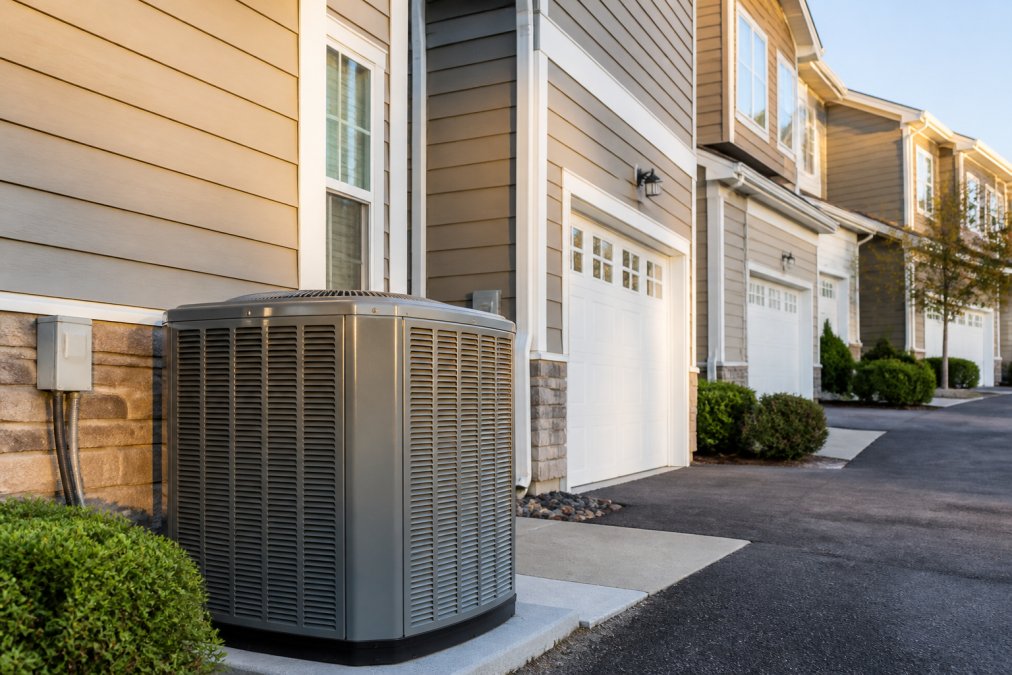
Townhouses present unique challenges single-family homes don't have. Their vertical layout, shared walls, and limited outdoor space mean the best hvac system for townhouses isn't just a smaller version of a standard house system.
Heat rises, and in a narrow townhouse, that thermal movement happens fast. A single-zone system runs until the main-floor thermostat is satisfied, often leaving upper bedrooms several degrees warmer. The decision isn't just about brand or price; it's about matching system architecture to the building's vertical reality.
Top HVAC Systems for Townhouses: A Side-by-Side Comparison
Three main system types dominate for townhouses: ductless mini-splits, high-efficiency heat pumps, and central air conditioning with zoning. Each solves the multi-story problem differently; the right choice depends on existing ductwork, budget, and how much room-by-room control you want.
| System Type | Best For | Key Advantage | Main Drawback |
|---|---|---|---|
| Ductless Mini-Split | Homes without ductwork | Individual room control | Visible indoor wall units |
| High-Efficiency Heat Pump | Year-round efficiency | Heating and cooling in one | Performance varies in extreme cold |
| Central AC with Zoning | Existing ductwork | Even airflow with dampers | Ductwork must be in good shape |
Ductless Mini-Split Systems
Ductless mini-splits are a strong contender for townhouses, especially older ones without ductwork. An outdoor condenser connects to one or more indoor air handlers, each serving a specific zone, letting you cool top-floor bedrooms without wasting energy on unused lower levels. Mitsubishi Electric and Daikin lead this category with inverter-driven compressors that adjust output continuously.
High-Efficiency Heat Pumps
A high-efficiency heat pump is a two-in-one solution, providing cooling in summer and heating in winter. For a townhouse, this eliminates the need for a separate furnace, freeing up closet or basement space. Bosch's IDS system is a standout, offering inverter-driven performance with quiet operation rated as low as 59 dBA, which matters when your outdoor unit sits near a shared walkway or a neighbor's window (bosch-thermotechnology.com).
Central Air Conditioning with Zoning
For townhouses with existing ductwork, central air conditioning with zoning is often the most straightforward upgrade. The key is adding motorized dampers inside the ductwork, controlled by separate thermostats for each floor. This works best when ductwork is properly sized and sealed. Carrier's Performance Series offers two-stage cooling that pairs well with zoning, without the premium price of their Infinity line.
Understanding Zoned HVAC System Benefits for Multi-Story Living
Zoned hvac system benefits become immediately obvious in a townhouse: you stop paying to heat and cool rooms you aren't using. Zoning splits your home into independent areas, each with its own thermostat and dampers.
The result is better comfort and lower bills, since you're not conditioning unused space. A zoned setup also extends system longevity, because equipment runs less often and under less strain. Whether achieved with ducted dampers or a ductless multi-zone mini-split, the principle is identical.
Brand Breakdown: Reliability and Performance Compared
Choosing a brand is the second decision; the first is system type. Here's how the major players stack up for townhouse applications.
Trane and Carrier: Premium Durability
Trane and Carrier are the established premium players. Trane's Climatuff compressor is widely regarded as one of the most durable, making their XR Series a solid pick for owners planning to stay 15 years or more. Carrier's Infinity System counters with Greenspeed intelligence and exceptionally quiet operation. The tradeoff is a higher upfront investment and, for Carrier, proprietary parts requiring a certified technician.
Lennox and Bosch: Efficiency Leaders
Lennox and Bosch compete on efficiency and value. Lennox's Signature Collection pushes industry-leading SEER2 ratings and offers solar-ready options. Bosch's IDS system delivers premium inverter performance at a more accessible price point.
Mitsubishi and Daikin: Ductless Specialists
If you've settled on a ductless mini-split, Mitsubishi Electric and Daikin are the specialists. Mitsubishi's M-Series is the benchmark for zoned control and inverter efficiency. Daikin's Fit System uses a side-discharge design that fits in tight side yards where a traditional condenser won't.
Goodman: Budget-Friendly Reliability
Goodman rounds out the field as the budget-conscious choice. Their GSZ Series heat pumps use high-efficiency scroll compressors and come with a 10-year limited parts warranty. You sacrifice some advanced smart features, but for a rental or starter townhouse, Goodman delivers reliable comfort.
What Is the Average Cost to Replace HVAC in a Townhouse?
Townhouse HVAC replacement costs more than a single-family home per square foot, driven by tight spaces and running lines vertically through multiple floors. The cost of a full replacement depends on the system type, features, and installation complexity. The most common price drivers break down like this:
Tap to easily schedule service today! →
- Ductless mini-split (multi-zone): Pricing depends on the number of zones and specific equipment chosen. The higher cost reflects the need for a separate line set and electrical run to each indoor unit.
- Central AC with furnace or air handler: Pricing depends on equipment and labor, assuming ductwork is in good shape. If your ducts need sealing or resizing, that will add to the cost.
- Heat pump replacement (ducted): This is often an economical route if you're replacing an existing system, since the refrigerant lines and electrical connections are already in place.
- Ductwork retrofit: Running new metal or flex duct through finished walls and floors in a vertical townhouse is labor-intensive, which is why ductless systems dominate the retrofit market.
Beyond system type, three townhouse-specific factors move the price needle most:
- Line set length and routing. The distance between the outdoor condenser and the highest indoor unit determines how much refrigerant line and how much labor are required. In a three-story townhouse, that vertical run can easily exceed 50 feet, and every foot adds material and installation time. Contractors often need to use a lift or scaffolding to access the roofline, which adds to the job cost.
- Electrical panel capacity. Older townhouses frequently have 100-amp panels that can't handle the additional load of a new heat pump or central AC (hud.gov). Upgrading to 200-amp service is an additional cost, and it's a cost many homeowners don't anticipate until the contractor performs the load calculation.
- HOA compliance work. If your HOA requires a specific enclosure, a roof-mounted unit, or a particular condenser model, you may pay a premium for specialized equipment or additional carpentry. Budget for screening, platforms, or relocation to meet architectural guidelines.
Because costs are so project-specific, the only reliable way to get an accurate figure is a professional on-site assessment. At Rich’s Plumbing Heating & Air Conditioning, we provide free estimates for most services.
Dealing with HOA Rules, Retrofits, and Smart Thermostats
Most townhouse owners live under an HOA, and those rules can dictate your HVAC choices more than budget or comfort. Before buying anything, pull your HOA's architectural guidelines and look for three restrictions:
- Placement and setback requirements. Many HOAs require outdoor condensers to be set back a minimum distance from property lines, often 3 to 5 feet, and prohibit units in front yards or visible from the street. In attached housing, this can leave you with a single narrow side yard as your only viable location.
- Screening and enclosure mandates. Some associations require units to be hidden behind fencing, lattice, or landscaping. If the enclosure restricts airflow to less than the manufacturer's minimum clearance (typically 12 inches on the sides and 5 feet above), your system will run hotter, lose efficiency, and may void the warranty (energystar.gov).
- Model or noise restrictions. A growing number of HOAs cap outdoor unit noise at 60 dBA or lower, measured from the property line. This effectively rules out older, single-stage condensers that push 70+ dBA and pushes you toward inverter-driven units with sound ratings in the 55-59 dBA range.
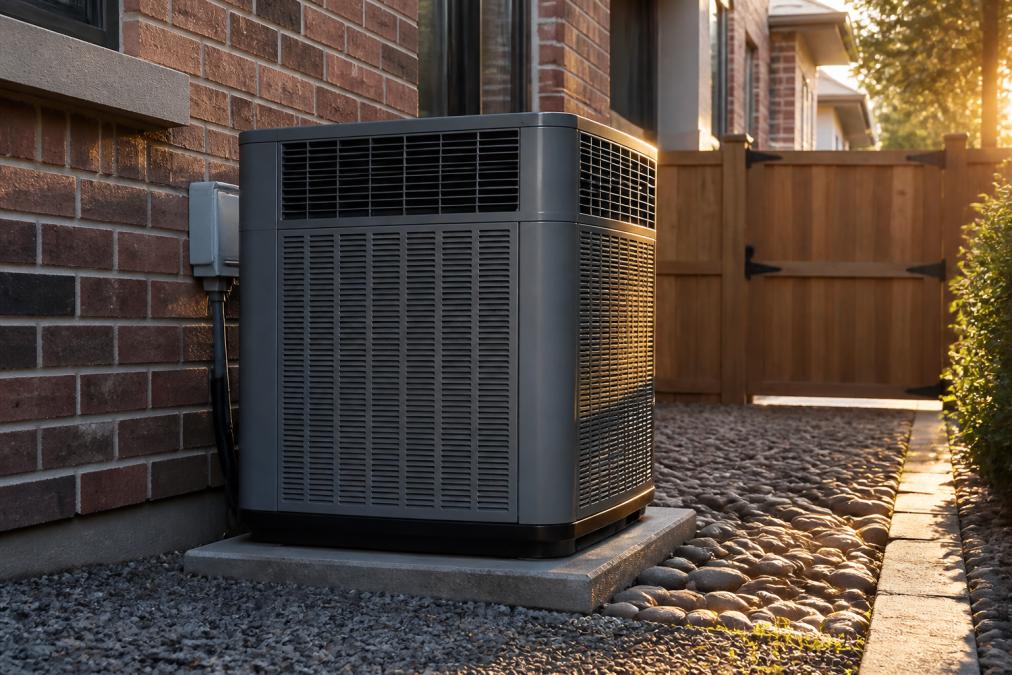
A compact, side-discharge unit like the Daikin Fit or Mitsubishi MXZ-SM series is frequently the only option that satisfies strict guidelines. These units pull air from the side and exhaust upward, so they can sit closer to walls and fences than top-discharge condensers. Submit your proposed equipment specs to the HOA for written approval before committing.
Retrofitting Older Townhouses: The High-Intent Playbook
For older townhouses, retrofitting is the other major hurdle. Adding ductwork to a finished multi-story home is invasive and expensive, which is why ductless mini-splits are so popular in older units. The retrofit playbook depends on what you already have:
- You have ductwork from a 1980s or 1990s system. The ducts are likely undersized for modern high-efficiency equipment and may have leaks at every joint. A duct leakage test tells you whether sealing is enough or whether sections need replacement. Prioritize sealing the ducts in the attic or crawlspace first, since those leaks waste the most energy.
- You have a boiler and radiators, no ductwork. This is common in older row-style townhouses. Your options are ductless mini-splits (least invasive), high-velocity small-duct systems like Unico or SpacePak (which use 2-inch flexible tubing that snakes through walls), or a full ducted retrofit (most invasive and expensive). High-velocity systems are a legitimate middle ground, but they require a knowledgeable installer and typically cost more than a standard mini-split.
- You have a window AC or through-wall unit. Removing the old sleeve and patching the wall is a prerequisite. Budget for carpentry and drywall repair, and confirm the wall cavity is clear of obstructions before the new line set is routed.
Smart Thermostat Integration for Narrow, Vertical Floor Plans
Whichever route you take, integrating a smart thermostat is straightforward and worthwhile. Most modern systems are compatible with standard smart thermostats. But for a townhouse, the thermostat strategy matters more than the brand:
- One thermostat per zone is non-negotiable. A single smart thermostat on the main floor cannot fix the temperature stratification between floors. You need either a multi-zone mini-split system with individual remote controls or a ducted system with motorized dampers and a thermostat on each floor.
- Look for occupancy-based scheduling. Thermostats like the Ecobee with room sensors or the Nest Learning Thermostat can detect when you're home and adjust each zone accordingly. In a townhouse where the top floor is empty all day, this feature alone can cut cooling costs.
- Check for equipment-specific compatibility. Bosch's IDS system works with most standard thermostats, but Carrier's Infinity and Lennox's Signature lines require their proprietary communicating thermostats to unlock full efficiency. If you want to use your own smart thermostat, confirm compatibility before you buy the equipment, not after.
Your HVAC Maintenance Checklist for Townhomes
Regular maintenance is the single best way to protect your investment and extend system longevity. For townhouse owners, this checklist covers the essentials:
- Replace or clean air filters monthly during peak heating and cooling seasons. Dirty filters restrict airflow and force the blower to work harder.
- Clear debris from the outdoor condenser unit every few weeks, keeping at least two feet of clearance on all sides.
- Check condensate drains for clogs each season. A blocked drain can cause water damage to ceilings and walls.
- Schedule a professional tune-up twice a year, once before cooling season and once before heating season. A technician will check refrigerant levels, inspect electrical connections, and verify the system is operating at peak compressor efficiency.
- Test your thermostat and zoning dampers to confirm each zone responds correctly to its temperature settings.
Conclusion: Choosing the Right System for Your Townhouse
Selecting the best hvac system for townhouses comes down to understanding your building's constraints and comfort priorities. If you lack ductwork, a ductless mini-split from Mitsubishi or Daikin offers the most flexible zoning. If efficiency is your goal, a Bosch or Lennox heat pump delivers excellent performance. If you have ducts in good shape, a zoned central system from Trane or Carrier provides reliable comfort.
Installation complexity, HOA rules, and retrofitting needs can turn a straightforward purchase into a headache. That's where professional guidance earns its keep. Rich’s Plumbing Heating & Air Conditioning brings over 30 years of experience to townhouse installations across New Jersey, with licensed, insured technicians and a 100% satisfaction guarantee. Tap to schedule service today and get a free estimate.
Frequently Asked Questions
Is a heat pump or central air better for a townhouse?
For most townhouses, a heat pump is the better choice because it provides both heating and cooling in one unit, which saves valuable outdoor space. Heat pumps also offer high SEER2 ratings and efficient performance in moderate climates. Central air is a solid option if you already have a furnace and ductwork, but it only handles cooling. A heat pump with zoned temperature control is often the most effective solution for managing multi-story temperature differences.
What is the typical price of a new AC unit for a townhouse?
The cost to replace HVAC in a townhouse varies widely based on system type, SEER2 rating, and installation complexity. Ductless mini-splits and heat pumps often have different price points than traditional central air systems. For an accurate figure, request a free estimate from a licensed installer. They will perform a load calculation to size the unit correctly for your square footage and layout, which is critical for efficiency and system longevity.
What brand of HVAC is the most reliable?
Trane and Carrier consistently rank high for long-term reliability and durability. Trane's Climatuff compressor is known for handling extreme temperatures, while Carrier's Greenspeed intelligence offers precise comfort. If you want premium efficiency, Lennox and Bosch are excellent choices. For budget-conscious homeowners, Goodman provides dependable performance with a 10-year parts warranty. The best brand for your townhouse also depends on which local dealer offers the strongest installation and maintenance support.
How does zoned HVAC improve comfort in multi-story townhomes?
Zoned HVAC systems use adjustable dampers and multiple thermostats to control air distribution to different floors independently. This solves the common problem of hot upstairs bedrooms and cold downstairs living areas. By directing conditioned air only where it is needed, zoning reduces energy waste and lowers utility bills. It also allows each resident to set their preferred temperature, improving overall thermal comfort without requiring a larger, more expensive system.
Frequently Asked Questions
Q: Is a heat pump or central air better for a townhouse?
A: For most townhouses, a heat pump is the better choice because it provides both heating and cooling in one unit, which saves valuable outdoor space. Heat pumps also offer high SEER2 ratings and efficient performance in moderate climates. Central air is a solid option if you already have a furnace and ductwork, but it only handles cooling. A heat pump with zoned temperature control is often the most effective solution for managing multi-story temperature differences.
Q: What is the typical price of a new AC unit for a townhouse?
A: The cost to replace HVAC in a townhouse varies widely based on system type, SEER2 rating, and installation complexity. Ductless mini-splits and heat pumps often have different price points than traditional central air systems. For an accurate figure, request a free estimate from a licensed installer. They will perform a load calculation to size the unit correctly for your square footage and layout, which is critical for efficiency and system longevity.
Q: What brand of HVAC is the most reliable?
A: Trane and Carrier consistently rank high for long-term reliability and durability. Trane's Climatuff compressor is known for handling extreme temperatures, while Carrier's Greenspeed intelligence offers precise comfort. If you want premium efficiency, Lennox and Bosch are excellent choices. For budget-conscious homeowners, Goodman provides dependable performance with a 10-year parts warranty. The best brand for your townhouse also depends on which local dealer offers the strongest installation and maintenance support.
Q: How does zoned HVAC improve comfort in multi-story townhomes?
A: Zoned HVAC systems use adjustable dampers and multiple thermostats to control air distribution to different floors independently. This solves the common problem of hot upstairs bedrooms and cold downstairs living areas. By directing conditioned air only where it is needed, zoning reduces energy waste and lowers utility bills. It also allows each resident to set their preferred temperature, improving overall thermal comfort without requiring a larger, more expensive system.